
Common Causes of Garage Door Motor Clicking
Faulty Capacitor in the Motor Unit
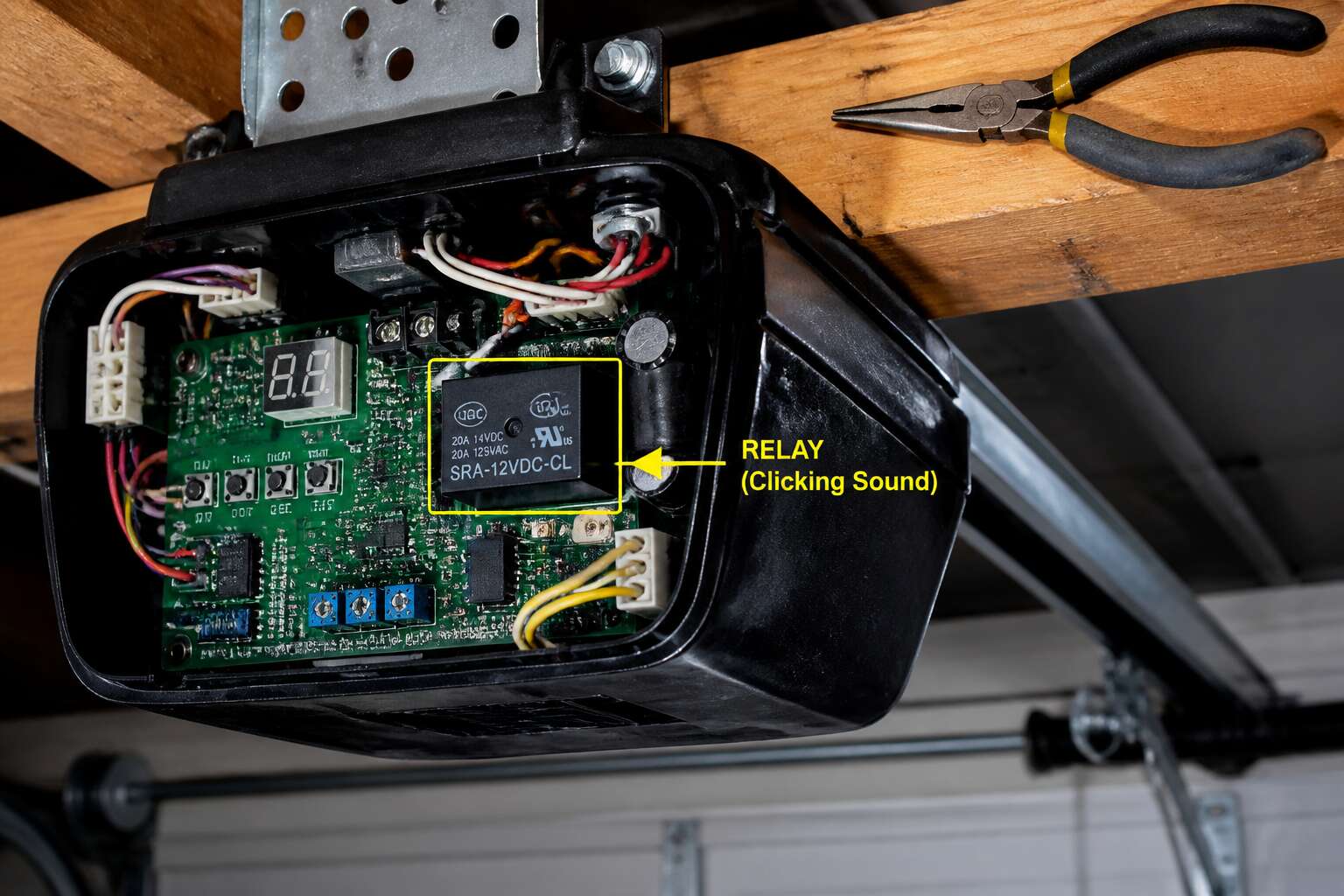
A malfunctioning capacitor is a prime suspect when your garage door motor clicking sound resembles a rapid, rhythmic tap. South African homes, particularly those facing intense summer heat, put significant strain on these electrical components. The capacitor acts as a storage unit for electrical charge, giving the motor the initial surge of power needed to lift the heavy door. When this cylindrical part fails, it cannot hold that charge effectively.
Instead of starting, the motor unit begins a cycle of trying and stopping. You hear the relay engage and disengage repeatedly, creating that distinct clicking noise. The motor itself remains silent, as it never receives the full electrical current to spin its gears. In many instances, a bulging top on the capacitor or a burnt smell near the motor confirms the diagnosis.
Every clicking cycle bleeds energy and stresses the motor’s start winding. This constant strain can eventually burn out a perfectly good motor, turning a simple capacitor replacement into a costly overhaul. A qualified technician with a multimeter can quickly test the microfarad rating to confirm the fault. If the reading is significantly below the required specification, the capacitor is past its prime. Replacing this small part often restores your door to full, silent functionality.
Worn Gears or Sprocket in the Drive Mechanism
A rhythmic clicking from your garage door motor can be more than just an annoyance. If the unit struggles to move the door but the lights stay on, the issue often lies deep within the drive mechanism itself. While electrical faults are common, the physical wear of metal components is a frequent culprit, especially in older systems.
The motor relies on a series of gears and a sprocket to convert electrical energy into the lifting force that moves the heavy door along the tracks. These parts are made of hardened steel or durable nylon. Over time, the constant friction and heavy load wear down the teeth of these components. When the teeth become stripped or a gear develops a hairline crack, the motor shaft spins but cannot grip properly. This slippage creates that distinct, repetitive clicking or grinding sound as the motor attempts to engage the drive chain.
Several factors accelerate this wear. Infrequent lubrication is a primary cause, as dry metal rubs against metal with increased resistance. Similarly, a garage door that is out of balance forces the motor to work harder than necessary. If the springs are broken or tensioned incorrectly, the full weight of the door falls on the motor, stressing the gears with every cycle. The specific components most at risk include:
– The drive gear attached to the motor shaft.
– The worm gear that connects the motor to the trolley.
– The sprocket on the top of the motor unit.
Identifying this specific failure requires a keen ear. A clicking sound that does not coincide with a struggling motor might just be a loose chain. However, if the clicking is rapid, rhythmic, and accompanied by a slight vibration in the motor casing, it is almost certainly internal gear damage. You may also notice that the door moves in short, jerky bursts before stopping completely. Leaving this issue unattended will only grind the broken particles further into the mechanism, eventually destroying the motor’s internal housing and leading to a complete, costly replacement.
Limit Switch Misalignment or Malfunction
The motor hums with intent, yet the door remains still. A sporadic, sharp clicking from the operator unit often signals a breakdown in the command chain. Before the mechanism can turn the chain, it must confirm the door’s position. This is the duty of the limit switch. When this small component falls out of adjustment, it sends conflicting signals to the logic board. The result is a rapid engagement and disengagement of the drive mechanism, producing that telltale staccato chatter. It is a ghost in the machine, a loop of commands that never reaches completion.
This misalignment rarely happens overnight. It is often the consequence of a door that has become slightly unbalanced over time. As the heavy panels shift and the cables stretch, the physical pressure against the switch changes. The switch either closes too early, halting the motor prematurely, or it fails to close at all, leaving the motor ignorant of the door’s state. A faulty switch might also be intermittent. The internal contacts become corroded or brittle, failing to transmit the signal consistently. This creates a sporadic connection, where the motor receives a “go” command followed instantly by a “stop” command.
Several specific faults can lead to this auditory warning:
– Physical vibration has loosened the switch mounting bracket, altering the trigger point.
– The switch lever or actuator arm has snapped, breaking the contact with the trolley.
– Internal electrical contacts are worn or oxidized, causing an open circuit.
– The wiring harness connecting the switch to the motor logic board has chafed or shorted.
When you hear that specific garage door motor clicking sound, it is the sound of electrical energy being pulsed but not converted into mechanical work. The motor is being told to start, then told to stop, all within a fraction of a second. This rapid cycling can overheat the motor windings and eventually burn out the entire logic board. It is a symptom that demands attention, as the underlying failure will only worsen with each attempted cycle.
Misaligned Tracks or Rollers Causing Unnecessary Strain
A garage door motor clicking sound reveals a battle occurring far from the motor unit itself. The operator is not the culprit, but the exhausted messenger. When the track geometry bends or the rollers seize, the door’s weight distribution shifts. The motor must now fight against this unnatural friction. This prolonged struggle produces a labored clicking rhythm as the drive belt or chain skips under the sudden load.
The panels physically bind against the track flanges, creating a percussive snap with each inch of travel. Vibration from this stressed motion further loosens the track brackets and roller bearings. The situation compounds. Misaligned tracks cause the door to hang lopsided, placing torque on the opener shaft it was never designed to endure. The motor attempts to compensate, failing repeatedly.
Specific track or roller faults generate this conflict:
– A bent or bowed vertical track section pinches the roller.
– A worn roller bearing has gone flat, creating a daily thud.
– The track mounting brackets have pulled away from the wall studs.
– Impact damage from a vehicle has pushed the bottom track inward.
These physical faults translate directly into that electrical stutter. The motor hits a snag, reverses, retries, and clicks. It is the sound of a system fundamentally out of sync. The garage door motor clicking sound is the final audible vote of no confidence in a worn out mechanical pathway. Every cycle stretches the fraying components further, etching the failure deeper into the door’s steel sinews.
Diagnosing the Clicking Sound
Listening for the Pattern and Frequency of the Clicks
A garage door motor that clicks carries a message, and learning to interpret it can save you both time and money. That rhythmic sound, repeating like a metronome in your driveway, speaks to the internal state of your system. Before any tools come out, pause and listen. The pattern matters as much as the sound itself. A single, decisive click often points to a relay that is struggling to engage. Rapid, successive clicks, however, can indicate a different story, one of power delivery problems or a communication breakdown between the wall switch and the motor unit.
As you stand near the garage, tune out the ambient noise of the South African wind or the hum of traffic. Focus purely on the beats. Is the clicking constant, or does it flare up only when you press the transmitter? Does it stop as soon as the door begins to move, or does it persist throughout the operation? These details are your clues to the root cause. When you listen closely, you are essentially performing a non-invasive diagnostic test, narrowing down the potential faults before you even lift a panel. This auditory check is the first step toward a solution.
Consider the variables you are observing:
– The frequency, or how quickly the clicks follow one another, which can tell you if the motor is being asked to start but is failing to do so.
– The timing, or whether the clicking occurs at the start, middle, or end of the door’s cycle.
– The responsiveness of the door, which is to say, whether it gives any physical twitch, however small, when that click sounds.
A garage door motor clicking sound is rarely a mystery if you approach it methodically. Once you have noted the rhythm, you can move forward with confidence. The pulsating noise is a symptom, and by pinpointing its cadence, you have already taken the most valuable step in the repair process.
Checking the Motor Unit’s Power Supply and Indicator Lights
A garage door motor clicking sound often begins its mournful tale not in the gears, but in the heart of the power supply. Before you inspect the drive mechanism or the tracks, verify the lifeline of the system. A volatile power feed, a common spectre during South African load shedding, can cause the internal relays to chatter in a frantic, repeating rhythm. This low voltage often leaves the indicator light on the motor unit dim, flickering, or entirely absent, a clear omen of electrical distress.
Check the supply voltage with a multimeter to rule out a fluctuating source. Examine the power cord for damage and ensure the outlet is properly earthed. The indicator lights themselves provide vital clues.
– A solid, steady light typically indicates a healthy connection.
– A rapid blinking light, however, suggests a problem with the safety sensors or a receiver unable to communicate.
– No light at all points to a blown fuse, a tripped circuit breaker, or a failed transformer.
When the motor unit shows no sign of life at the indicator while the clicking persists, you are likely dealing with a capacitor struggling to provide the initial surge of power. This top-up charge is essential for starting the motor. If the light blinks only when the wall switch is pressed, the receiver logic board may be failing to process the signal. Listening to the cadence of the click alongside the light’s behaviour gives you a clear diagnostic picture without ever touching a gear. The garage door motor clicking sound is the voice of a system under strain, and its pitch and pattern, combined with the status lamp, reveal whether the problem is external power or internal failure. This systematic approach eliminates guesswork between the wall switch, the receiver, and the primary power source.
Inspecting the Trolley, Chain, or Belt for Obstructions
The click is the cheapest part of the mechanism. It costs nothing to produce, yet it can reveal a damaged trolley, a slipping belt, or a blocked rail before you ever open the motor unit. A garage door motor clicking sound often starts not in the electronics but in the drive line that moves the door itself.
The trolley is the physical link between the motor and the door. When the trolley meets resistance along the rail, the chain or belt slips instead of pulling smoothly. That slip is what you hear as a click. A quick inspection can reveal the culprit:
1. Debris caught in the trolley wheels or along the rail channel
2. A loose or sagging chain that slaps against the rail cover
3. Worn teeth on the belt or a cracked belt segment
The obstruction does not need to be large to cause a click. A pebble or a bent bracket is enough to interrupt the trolley’s glide. When the drive mechanism stutters, the motor keeps pushing and the connection keeps breaking, creating a persistent ratchet sound. The clicking is the trolley catching, releasing, and catching again. Each repetition of the garage door motor clicking sound marks another failed attempt to move the door.
Testing the Door’s Balance and Hand-Pull Disconnect
The hand-pull disconnect separates the motor from the carriage. Lifting the door halfway and releasing it reveals the balance. A balanced door stays put. A door that drifts down or springs up is fighting the motor, and that fight often surfaces as a garage door motor clicking sound.
Testing the balance requires a few observations:
- The door should move smoothly with no jerks.
- The spring tension should hold the door at any height.
- The track should not flex under load.
Any deviation places extra strain on the drive mechanism. The motor then pushes against a misaligned weight, and the release clutch engages and disengages rapidly. That rapid cycle produces the clicking you hear.
Step-by-Step Troubleshooting and Repairs
Resetting the Garage Door Opener to Clear Error Codes
There’s a unique frustration in hearing that garage door motor clicking sound echo through the house, a rhythmic tapping that signals a complete refusal to cooperate. It’s more than a mechanical hiccup; it’s a communication from the system, often pointing directly to a locked-up error state. Before you call for reinforcements, you can often perform an exorcism of sorts, clearing the digital ghosts that have frozen the unit’s logic.
The modern opener runs on a delicate balance of programming and hardware. When it encounters resistance or a signal glitch, it often defaults to a locked mode, which manifests as that persistent clicking without any actual movement. To break this cycle, you need to interrupt the power flow completely, allowing the internal capacitors to drain. Locate the power cord and unplug the unit entirely; if it’s hardwired, trip the dedicated circuit breaker in your main panel. Leave it isolated for at least sixty seconds. This is not a mere pause; it’s a hard reset that wipes the volatile memory clean. After the wait, restore the power and listen. The silence is often the first sign of success.
If the unit is still stubborn after the power cycle, you might need to clear the stored travel limits, which can sometimes become corrupted. Here is the sequence to re-establish the baseline:
1. Locate the “Learn” or “Program” button on the motor housing.
2. Press and hold this button until the indicator light turns off, which usually takes about six seconds.
3. Release the button, then press it again briefly and release immediately.
4. Test the wall console or remote to see if the receiver has accepted the new signal.
This process wipes the remote codes and often purges the fault that triggered the garage door motor clicking sound. Following this, you may need to reprogram your remotes to the unit.
A persistent clicking after a full reset usually points back to a physical obstruction, but at this stage, you have eliminated the software variables. If the motor still hums and clicks without lifting, the internal gears might be stripped, but you have isolated that after proper troubleshooting. Just remember that a standard home system often requires a simple re-sync; the mystery is usually solved with a short timeout and a fresh connection. If the sound returns after a successful reset, consult a professional who can diagnose deeper electrical issues safely.
Replacing the Capacitor and Checking for Burnt Components
If the reset procedure fails to restore order, the culprit often lies in the motor unit’s electrical heart: the capacitor. This cylindrical component provides the initial surge of power to start the motor. A failing capacitor will produce a distinctive garage door motor clicking sound, a rapid series of electrical attempts that never quite ignite.
Begin by disconnecting the opener from its power source. Verify this with a non-contact voltage tester. It is a simple safety measure that prevents a startling shock.
– Locate the capacitor, typically a silver or black cylinder near the motor.
– Inspect its top for any bulging, cracks, or leaked electrolytic fluid.
– Use a multimeter with a capacitance setting to test its microfarad rating. A reading significantly lower than the value printed on the component’s side confirms failure.
Replacing a capacitor is straightforward; note the wiring configuration, detach the old unit, and install the new one with the same specifications. Swollen capacitors are the primary cause. If the capacitor tests fine, inspect the circuit board for burnt components. Look for darkened resistors, scorch marks, or a distinct odor of fried electronics. These visual clues point to a board that requires professional replacement, as the continued clicking will eventually damage the logic board entirely.
Adjusting the Limit and Travel Settings for Proper Operation
When the capacitor tests clean, the garage door motor clicking sound often traces back to the travel limits. These small screws on the motor unit command where the drive arm stops. A half turn of either adjustment changes the full opening distance by a few centimetres, and the motor will keep reaching for a position it can never reach.
Adjust the limit settings while the door is fully closed:
- Locate the up and down limit screws, usually on the rear access panel.
- Turn the down limit screw a quarter turn and listen for the motor stop.
- Move to the up limit for a full cycle and feel for a smooth halt at the weather seal.
Run the opener through an entire complete travel. The chattering should stop the moment the door reaches its stall. Creep is normal after years of panas, so it is recommended to repeat this process yearly to keep the garage door motor clicking sound from returning after extended wear.
When the capacitor tests clean, the garage door motor clicking sound often traces back to the travel limits. These small screws on the rear motor unit command where the drive arm stops its travel. A half turn of adjustment changes the travel by a few centimetres, and the motor will keep reaching for a position it can never reach, creating that persistent clicking.
Set the travel limits with the door fully closed:
- Locate the up and down limit screws, usually behind the rear access panel.
- Turn the down limit screw a quarter turn while the motor is disengaged.
- Adjust the up limit so the door rests neatly at the weather strip and opens to the exact horizontal rail.
Run the unit through three complete cycles. A properly set transport eliminates the racket the moment the door reaches its final position. Springs slack over time, so check these settings yearly to keep that garage door motor clicking sound from returning under heavy seasonal use.
Lubricating the Chain, Gears, and Moving Parts to Reduce Friction
Silence is the heart’s own music, yet a garage that clicks without ceasing speaks a language of wear. Friction is the thief. It steals smooth motion and leaves behind that grating, persistent racket. The cure is nourishment, plain and simple.
You must tend to the moving parts as a gardener tends to a vine. The chain, the gears, the hinges on the tracks. Each one craves a whisper of lubricant. Use a silicone spray or a lithium grease, never a heavy oil that will collect dust and grit.
- The chain or belt drive, where it meets the sprocket
- The rollers inside their tracks
- The hinges on each door panel
Apply sparingly. A cloth to wipe away excess. Then run the opener through a cycle. The garage door motor clicking sound will soften if the complaint was born of dryness. A well oiled machine is a quiet machine.
Tightening Loose Hardware on the Motor and Door Assembly
The Telltale Click: Decoding Your Garage Door Motor’s Urgent Message
That rhythmic, sharp click-click-click emanating from your garage door motor is never a sign of contentment. It is a distress signal, a mechanical Morse code indicating that the system is failing to complete its cycle. The source is often not a single point of failure, but a cascade of issues starting with the carriage assembly, which is the trolley that pulls the arm attached to your door. When the motor turns the drive gear but the carriage refuses to budge, the internal plastic teeth strip, creating that repetitive clicking sound as the sprocket spins uselessly.
Before you assume the worst and call for a costly replacement, you must examine the physical connection between the door and the track. If the door is disconnected from the carriage (perhaps a pulled release cord), the motor runs free, causing the exact clicking noise you hear. However, if the door is connected but the tracks are misaligned, the increased friction forces the motor to strain. That strain triggers the internal safety sensors to reverse the operation, which sounds like a rapid clicking or chattering. You should also inspect the limit switches; these small devices tell the motor when to stop. If they are loose or faulty, the motor will hunt for the stop position, clicking repeatedly as it tries to recalibrate its travel distance.
Step-by-Step Troubleshooting and Repairs
If the release cord isn’t the culprit, you must turn your attention to the drive mechanism. Disconnect the door from the carriage to isolate the motor. If the clicking stops when the door is disconnected, the problem lies in the door’s mechanical weight or balance, not the motor. If the clicking persists, the issue resides within the gear assembly or the motor itself. Here are the ordered steps to diagnose the issue effectively:
– Inspect the drive belt or chain: Check for slack or skipped teeth. A loose belt will slip on the sprocket, creating a slipping and clicking sensation.
– Examine the carriage release mechanism: Ensure it has fully re-engaged with the drive chain. A half-engaged position allows the motor to spin without moving the trolley.
– Test the motor capacitor: A failing capacitor provides insufficient startup torque. The motor attempts to move, stalls, and clicks. Look for a bulging top or listen for a humming buzz accompanying the click.
Tightening Hardware on the Motor and Door Assembly
Once you have isolated the drive system, you must address the physical security of the mounting points. The tension in the system is critical. If the motor unit is vibrating excessively, it indicates loose mounting brackets, which absorb torque and cause the gears to skip. You need to verify that the rail is perfectly level and that the motor housing is securely fastened to the support struts.
Furthermore, the connection between the door arm and the carriage is a common failure point. The bolt securing these two elements often works loose over time due to constant vibration. A loose bolt here allows the arm to slide up and down on the carriage pin, creating a clicking sound that emits from the trolley but is amplified by the motor. You should tighten the nuts on the carriage but avoid over-tightening, as this can strip the threads or bind the trolley wheels against the track. A 3/8-inch drive ratchet with a socket extension is usually sufficient to secure these components without distorting the metal.
The Mechanical Reality
There is a distinct difference between a motor that clicks and a motor that grinds. A grind indicates worn metal; a click indicates a lack of mechanical connection or a lack of power. If you have exhausted the hardware checks and the clicking persists, the internal gears are likely stripped. In this scenario, lubrication is counterproductive. You cannot fix stripped nylon gears with grease; you can only replace them or the entire trolley assembly.
Always remember to check the emergency release cord’s status before deep-diving into electrical diagnostics. Ninety percent of “clicking motor” service calls are solved by simply re-engaging the carriage. If the releases are fine and the hardware is tight, but the clicking returns under load, disengage the door and manually lift it halfway. If it falls or drops, the torsion springs are broken, forcing the motor to handle the entire weight of the door. That massive resistance will not only cause clicking but will burn out the motor windings over time, a scenario where repair costs exceed replacement value.
When to Call a Professional vs. DIY
Safety Risks Associated with High-Tension Springs and Electrical Work
The rhythmic click of a garage door motor is a language of its own. It is not a request for a DIY project. It is a warning, often about a component under immense tension. While some maintenance is safe, certain repairs can turn a simple fix into a trip to the emergency room.
The primary dangers live in two places: the torsion spring and the electrical system. The spring is counterbalancing the entire weight of the door. One slip while adjusting it can release that energy with brutal force. The motor also carries live power, where a misstep can cause a shock or a short circuit.
A safe approach involves knowing your limits. You can handle the visual checks. Conversely, a professional should handle the tension and wiring.
1. Inspect the tracks and rollers for debris or wear.
2. Tighten loose bolts on the hinges and brackets.
3. Replace the batteries in your remote controls.
If you have done all this and the garage door motor clicking sound persists, stop. Do not ignore the signal. A persistent click often indicates a failing capacitor or an internal gear strip, which are jobs for trained hands. The cost of a service call is far less than the cost of an injury. When the mechanism speaks, it demands respect, not a hammer. Call the expert.
Signs of Major Motor Damage or Circuit Board Failure
There comes a point where a garage door motor clicking sound signifies more than a minor fault. If the motor clicks without movement, the logic board has likely failed. If the click arrives only after the door travels a certain distance, the motor assembly itself may be damaged.
You can handle the simple checks. You cannot repair a failed circuit board with a screwdriver. Consider these clear indicators:
- The motor clicks but the door does not attempt to move.
- The opener ignores every command, even a new remote battery.
- The click accompanies a stuttering motion or a complete dead stop.
These symptoms separate what you can fix from what an expert must handle. A garage door motor clicking sound that persists after your inspections belongs in professional hands. It is a small admission that the mechanism has outmatched your toolkit!
Comparing the Cost of Professional Repair vs. Replacement
A garage door motor clicking sound that repeats without any movement is a clear signal that something internal has failed. Often, this points to a capacitor that can no longer provide the starting torque, or a circuit board that has lost its ability to communicate with the motor. While many homeowners are handy, diagnosing this specific issue requires a multimeter and a careful eye for burnt components.
You can certainly handle the simple maintenance tasks that prevent these failures. For example, ensuring the tracks are clean and the hardware is tight keeps the system balanced. Consider these quick checks before you call anyone else.
– Inspect the emergency release cord to ensure it is not pulled.
– Verify that the photo-eye sensors are clean and aligned.
– Check the main power outlet for a working voltage.
However, a persistent clicking sound usually indicates a deeper electrical problem. When the circuit board fails, the cost of a replacement board plus the labour to install it often approaches 60% of a brand-new motor unit. In this case, comparing the repair price to the cost of a full replacement makes the decision quite simple. You are better off investing in modern equipment with a warranty than pouring money into a dying system. The labour is the expensive part; replacing the entire unit takes the same time as a complicated board swap, but gives you a fresh start.
Understanding Warranty Coverage and Insurance Requirements
Some clicks are yours to solve. A loose screw or a dirty sensor is a simple fix. The garage door motor clicking sound that persists for more than a few seconds, however, asks for a professional. Once you open the motor housing, you may void the warranty. Many manufacturers seal the unit with tamper proof stickers. Remove one and your claim disappears.
Warranty coverage varies by brand. Some offer five years on parts, others ten. The warranty often excludes labour. It also excludes damage from power surges. Check your policy before attempting any repair. A surge protector is a worthwhile investment, especially in areas with unstable grids.
- Photograph the motor unit and its serial number before any work
- Keep receipts for all replacements
- Ask your insurer whether a faulty opener is covered under home contents or building insurance
Insurance requirements in South Africa often demand professional installation. A DIY repair may cause damage that the insurer refuses to cover. The clicking sound might be a warning, not a failure. But a wrong diagnosis costs more than a technician visit. Call a professional when you doubt your skill. Your safety and your warranty depend on it.
Weighing the Time and Skill Needed for Complex Fixes
Time is the hidden variable in any DIY repair. A weekend workshop visit to replace a capacitor might cost you three hours. A callout to a technician consumes one. When the garage door motor clicking sound appears only during specific operations, the diagnosis becomes iterative. You test, observe, and retest. Professionals hold diagnostic tools that map voltage and logic board faults in minutes.
The complexity of your opener dictates the answer. Some repairs require a single screwdriver. Others require load testing and calibration.
– Replacing a snapped belt: DIY feasible with a second person.
– Replacing a circuit board: leave to a technician. Static discharge kills new components.
Intermittent clicking often points to a failing limit switch. That component sits inside the housing. Removing the housing nulls your warranty. A professional replaces it under their own liability. The failed motor, the damaged gear, the stripped sprocket. These all share a common thread. They become more expensive after amateur intervention than before it.
0 Comments