
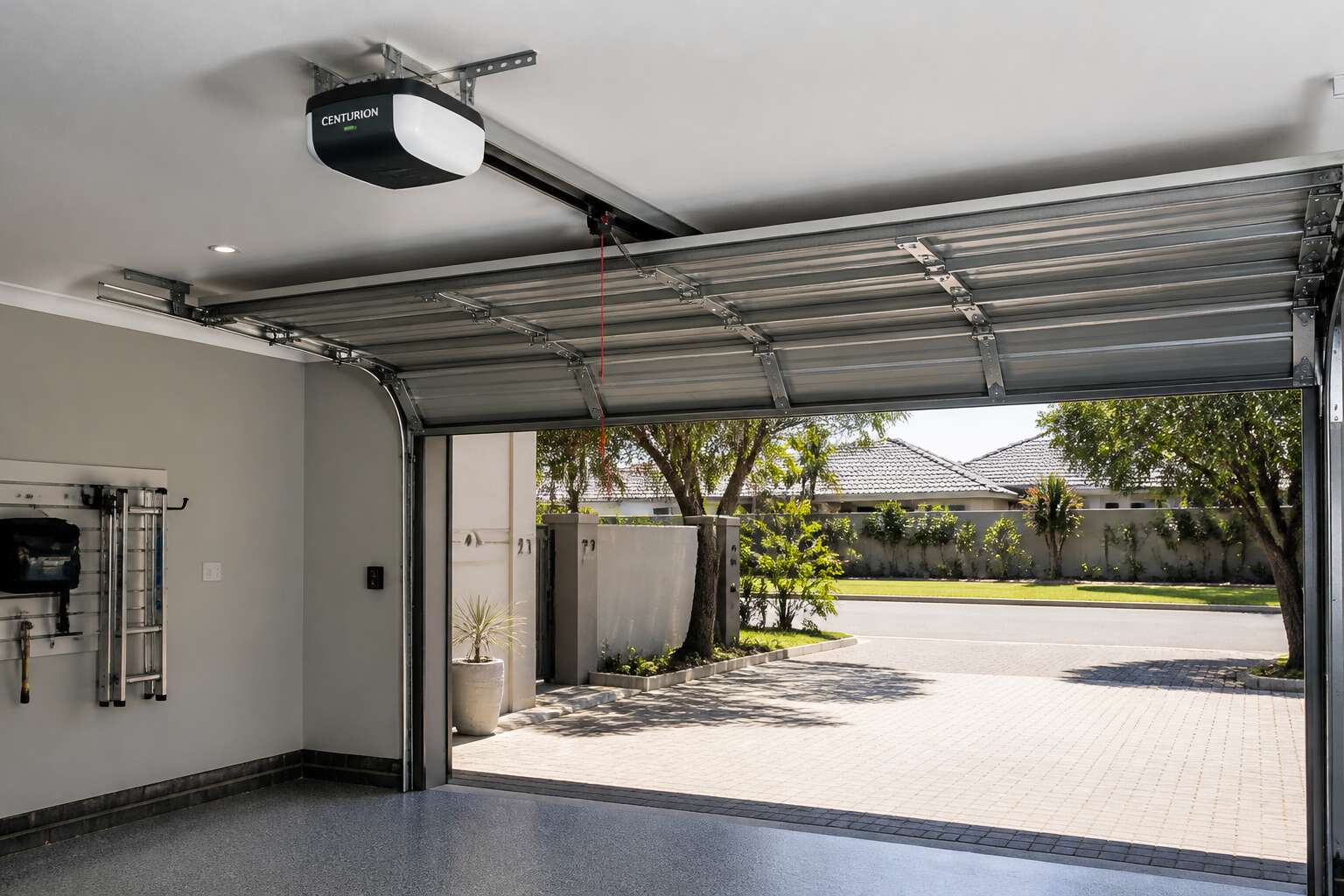
Types of Garage Door Motors Suitable for Local Homes
Chain Drive Motors: Durability and Affordability
The chain drive motor hums a familiar rhythm in South African garages. For local homes, this mechanism offers a straightforward promise: it lasts. The steel chain and metal gears handle load shedding cycles without complaint. Cost remains the strongest argument. A garage door motor in South Africa with chain drive undercuts belt or screw systems, making it the pragmatic choice for budget conscious families.
Durability stems from simplicity. Fewer moving parts fail, and replacement chains are available in most hardware stores. This matters when technicians are scarce outside major cities. Chain drives vibrate, but they tolerate dust, heat, and power surges. Owners accept more noise in exchange for a system that just works. That trade feels honest in a country where reliability is never guaranteed!
Belt Drive Motors: Quiet Operation for Attached Garages
In attached garages, the sound of the door motor travels directly into living spaces. Belt drive motors use a reinforced rubber belt that dampens vibration, creating a near silent operation. For a garage door motor in south africa, this quietness matters when a bedroom sits directly above the garage.
- Soft start and stop reduces strain on the door mechanism
- No metal on metal contact means fewer heat related wear points
- Ideal for frequent use in home environments
The trade off is a higher purchase price. But for families who value peaceful mornings, that cost buys something intangible. I have replaced chain drives for clients who could not sleep through the noise. Local load shedding can cause power surges, and belt drives tolerate them with a simple drive belt that is easy to replace.
Screw Drive Motors: Reducing Moving Parts for Reliability
When Eskom switches off the lights, the last thing you need is a finicky garage door. Screw drive motors offer a different approach. They use a threaded steel rod to move the carriage directly. No chain, no belt, just a simple mechanical drive.
This design reduces moving parts, which matters for a garage door motor in south africa. Power surges from load shedding can scramble sensitive electronics. With fewer components exposed to stress, there is less to fail. The motor does not need to work as hard to overcome friction.
- Direct transfer of force from motor to door
- Consistent performance in hot climates
- Long service intervals without lubrication
Maintenance is straightforward. The screw drive runs on grease, which lasts for years. There is no metal on metal grinding like older chain systems. For homeowners who want reliability over silence or cost savings, this option sits in a practical middle ground.
Direct Drive Motors: Compact and Maintenance-Free Design
If you have ever stared at a tangle of chains and cursed, direct drive motors are the answer. There is no belt to stretch, no chain to oil, no screw to align. The motor attaches straight to the torsion shaft, turning the door with brute simplicity. For a garage door motor in south africa, that means fewer components for Eskom’s erratic power to scramble.
These motors are compact enough to fit in tight ceiling spaces, which is handy when your garage doubles as a workshop. They run on sealed bearings, so maintenance is a yearly glance, not a monthly ritual. You might sacrifice some of the whisper-quiet manners of a belt drive, but you gain a unit that just works.
- Best for single residential doors
- No separate gearbox or rail
- Simple to retrofit onto existing shafts
Direct drive is the no-nonsense choice for homeowners who want to forget the motor exists until the remote clicks.
Key Factors to Consider When Choosing an Automated Garage System
Power and Torque Requirements for Different Door Sizes
That double garage door weighs more than most cars on South African roads. A standard 5.4 metre door can come in at 120 kilograms, and an undersized motor will strain, overheat, and fail within two years. In my repair work, the average garage door motor in South Africa needs torque to lift the door smoothly, even when the springs stiffen in cold weather.
A single sectional door of 2.4 metres might require only 500 Newtons of lifting force, while the same door in timber demands 800 Newtons or more. Match any garage door motor in South Africa to the door’s actual weight and dimensions.
Keep these points in mind:
- Total door mass, including cladding and windows
- Counterbalance spring condition
- Frequency of daily use in busy households
The terrain of your driveway matters too. A steep incline changes the load profile, so a domestic motor may struggle where a commercial unit thrives. That is where installations go wrong!
Noise Levels and Neighbourhood Considerations
The sound of a garage door motor in south africa announces your 5am departure to every watchful neighbour on the street. Sound travels well in suburban layouts. A tired chain mechanism clatters through brick walls, and the noise lands directly in a bedroom window. Nobody wants to be the reason every dog on the street barks before sunrise!
Quiet operation matters more than most buyers admit. Your double storey home amplifies the vibration from the ceiling. The wrong garage door motor in south africa turns a simple exit into a neighbourhood event, particularly when the unit is mounted under a bedroom.
Consider these factors before choosing:
- Operational hours and when you typically leave the house
- Wall thickness and insulation between garage and living spaces
- Whether your bedroom shares a wall with the garage
Battery Backup for Load Shedding and Power Outages
An unplanned blackout interrupts an automated garage door mid-operation. A garage door motor in south africa without battery backup leaves a heavy door stranded. Load shedding does not wait for you to be home, and it rarely times itself for after you have left. Your backup system determines whether you exit on time or spend the morning searching for the manual release.
Key factors to evaluate:
- Battery capacity relative to the motor’s power draw.
- Automatic switchover speed when the grid drops.
- Battery lifespan and replacement cost under regular use.
Match the battery to the door’s weight and how often load shedding interrupts your routine. A backup that lasts thirty minutes may cover a false alarm, but not a full shed. Confirm the system supports repeated discharge cycles and charges completely between outages. Otherwise, when darkness arrives, you work the door by hand.
Safety Features: Obstruction Detection and Auto-Reverse
The average steel garage door weighs roughly 140 kilograms, yet most homeowners rarely think about what happens if it meets resistance. The garage door motor in south africa controlling that door must integrate obstruction detection and auto-reverse. These systems rely on pressure sensors and photoelectric beams to stop everything the instant force appears.
Auto-reverse demands rapid signal processing. A sluggish motor hesitates, letting the door contact a child’s bicycle or an outstretched hand before reversing. That delay, even a fraction of a second, creates unnecessary risk. Modern units continuously monitor force limits, adjusting torque as springs age and cables stretch.
- Photoelectric sensors near the floor detect people and pets.
- Manual release mechanisms disengage the carriage during power failures.
Adjustable sensor sensitivity suits uneven driveways, where a fixed threshold triggers false reversals. In South Africa, erratic voltage affects electronics, so a surge-protected control board extends the motor’s lifespan. A garage door motor in south africa with fine-tuned force thresholds and robust surge protection offers the best safeguard.
Warranty, Brand Reputation, and After-Sales Support
A garage door motor in south africa is only as dependable as the company standing behind it. Warranty terms reveal a manufacturer’s true confidence in its product. A five year motor warranty means something entirely different from a five year parts warranty, and South African buyers should examine the terms closely before signing anything.
Brand reputation matters because local conditions demand local knowledge. The most respected international brands still rely on regional distributors who understand voltage fluctuations, coastal corrosion, and the punishing summer heat. After-sales support encompasses response times, technician availability, and whether spare parts actually sit on shelves.
Consider these points before committing:
– Does the warranty cover labour costs or only replacement parts?
– Are callout fees waived during the first year?
– How quickly can the supplier procure a new control board?
– What do current customers report about repair turnaround times?
A garage door motor in south africa with weak after-sales support becomes an expensive ornament the moment it fails. Invest in a brand with a proven local footprint and a warranty that genuinely protects your household.
Installation and Maintenance Practices for Coastal and Highveld Conditions
Professional Installation vs. DIY: What You Need to Know
The South African climate is two climates in one. On the coast, salt-laden air corrodes a garage door motor in south africa with persistent ferocity. On the Highveld, fine dust and wide temperature swings attack different components. A motor that thrives in Durban often struggles in Johannesburg!
Seasonal maintenance must adapt to your region:
- Coastal: wipe exposed metal parts monthly and apply dielectric grease to electrical terminals.
- Highveld: blow out dust from the motor housing and verify spring tension as temperatures shift.
Professional installation matters more than many owners realise. When you buy a garage door motor in south africa, DIY setup often skips torque calibration and limit switch adjustment. Those steps determine whether the door seals properly and reverses on obstruction. Regional conditions demand precision that only trained hands deliver reliably. The coastal salt and Highveld dust will expose any shortcut within months.
Routine Maintenance Tips to Extend Motor Lifespan
A garage door motor in south africa must endure two distinct climates, and both attack differently. The installation environment dictates how long the unit survives. Coastal homes face salt-laden air that corrodes terminals within months. Highveld properties contend with abrasive dust and temperature swings that stiffen springs overnight. Regional installation practices must address these stressors before they become failures.
For a garage door motor in south africa, routine maintenance must respond to the local climate. Coastal owners should flush guide rails with fresh water to remove salt film, then check fasteners for rust. Highveld owners must clear dust from the motor housing before the summer thunderstorm season, and confirm the drive chain keeps a steady tension as temperatures shift. A checklist condenses these habits:
- Inspect the track alignment after a severe weather front.
- Verify the drive belt or chain for wear before each equinox.
- Reapply corrosion inhibitor to all exposed steel fasteners.
Common Issues and Troubleshooting in Humid or Dusty Climates
In the coastal city of Durban, a garage door motor in south africa can lose its electronic brain to corrosion within 18 months if installed without sealed connectors. Installation on the Highveld demands a different discipline. Dust accumulates in the motor housing, and thermal expansion loosens mounting brackets. A competent installer routes cables away from weep holes and uses marine grade terminals.
Humidity creates condensation inside the control board. Dust clogs the limit switches. Troubleshooting these failures requires a systematic approach:
1. Test the wall console after a power surge.
2. Inspect the capacitor for bulging.
3. Clean the photocell lenses with a dry cloth.
The coastal installer also verifies that the motor’s gearbox breather is positioned to shed water. Highveld properties need a shade cover to deflect the noon sun, which degrades plastic gears. Each climate leaves its fingerprints on the same machine, but the right installation practice reads those marks before they become faults.
Cost and Energy Efficiency of Automated Garage Solutions
Price Ranges for Different Motor Types and Brands
Your garage door motor could be swallowing more standby power than you think. In South Africa, where every rand counts, that hidden drain adds up. A typical AC motor idles at 10 to 15 watts, while a modern DC motor uses just 1 to 2 watts. Over a year, that difference can cover a few loaves of bread or a week of data.
Price ranges vary wildly across brands. For a garage door motor in South Africa, expect to pay from R3,000 for a no-frills chain unit to R12,000 for a premium screw drive with battery backup. The clever trick is to compare energy efficiency against upfront cost. Sometimes spending R2,000 more on a brushless motor pays for itself within three years. In my experience, comparing quotes reveals a R1,500 gap for identical specs.
- Chain drive: R3,000 to R5,000, moderate efficiency
- Belt drive: R4,500 to R7,500, better efficiency
- Screw drive: R6,000 to R9,000, good efficiency but higher standby
High-end European brands like Centurion and ET Systems price their units higher but include energy-saving modes. Local brands often offer adequate performance at lower prices. When you buy a garage door motor in South Africa, remember that a well-insulated door reduces motor strain, cutting both purchase cost and electricity bills.
Energy Consumption and Standby Power Usage
Automated garage solutions vary significantly in energy appetite. The standby power of a garage door motor in South Africa often escapes notice, yet it runs around the clock. An older AC unit idles at 12 watts. A modern DC unit draws 1.5 watts. That gap compounds quickly.
Annual costs tell the story. At 12 watts idle, a motor burns roughly 105 kWh per year. At municipal rates, that adds over R400 to your bill. A brushless DC motor costs about R50 per year. Over five years, the savings cover a professional service visit.
Energy efficiency also shapes the purchase decision. An oversized motor wastes electricity on every cycle. A correctly matched garage door motor in South Africa runs shorter, cleaner cycles and reduces strain on the door mechanism.
Key figures to compare:
– Idle draw: DC beats AC by a factor of eight
– Soft start technology lowers peak current draw
– Battery backup adds standby load, so weigh the trade-off
Optimising Performance During Rolling Blackouts
Rolling blackouts force a practical question: how many times can your garage door motor open and close on a single battery charge? A garage door motor in south africa with a low standby draw leaves more headroom for the backup battery than an older unit. Every watt saved on idle is a watt available for the next cycle when the grid drops.
Cost and energy efficiency converge during load shedding. An efficient motor allows a smaller inverter and battery bank to do the same work. That changes the upfront cost of a backup solution. Oversized motors draw more current per cycle, draining batteries faster.
- Efficient motors extend battery runtime compared to older AC units
- Lower peak current reduces strain on inverters during outages
- Shorter cycles use less energy per open and close
A garage door motor in south africa that wastes little power runs longer on backup.
Smart Home Integration and Remote Access Costs
The true cost of a garage door motor in south africa extends beyond the purchase slip. Smart home integration invites a subscription for remote access, and those fees accrue quietly. An efficient motor trims electricity bills, offsetting data demands of Wi-Fi.
Consider the balance between convenience and expenditure. A connected motor lets you check door status from anywhere, but that privilege carries a hardware premium and an app service charge. Energy efficient units reduce standby losses, so the inverter and battery bank shrink.
- Remote modules add 15% to 25% to motor price.
- Annual subscription fees run R300 to R900.
- Energy efficient drivers lower peak current, easing inverter load.
When you total the ownership costs of a garage door motor in south africa, the smartest bargain is an efficient motor with modest connectivity. Skip the unnecessary cloud features, and your wallet and backup system both breathe easier.
Insurance Implications and Security Add-Ons
South African insurers increasingly ask about your garage door motor in south africa before finalizing a home policy. A motorized door with a certified locking mechanism signals lower risk, and that can translate into reduced premiums. You may need an installation certificate and a receipt showing the model’s security rating.
Security add-ons extend protection, but they consume power. A camera, siren, or door contact sensor draws from the same backup system that keeps the motor running during load shedding. Peripherals with low standby consumption allow the garage door motor in south africa to support the extra draw without a larger battery.
Insurers typically review three factors:
- The motor’s certification and installation records
- The combined standby wattage of the motor and security peripherals
- Whether the add-ons depend on cloud connectivity
A policy discount often depends on the documentation you keep.
Financing and Payment Plan Options Available Locally
A garage door motor in south africa often carries a higher upfront price than its petrol station equivalent, but the operational cost tells a different story. Energy efficient motors draw as little as 3 watts on standby, which amounts to under nine rand per month on most municipal tariffs. That small figure becomes meaningful when you calculate the total cost over the motor’s expected ten year lifespan.
Financing options have grown more flexible across local hardware chains and specialised automation suppliers. Lay-by remains the safest route for budget conscious buyers, while interest free credit terms of 6 to 12 months are now standard on mid range models.
- Lay-by with no interest, usually 60 to 90 day terms
- Store credit cards with promotional interest free windows
- Bank instalment loans spread over 12 to 24 months
The financing structure you choose affects the total outlay. A longer repayment period adds interest, but a shorter one strains monthly cash flow. Compare the effective annual rate against the energy savings to see which arrangement actually pays for itself.
Security and Smart Technology Trends in Garage Automation
Smartphone Control, Geofencing, and Activity Alerts
The modern garage door motor in South Africa has evolved into a security asset. Smart automation puts control in your pocket, and the implications for home security are significant.
Smartphone control lets you close a forgotten door from anywhere. Geofencing takes this further; your motor detects your phone’s location and responds automatically.
Activity alerts deliver immediate notifications of every open and close. Some systems flag unusual patterns, such as a door opening at odd hours.
Security features worth considering:
- Real-time push notifications
- Geofenced auto-close triggers
- Custom user access codes for family members
Integration with Home Security and CCTV Systems
Break-ins in South Africa often begin at the garage. That’s why the garage door motor in south africa has become a pivotal player in home security infrastructure. The motor now communicates with CCTV systems, triggering cameras the moment an unsolicited opening occurs. The result is a recorded sequence of events and a visible trail of every movement.
- Triggering camera presets on door activation
- Syncing with alarm panels to verify forced entry
- Overlaying door activity timestamps onto video playback
This integration gives homeowners a timeline of every approach. I’ve watched this feature turn a simple motor into a sensor that feeds the entire security network. For modern homes, the garage door motor in south africa acts as the central relay between physical access and digital surveillance.
Future Innovations: Solar-Powered Motors and AI Monitoring
The next wave of garage door motor in south africa is defined by solar power and machine intelligence. As load shedding persists, motors are moving off the grid entirely. A compact photovoltaic array on the roof, wired to a lithium buffer, keeps the motor operational through endless blackouts. I have seen this shift coming for years; it is a practical response to our energy reality.
AI monitoring changes how the motor anticipates behaviour. The system learns typical opening times and flags outliers. It distinguishes between a resident’s morning departure and a suspicious late-night approach.
Future capabilities include:
– Predictive diagnostics that alert you before a motor fails
– Adaptive speed control based on weather and door condition
– Visual recognition that verifies known faces before opening
These advances will turn the garage door motor in south africa into a thinking component of the smart home, one that watches, learns, and acts with certainty.
0 Comments