
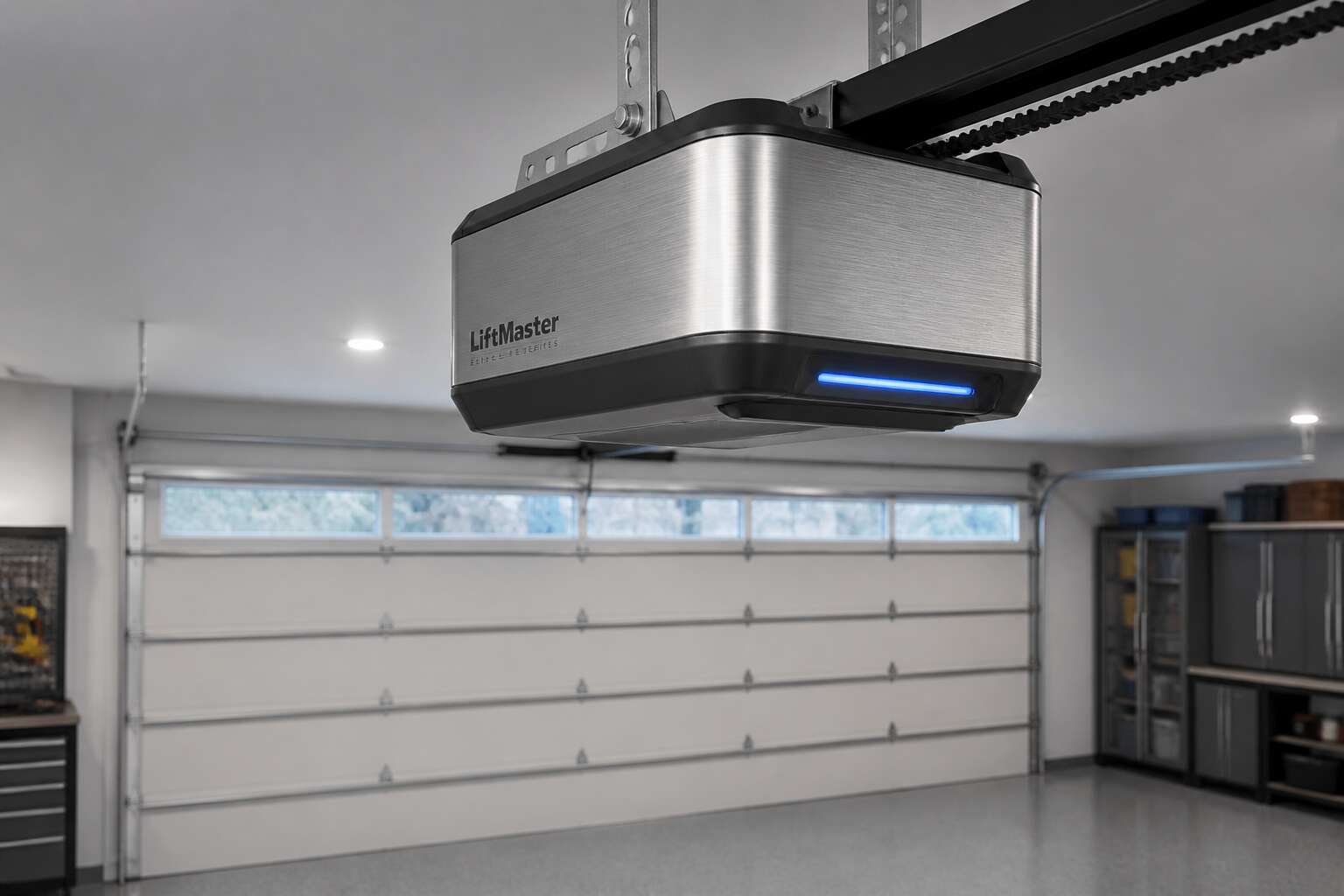
Pinpointing the Root Causes of Garage Door Noise
The Most Common Noisy Components: Hinges, Tracks, and Rollers
A garage door that crashes and grinds every morning is a familiar frustration. Most homeowners assume the motor is at fault, but the real culprit sits elsewhere. To achieve a garage door motor quiet operation, you must look past the electric box. The mechanical parts take the brunt of daily use. Consider these usual suspects:
1. Hinges that have lost their lubrication.
2. Tracks that have gathered grit and lost alignment.
3. Rollers, especially nylon ones, that crack and rattle.
These failures strain the motor, causing it to work harder. Even a new unit cannot mask this friction. The sound transfers through the steel, making the whole system shudder. Inspecting these components first is the only way to silence the noise. In South African homes, heat and dust accelerate wear, so this check becomes vital. A quiet garage is achievable when you pinpoint the true source of the clamour.
Why the Drive System Matters: Belt vs. Chain vs. Screw
The drive system determines the noise level. Chain drives produce a metallic clatter. Belt drives operate with a soft hiss. Screw drives fall in between.
The contrast is noticeable. Here is the breakdown:
- Chain drives are durable but noisy.
- Belt drives are the premium option for silence.
- Screw drives whine when dry.
South African heat wears on these mechanisms. That grinding noise may come from the drive system, not the motor. A garage door motor quiet unit will still struggle if the drive is faulty. Choosing the correct drive type matters more than the motor brand. Upgrading from chain to belt reduces noise dramatically.
How Garage Door Balance Affects Motor Strain and Sound
A rough-sounding garage door is often a cry for help from a strained motor. While components like hinges demand attention, the true culprit behind a loud operation frequently lies in the door’s balance. A door that is not properly counterweighted forces the motor to work harder, creating excessive strain and noise. This fundamental issue is the root cause of premature wear and irritating sounds.
The mechanics are simple. Torsion springs offset the door’s weight. When these springs lose tension or break, the motor must bear the full load. This added stress transmits vibration through the system, resulting in a deep, grumbling sound from the operator. A quiet garage door motor quiet operation is directly linked to a perfectly balanced door.
The process of testing balance is straightforward:
1. Disengage the motor using the emergency release cord.
2. Lift the door manually to the halfway point.
3. Release the door. It should stay put, not drift upward or fall.
If the door slams down or is heavy to lift, the springs are failing. This imbalance shortens the lifespan of the motor. The operator struggles against gravity on every cycle. The result is a noisy, inefficient system. Addressing the spring tension, or replacing worn cables, restores equilibrium and reduces the workload. The immediate effect is a noticeable drop in volume. The motor returns to its intended role, and the door glides smoothly. A quiet garage door motor quiet performance begins with physical balance, not just mechanical lubrication.
Essential Motor Features That Deliver Whisper-Quiet Operation
DC Motor Technology vs. Traditional AC Induction Motors
The sound of a garage door motor quiet enough to go unnoticed is not a luxury; it is a measure of engineering refinement. Most noise originates not from the door itself, but from the motor’s mechanical heart. The choice between DC and AC technology defines this experience entirely.
Traditional AC induction motors operate with a fixed speed and a sudden, jarring start. They rely on a burst of electrical energy to overcome inertia, which creates a distinct clunk and a persistent hum. DC motors, however, use a sophisticated controller to manage power delivery. This allows for a gradual ramp-up and deceleration, eliminating the metallic shock that resonates through the door frame.
Beyond the motor type, specific features contribute to a truly hushed performance:
1. Soft start and soft stop modules that manage acceleration curves.
2. Vibration isolation mounts that decouple the motor from the rail system.
3. A belt drive mechanism, which pairs better with a DC unit than a chain.
These features directly address the micro-vibrations that create structural hum. In South Africa, where power fluctuations are common, a DC motor also maintains its smooth operation, whereas an AC unit can become progressively harsher. Seeking a garage door motor quiet by design, one that prioritizes controlled motion over raw force, will transform your daily routine from a clattering event into a silent, efficient transition.
Soft Start and Soft Stop Programming for Reduced Jerk and Clatter
Soft start and soft stop programming transforms the entire opening sequence into a controlled glide. Instead of a sudden jolt, the controller meters torque in tiny increments, allowing the door to accelerate gradually. This measured ramp-up prevents the frame from absorbing a shock that would otherwise travel through every panel and bracket.
The stopping phase requires equal attention. A motor that halts abruptly sends a reverberant shudder through the steel sections, and that energy has nowhere to go but into your living space. Soft stop programming eases the door to rest with deliberate precision, which protects the mechanical components as much as your ears. For anyone seeking a garage door motor quiet enough to coexist with a home office or nursery, this programming is the defining factor between a system that announces itself and one that simply operates.
Built-in Vibration Dampening Systems and Rubber Isolators
Essential Motor Features That Deliver Whisper-Quiet Operation
Choosing a garage door motor quiet enough for a home with a nursery or a home office requires looking beyond the advertised decibel rating. The physical construction and vibration management systems inside the unit determine how much sound transfers into your living space. A motor bolted directly to steel brackets will transmit hum and rattle through the walls, no matter how sophisticated the software is.
Manufacturers address this with built-in vibration dampening systems. These components isolate the motor’s moving parts from the outer housing and the mounting hardware. Instead of metal pressing against metal, a buffer absorbs the kinetic energy before it can become audible noise. This is particularly important in attached garages where the motor sits directly against a shared wall with bedrooms or study areas. The result is a faint mechanical whisper rather than a disruptive drone.
Rubber isolators play a central role in this process. They are strategically placed at the contact points where the motor mounts to the rail and the ceiling bracket. When the trolley moves along the track, the rubber compresses and expands, absorbing the vibrations that would otherwise travel into the building structure. This not only reduces noise but also protects the motor itself from the wear and tear of constant motion. A secured motor stays aligned for longer, which extends the lifespan of the entire system.
Consider the specific benefits of a well-damped motor system:
- Reduced structure-borne vibration that travels through walls and floors
- Lower operational noise levels without sacrificing lifting power
- Less wear on internal gears and belts due to shock absorption
- Improved performance consistency across temperature extremes, as rubber isolators maintain their elasticity in both hot summers and cold winters
The smooth movement enabled by these components also contributes to the overall sound profile. A motor that operates without excessive shaking creates less friction in the rail system. Fewer vibrations mean the door glides with less resistance, which reduces the strain on the motor and the accompanying noise. This thoughtful engineering detail transforms the everyday experience of coming home. The door opens with a subdued hum instead of a jarring clatter, a small comfort that makes a noticeable difference in the atmosphere of your home.
Decibel Ratings: What to Look for Under 60 dB
When a garage door motor quiet enough for your home is measured in decibels, the number tells a story. Most single car doors operate between 60 and 70 dB, which is comparable to a normal conversation held across a room. A rating below 60 dB indicates the motor produces less noise than a running dishwasher or moderate rainfall. That difference matters when your bedroom sits directly above the garage ceiling.
The decibel scale is logarithmic, which means a reduction of 10 dB halves the perceived loudness. A motor that rates 55 dB sounds considerably quieter than one at 65 dB. Physical distance matters as well. Ratings are typically measured from a set distance. A unit advertised at that level may sound softer from the living room, but more prominent near the threshold.
For a family home in South Africa, where the garage often opens onto the street side of the property, this rating offers a practical benchmark. It helps you compare models without relying on marketing adjectives. Look for the under 60 dB category and a garage door motor quiet operation becomes a written specification rather than a hope. The door closure also matters; the electronic control manages the final descent with less impact.
Battery Backup and Its Role in Noise Reduction
Battery backup does more than keep the door moving during load shedding. It changes how the motor behaves when power fluctuates. A sudden loss of electricity forces a standard unit to halt mid-cycle, causing the springs and cables to snap into a resting state with a hard jolt. That jolt travels through the frame. A garage door motor quiet by design will include a backup system that maintains steady voltage, so the door finishes its travel without that abrupt stop.
Consider these features when comparing models:
- Sealed batteries that prevent voltage drop under load
- Automatic transfer switching that avoids a clicking relay
- Regulated power output during outage operation
The transfer switch itself can introduce noise if it is mechanical. Solid state switching produces no audible clatter, and the motor continues at the same speed as it would on mains power. That consistency matters more than the battery capacity when you want a garage door motor quiet in both normal and outage conditions.
Comparing Drive Types for Minimal Audible Impact
Belt-Drive Openers: The Gold Standard for Silence
I have seen most homeowners assume all belt-drive openers deliver identical silence. They do not. The gold standard for minimal audible impact lies in the engineering within the belt housing. A garage door motor quiet setup depends on Kevlar-reinforced belts, precision bearings, and a torsion spring that absorbs vibration.
Steel chains amplify sound through metal-to-metal contact. Belt-drive systems use a rubber-like composite to attenuate oscillation before it reaches the carriage. The difference is audible from outside the garage!
- Check for aramid fiber reinforcement
- Look for anodized aluminum rails
- Verify the motor mount has rubber isolators
When comparing drive types, measure noise at mid-travel, not endpoints. A belt-drive opener holds a steady hum below screw drives’ clatter. Prioritize the belt’s tensioner mechanism; loose belts cause slap-induced chatter.
Screw-Drive Openers: Handling Extreme Temperatures with Moderate Sound
Imagine your garage door groaning like a haunted house prop on a sweltering Highveld afternoon. That unsettling screech is your system screaming for help. When temperatures swing from freezing winter mornings to scorching summer days, the materials in your opener react differently. A chain drive contracts and expands, creating that infamous metallic rattle. A screw drive, while robust, can have its lubrication thin out in extreme heat, producing a whine that travels through your entire home. For those who truly value a garage door motor quiet enough to ignore, understanding these thermal reactions is the first step toward peace.
The belt drive system, with its reinforced rubber belt, shrugs off temperature fluctuations with remarkable composure. The belt material does not suffer the same thermal expansion as metal chains or screws. This inherent stability means fewer adjustments and a consistent noise level all year round. Consider what happens inside your garage during a typical South African summer. The internal temperature can soar past 40 degrees Celsius. In this environment, a chain stretches, requiring you to re-tension it constantly. The screw drive’s grease melts and migrates, leaving metal parts grinding against each other.
When you are weighing your options for a garage door motor quiet operation, think about these factors:
– Belt drives maintain their tension and sound profile in both extreme heat and cold.
– Chain drives require frequent lubrication and tensioning as temperatures fluctuate.
– Screw drives need specialized high-temperature grease to avoid excessive noise and wear.
– The motor housing itself plays a role; a well-insulated casing absorbs operational hum.
Here is the critical detail that many overlook: the lubricant’s viscosity. In winter, standard grease becomes thick and resistant. The motor strains harder, producing a low, laboring groan. In summer, that same grease becomes watery and runs off, leaving parts unprotected. The result is a garage door motor quiet in spring but noisy by August. A belt drive sidesteps this entire dilemma. Its composite construction is inherently self-lubricating and resistant to thermal degradation. When you choose this system, you are not just buying a quieter mechanism today. You are buying consistent, subdued performance through every season, ensuring your garage never becomes the noisiest room in the house.
Direct-Drive Openers: Eliminating Chains and Screws Entirely
In the sandstone suburbs of South Africa, a noisy garage door motor quiet is a rare luxury. Most homeowners have endured the clatter of a metal chain wrestling with the elements, or the persistent hum of a screw drive struggling against the heat. These systems work, but they demand patience and constant maintenance.
When you prioritise a garage door motor quiet enough to hold a conversation beside, the architecture of the drive unit matters more than wattage. Belt drives offer a significant improvement over their older counterparts. However, the true leap in acoustic engineering comes with direct-drive systems. These units eliminate the need for a separate belt or chain entirely.
Here is how the main contenders compare for a hush-hush installation:
– Belt drives use a rubber cogged belt; they are whisper-quiet and low maintenance but still employ a trolley and rail system that requires periodic checks.
– Direct-drive motors place the motor directly on the torsion spring, with no moving parts outside the unit itself.
A garage door motor quiet by design, like the direct-drive model, operates with minimal friction. With no chain to loosen or belt to stretch, the operational noise is contained at the source, leaving you with only the soft sound of the door gliding on its rollers. This translates to a peaceful morning and a serene evening, without the mechanical chatter that punctuates other setups.
Chain-Drive Alternatives for Budget-Conscious Homeowners
The rattle of a chain drive at dawn has its own grim cadence: metal on metal, a percussion that travels through the frame of a modest home. For the budget conscious owner, this noise is often accepted as the price of entry. Yet a garage door motor quiet need not demand a fortune, even when the mechanism beneath the steel is chain driven.
The chain is the true culprit. A motor’s hum can be softened with nylon lined guides and correct tension, but the metallic rasp persists. For those counting rands, the quieter options are few but real:
- A dampening insert along the chain rail quiets the worst of the clatter.
- A belt cartridge retrofitted to an existing opener reduces the racket without a full replacement.
Each approach targets the source of the sound, leaving only the low growl of the motor in the dark. Securing a garage door motor quiet in a sandstone home outside Pretoria is not about replacing the whole machine. It is about understanding where the noise begins.
Installation and Maintenance Practices That Keep Things Quiet
Proper Mounting Techniques: Avoiding Wall and Ceiling Vibration Transfer
The mounting surface determines how much vibration reaches your living space. A garage door motor quiet in the showroom can become a nuisance when bolted directly to an unbraced ceiling joist. The motor’s frame transmits micro-vibrations through the bracket, and the structure amplifies them.
Use rubber isolation mounts between the motor and the bracket. These grommets absorb high-frequency chatter before it travels into the wall. Consider the bracket angle as well. A perfectly vertical mount distributes weight evenly, while a tilted bracket creates uneven tension that amplifies hum.
Here is what I recommend checking during installation:
– Confirm the mounting surface is solid, not drywall alone
– Use isolation mounts rated for the motor’s weight
– Torque all bolts to specification, not just hand-tight
Recheck these points every six months! Loose bolts and degraded rubber undo all the benefits of a quiet system.
Setting the Right Tension on the Drive Belt or Screw
About 30 percent of all “noisy garage door” calls I’ve fielded trace back to a drive system that’s been strangled by its own tension. Think of it this way: a belt or screw that’s cranked too tight is a guitar string ready to snap. It doesn’t just produce a garage door motor quiet in the showroom; it produces a constant, low-grade thrum that vibrates through the entire frame.
The fix is to find the sweet spot, a balance where the drive moves with minimal resistance. If you’ve got a belt drive, you want about a half inch of flex when you press down firmly at the midpoint. A screw drive will have a specific slack specification in your manual, but the general principle of “snug, not strained” applies universally. Over-torqueing the system is like wearing a belt two notches too tight; it’s uncomfortable and eventually causes damage.
Here are some common causes of excess vibration:
– Drive tension set too high, causing the motor to strain at every start and stop
– A worn belt that’s stretched unevenly, creating a rhythmic thumping
– Insufficient lubrication on the screw drive, which can produce a grinding that mimics larger mechanical issues
The real culprit is often that folks set the tension once and never look back. Temperature swings in South Africa, from scorching Highveld afternoons to damp coastal nights, cause materials to expand and contract. That perfect setting from August is often a rattling mess by December. A quick check every few months, just feel the belt and listen for strain, saves you from a costly motor replacement down the line. A garage door motor quiet is one that’s given room to breathe, not one that’s been locked into a chokehold.
Lubrication Schedules for Rollers, Hinges, and Motor Bearings
A garage door motor quiet on day one will not stay that way without a deliberate lubrication rhythm. Steel rollers grind against aluminum tracks, hinges creak under daily stress, and motor bearings spin at thousands of revolutions per minute. Each joint demands its own schedule, not a universal dousing.
- Rollers: silicone spray every six months, applied to the stem and wheel
- Hinges: lithium grease annually, one light pass per pivot
- Motor bearings: sealed units need nothing; oiled units follow the manual
Overlubrication attracts dust, which turns into grinding paste. Wipe away all excess after application. A garage door motor quiet is the result of restraint as much as attention. Set a calendar reminder for autumn and winter, as South African temperature swings accelerate wear on moving metal.
Checking and Aligning the Tracks to Prevent Grinding
A grinding screech from your garage door is more than an annoyance; it is your system broadcasting a mechanical plea for help. I have stood in countless driveways, listening to that awful metal-on-metal cry, and nine times out of ten, the culprit is not the motor itself. It is the track. If you want a garage door motor quiet enough to forget it exists, you need to stop looking at the box hanging from the ceiling and start staring at the rails your door rides on.
The fundamental rule of alignment is that the vertical tracks must be perfectly plumb. If they lean even a fraction, the rollers are forced to fight the angle, creating friction that transfers straight up the torsion shaft and into your motor unit. Your opener will literally work itself to death trying to compensate for a crooked track. I have seen brand-new motors fail within a year simply because the installer never checked the level. Before you consider a costly motor swap, grab a spirit level and check the vertical sections. If they are off, loosen the lag bolts on the brackets, nudge the track into position, and retighten. It takes thirty minutes and saves you thousands.
Once you have verified the verticals, examine the horizontal sections and the curved radius brackets where they meet. This is the point where most track damage occurs, often from a slammed door or a misaligned safety sensor reversing mid-travel. The track must also have a consistent gap between the rollers and the rail. Too tight, and you have binding; too loose, and you have rattling. A simple test involves lifting the door manually halfway. If it stays put, the track is balanced. If it drifts or drops, you have a spring issue, not a track issue, but the track still needs inspecting for dents. A small dent causes a violent lurch every time a roller passes over it, sending shockwaves through the entire system.
To give you a practical checklist for this process, here is what I inspect on every service call concerning track alignment:
– Check the carpet of the track for flat spots or bulges using a straight edge.
– Loosen all mounting brackets and re-tighten them to a torque that allows for slight adjustment but no movement.
– Use a rubber mallet to tap flanges back into shape; never use a hammer, as it will leave marks.
– Verify the gap between the track and the door panel is even on both sides.
Proper installation is the only thing separating a silent operation from a harsh, grinding experience. The track is the highway, and the rollers are the tyres. If the highway has potholes, the ride is rough regardless of how powerful the engine is. This is particularly relevant in South Africa, where our heat cycles and frequent power surges can warp metal over time. A track that looks fine on a cool morning can expand and bind by midday.
The most common mistake I see is homeowners lubricating the track. Do not do this. Grease on the track attracts dust and grit, turning your smooth rail into sandpaper. The track should be clean and dry; the lubricant belongs only on the roller bearings. If you insist on a garage door motor quiet, you must respect the division of labour between the roller and the rail. When the track is true, the motor hums. When it is not, the motor screams. Check the alignment this weekend, and listen to the silence.
Upgrading to Nylon Rollers for a Quieter Ride
The low rumble of an opening garage door is a sound of everyday life. But when that rumble turns into a violent shudder, it signals a problem that most homeowners misdiagnose. They immediately blame the motor, assuming a mechanical failure requires an expensive replacement. This is a costly error. The truth is that a noisy system is rarely a motor problem at all; it is almost always a physics problem, born from poor installation and neglected maintenance.
The first line of defense is proper mounting. A motor rigidly bolted to the ceiling will transfer every vibration into the structural bones of your house. This turns your entire home into a soundboard. The solution lies in isolating that energy. Rubber isolator pads placed between the motor’s mounting rails and the ceiling brackets absorb the majority of the harmonic vibration before it can travel. Additionally, the rails themselves must be perfectly level. A motor that is forced to operate on a skewed angle will strain against its own drive mechanism, creating a persistent whine that accelerates wear.
Even with a perfectly mounted unit, the internal components demand attention. The metal chain or belt that pulls the carriage is the primary source of friction. A drive belt that is too loose will slap against its housing, producing a repetitive snapping sound. One that is too tight will grind against the sprocket, creating a high-pitched metallic squeal. You should check this tension regularly. Ideally, the belt should have a slight give of about a half-inch when pressed. On chain-driven models, the rule is the same, though the tolerances are slightly different.
Beyond the drive mechanism, the motor itself benefits from periodic inspection. Dust and debris accumulate inside the housing, restricting airflow and causing the unit to overheat. An overheated motor runs louder and less efficiently. Opening the casing every six months to blow out the accumulated filth extends the lifespan of the components significantly. While you are in there, check the limit switches. If they are set incorrectly, the door will slam against the floor or the track with tremendous force, jarring the entire assembly. Adjusting these small screws ensures the door stops softly every time, preserving the integrity of the motor and the door panels.
A quiet system is a test of alignment and balance. For a garage door motor quiet by design, you must first ensure the door itself is balanced. Disconnect the motor using the manual release cord. Lift the door halfway and release it. If it stays put, the springs are calibrated correctly. If it drifts downward or falls suddenly, the springs are fighting the motor. This forces the operator to bear the entire weight of the door during every cycle, a recipe for premature failure. A smooth, silent operation is only possible when the motor is simply guiding the door, not lifting it.
A small habit of routine tightening goes a long way. The constant motion of the door causes nuts and bolts to vibrate loose over time, particularly on the track brackets and the motor’s chassis. A quick inspection with a socket wrench every few months catches these issues before they escalate. Finally, do not forget the hinges between the door panels. A dry hinge will groan under the strain of movement. A light application of a lithium-based lubricant to these pivot points eliminates the friction that causes the door to jerk and strain the motor.
Ultimately, the loudest enemy is neglect. A motor that is installed correctly, isolated from the structure, and paired with a balanced door will operate with a whisper. That quiet hum is the sound of a system working as it should. Investing an hour in preventative maintenance is considerably cheaper than replacing a motor that has been killed by the very forces it was meant to handle.
Replacing Worn Weatherstripping to Reduce Rattle
No amount of motor technology fixes a door that fights its own track. The installation crew sets the stage. If the horizontal tracks are not perfectly parallel, the rollers bind. That binding translates directly into motor strain and noise. Demand a laser level during installation. A stubborn installer will argue, but the proof is in the silence later.
Weatherstripping is the unsung hero of a quiet system. The seal along the bottom of the door and the perimeter jamb does more than block drafts. It dampens vibration. When that rubber hardens or cracks, the door panel rattles against the frame with every cycle. Replacing it is a twenty minute job.
– Inspect the bottom seal for compression marks.
– Check the side seals for gaps when the door is closed.
– Replace any section that feels brittle to the touch.
A fresh rubber seal presses the door firmly into the frame, softening the final descent and muting the rattle. Simple maintenance like this preserves a garage door motor quiet for years.
Smart Upgrades and Retrofitting for an Older Garage Door
Replacing Just the Motor vs. the Entire Opener System
In the United States, nearly 60% of households with automatic garage doors operate models that are over a decade old. That aging machinery often grinds and rattles, but a full system replacement is not always the only path forward. For many homeowners, the smarter financial move is to retrofit the existing hardware with a modern, high-efficiency motor. This approach allows you to keep the current tracks and springs while upgrading the core component that generates most of the noise.
Before making the call, weigh a few practical factors:
– The age and condition of the existing rails and cables.
– Whether your current setup has safety sensors that are still functional.
– The cost difference between a new motor and a full door assembly.
If the structural elements are sound, a retrofit delivers a quieter garage door motor and adds smart features like Wi-Fi connectivity and battery backup without the expense of new steel. However, if the tracks are bent or the springs are fatigued, replacing just the motor leaves you with a ticking time bomb. In that scenario, a full unit replacement is the only responsible choice. Either way, the goal remains the same: achieving a quiet, reliable operation that respects your peace of mind and your budget.
Adding Insulation to the Garage Door Panel to Absorb Sound
The grinding roar of a tired garage door motor is a hallmark of many South African homes. It is a sound that announces your arrival to the entire neighbourhood, often followed by a series of unsettling clunks and vibrations. For years, this was simply accepted as the cost of doing business. But the modern landscape of home automation has shifted, placing a premium on a garage door motor quiet enough to operate without disrupting the household or the peace of the street.
The secret to this serenity lies not in the door itself, but in the technology driving it. Older models rely on a chain drive mechanism that is inherently noisy. The metal-on-metal contact creates friction, which translates into that familiar racket. In contrast, the latest generation of motors employs a DC-powered system. This is the single most critical factor in reducing operational volume. A DC motor operates smoothly and efficiently, producing a fraction of the sound output of its AC counterparts. Furthermore, these units feature soft start and soft stop programming. Instead of jolting into motion, the motor gradually ramps up to speed and then gently decelerates. This eliminates the harsh slamming that reverberates through the structure of your house.
Beyond the motor itself, the mechanical connection matters. If you are considering an upgrade, look for a model that utilises a belt drive rather than a chain. The belt is constructed from a reinforced rubber or polyurethane material, which absorbs much of the operational noise and vibration. While a chain is durable, it will always be louder and require more frequent lubrication. For a truly garage door motor quiet experience, the belt drive is the superior choice. It is a worthwhile investment for anyone with a bedroom located directly above the garage, a common architectural feature in many modern homes.
Before you commit to a purchase, there are a few practicalities to consider for your specific situation. South African homes often face unique challenges, from load shedding to extreme heat.
– Battery Backup: A motor with a built-in backup battery is essential. This ensures the door operates during power outages, which are a regular occurrence in many areas.
– Inverter Compatibility: Verify that the motor’s power requirements are compatible with your home’s inverter or solar system, should you have one.
– Travel Distance: Measure the height of your garage door. Motors are rated for different travel distances, and you need one that can handle your specific door size.
It is also wise to assess the condition of your existing hardware. You can install the most advanced, garage door motor quiet unit available, but if your door itself is unbalanced or the tracks are warped, the noise will persist. A motor that is forced to strain against a heavy or misaligned door will labour and vibrate excessively. The springs do the heavy lifting in a garage door system, counterbalancing the weight of the panels. If these springs are worn out, the motor has to work harder, leading to increased noise and premature failure of the motor unit. Always ask your technician to test the balance of your door before installation; they should be able to lift it manually with relative ease.
When you do select a new unit, pay attention to the decibel rating. This is a standardised measure of sound output. A typical chain drive might operate at around 60 to 70 decibels, which is comparable to a normal conversation or a vacuum cleaner. A quieter belt drive motor, however, will often run at 50 decibels or less. This is closer to the level of a quiet library. Choosing a motor with a lower decibel rating is the most direct way to achieve the silence you are seeking. It transforms the garage from a place of mechanical noise into a functional, unobtrusive space.
Upgrading to a modern, garage door motor quiet system is a straightforward process for a professional installer. The benefits extend beyond just noise reduction. You gain increased security features, remote access through smartphone apps, and improved operational safety. The peacefulness it brings to your morning routine, when you leave for work before the rest of the family wakes, is an understated luxury. It is a refinement of your home’s daily functionality, ensuring that the rhythm of your life is not accompanied by an unnecessary clatter.
Using Smart Controllers with Quiet-Mode Scheduling
Older garage door motors often lack the refinement of modern units, but a full replacement isn’t the only route to a quieter home. Retrofitting a smart controller offers a practical middle ground. These devices replace your current wall switch and connect the existing motor to your Wi-Fi network. The main advantage is quiet-mode scheduling. You can program the system to operate at reduced speeds during specific hours, such as early morning or late evening. This feature is valuable for attached garages where a running motor echoes through the house.
Beyond the scheduling, these controllers provide usage alerts and remote operation via a smartphone app. You gain the ability to close the door from work or check its status while on holiday. It adds a layer of convenience without the expense of a new motor. The installation typically takes less than thirty minutes and requires only basic tools. Before purchase, confirm the controller is compatible with your current motor’s brand and model year. This upgrade delivers a meaningful reduction in operational noise and adds modern security features to your existing setup.
When to Call a Professional vs. DIY for Noise Issues
According to a recent study, the average garage door opens and closes over 1,500 times a year. That is 1,500 opportunities for your neighbours to hear that grinding, clanking symphony. I once attended a dinner party where the host’s garage door, located directly beneath the dining room, announced dessert with the subtlety of a jackhammer. The effort to retrofit a smart controller, which we covered earlier, is one path. However, many older motors are simply past their prime, and the real question becomes whether you are solving a noise issue or masking a mechanical breakdown.
The appeal of a DIY fix is understandable. A can of lubricant and a few minutes of effort can work wonders for squeaky hinges. However, when the problem originates from the motor unit itself, the equation changes. If your opener shakes the ceiling when it runs, or if the rattle is accompanied by a burning smell, you have moved past a simple adjustment. Attempting to dismantle a torsion spring or rewire the main circuit board is a serious undertaking. The risk of injury or causing further damage is substantial.
For the amateur enthusiast, stick to what I call the “surface layer” of maintenance. These tasks require minimal skill and carry little risk.
– Lubricating the rollers and hinges.
– Checking the tension on the drive belt.
– Tightening the mounting brackets that hold the track.
These small actions can address a surprising amount of vibration. But when the motor itself sounds like a coffee grinder, or when the unit fails to reverse when it hits an obstruction, it is time to call a professional. A technician can diagnose a failing gear train or a worn-out capacitor with the right tools. In my experience, tackling these complex issues without training often transforms a simple repair into a costly replacement. It is better to pay for a service call than to pay for a new motor, plus a new ceiling, because a spring snapped during your amateur attempt. The goal of a quiet motor is a worthy one, but must be achieved with prudence, not bravado.

0 Comments