
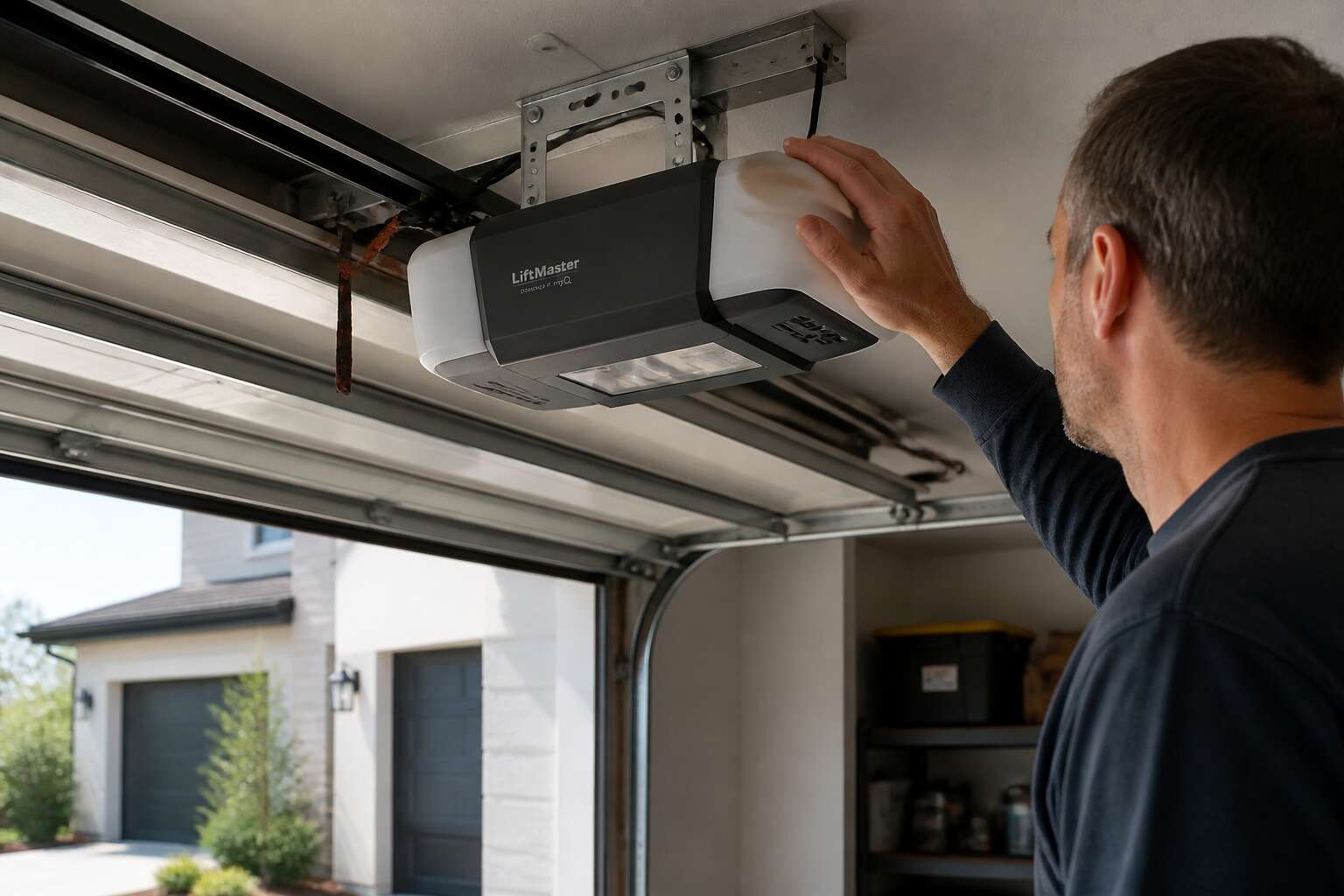
Key Warning Signs of a Failing Garage Door Motor
Unusual Noises and Vibrations
The quiet suburbs of Johannesburg and Cape Town have a secret soundtrack, and it is often the pained groan of a residential garage. When the morning ritual becomes a theatrical performance of grinding metal and shuddering panels, your motor is not merely complaining; it is providing a detailed diagnosis. A healthy unit operates with a low, affirming hum, while a failing one announces its distress with a repertoire of concerning sounds. If you hear a sudden, sharp bang, like a hammer striking concrete, you may be dealing with a snapped torsion spring, a problem that places immense strain on the motor itself. These sounds should prompt you to consider when to replace garage door motor.
Vibrations are the physical manifestation of internal chaos. When the entire door frame begins to shake during operation, the motor is fighting a losing battle against mechanical resistance. This juddering can often be attributed to:
– Worn gears stripping their teeth
– A frayed or misaligned drive chain
– Loose mounting brackets that have rattled free over years of service
As these components degrade, the motor works harder to compensate for the lost efficiency, accelerating its own demise. This is a crucial juncture for deciding the right time for an upgrade.
Beyond the literal grinding to a halt, there is a more insidious sign: the occasional, hesitant stop and start. If the door creeps upward a few centimeters, pauses as if contemplating its mortality, and then continues, the motor is suffering from a loss of torque. Treating these warning signals with polite indifference will eventually lead to a full paralysis, locking your vehicle inside without mercy. At this level of distress, the line between a repair and a replacement has been effectively crossed. That is precisely the moment you stop asking for repair quotes and start seriously evaluating when to replace garage door motor options.
Inconsistent or Slow Operation
Most garage door motors operate on a timer. When that internal clock starts to slow, you notice it immediately. A door that once took ten seconds to open might now drag out the process for nearly half a minute. This delay is not an aesthetic issue. It is a direct measurement of the motor’s declining health.
This sluggish behaviour often stems from failing capacitors, the electrical components that provide the initial surge of power. As they degrade, the motor loses its starting torque. The door will eventually refuse to move altogether. The cost of replacing a capacitor is minimal. The cost of a new motor is significant. Knowing the difference matters when you ask the question of when to replace garage door motor.
Inconsistent stopping is another warning. The door should reverse smoothly when it hits an obstacle. If it stutters, hesitates, or stops mid-cycle without reason, the logic board is failing. This board is the brain of the unit. When it malfunctions, you lose safety features and reliable operation. These symptoms point to the exact moment when to replace garage door motor.
– Failing logic boards cause unpredictable stopping.
– Worn capacitors reduce lifting speed.
– Corroded wiring leads to intermittent power loss.
South African conditions add a unique pressure. Load-shedding cycles cause power surges and drops that stress motor components. A motor that survives these conditions for years might suddenly give up. The erratic operation becomes a daily frustration and a safety hazard. Once the door stops behaving predictably, the unit has entered its final phase. This is when the decision to replace becomes unavoidable.
Frequent Overheating or Shutdowns
Your door motor is not designed to run hot. In South Africa, a brief period of use should leave the casing barely warm to the touch. If the metal becomes scorching after a single open and close cycle, the unit is labouring. Excessive heat accelerates the degradation of insulation in the windings. This leads to the unit tripping its thermal overload protector.
The motor will then refuse to operate for up to thirty minutes. You might notice a distinct electrical smell. The protection mechanism is intended to prevent a house fire, but it signifies the unit is past its prime.
– The motor shuts down entirely and requires a long cool-down period.
– The casing feels excessively hot after minimal use.
– A burning odour emits from the motor head.
These shutdowns are an early indication that you are approaching the point of when to replace garage door motor. A healthy machine performs its duty without protest. A dying one is desperate for rest. Ignoring the heat is expensive. When the thermal switch fails, the motor will burn out completely, and the resulting silence will dictate a new installation.
Remote and Wall Switch Malfunctions
The remote ages in stages. Some days it answers from the roadside; others insist you stand directly under the motor unit. South African humidity and fine engine dust degrade the transmitter contacts. A fresh battery brings no recovery when the receiver board ignores the signal.
The wall switch follows an identical timeline. Press the wall unit and the motor hesitates, making you tap twice. Each week the delay stretches further.
- The transmitter range contracts steadily.
- The wall switch requires a second press.
- The remote only responds from one fixed spot.
Adapting your routine around the hardware becomes habit. That creeping friction tells you when to replace garage door motor is near!
Excessive Energy Consumption
Your garage door motor is the unsung workhorse of your home. It lifts hundreds of kilograms several times a day, often for years without complaint. But like any hardworking machine, it eventually tires. While some issues are obvious, like the grinding noises or stalled movements we covered earlier, others are quieter and far more insidious. The most common sign that indicates when to replace garage door motor is a noticeable spike in your electricity bill, not because you are opening the door more often, but because the unit is labouring to perform a task it used to handle with ease.
Older motors, particularly those with chain drives, draw significant power. Yet, a failing motor experiences increased electrical resistance. This resistance converts electricity directly into wasted heat, which is why a struggling motor often feels hot to the touch. The math is simple: a motor nearing the end of its life can consume up to 30% more power than a new, efficient model. That is not a rounding error on your monthly statement; it is a steady drain of your hard-earned rands.
You might think a quick fix like lubricating the tracks or replacing the springs will reduce the load, but the problem lies within the motor’s internal windings and gears. Because the unit cannot dissipate heat effectively anymore, it runs hotter for longer periods. This thermal stress degrades the insulation on the wiring, creating a vicious cycle of inefficiency. If your system is older than fifteen years, the technology is likely obsolete. Newer motors utilise DC motors and standby modes that use a fraction of the power.
Signs your motor is becoming an energy vampire:
– Persistent warmth: The motor housing feels warm or hot to the touch after a single cycle.
– Dimming lights: The lights in your garage or home visibly flicker or dim when the door is in motion.
– Longer run times: The door takes noticeably longer to open fully, indicating the motor is struggling.
If you notice these symptoms, the question of when to replace garage door motor becomes a financial one. Paying a premium in electricity for a machine that could fail catastrophically at any moment is not prudent. While a repair technician might tighten a belt or replace a capacitor, they cannot reverse the wear on the motor’s core. You are simply delaying the inevitable and paying for the luxury of an inefficient interim period.
Investing in a new motor, specifically one with a brushless DC motor, resolves these issues instantly. It runs cooler, operates faster, and uses standby power measured in milliwatts rather than watts. Seeing a lower electricity bill after the installation is the clearest indicator that your decision to replace the unit was the correct one. The relief of knowing your system is efficient is substantial, but it is only one part of the ownership experience. The physical wear and tear on the mechanical parts, such as the springs and cables, is a separate beast entirely, and it is the next piece of the puzzle we will tackle.
Assessing the Age and Lifespan of Your Garage Door Motor
Average Lifespan of a Garage Door Opener
The average garage door opener is engineered for 10,000 to 15,000 operational cycles, which often translates to roughly 10 to 15 years of standard household use. However, this timeframe is not a guarantee. A motor’s actual longevity hinges on factors like usage frequency, climate extremes, and maintenance history. In South Africa, where load shedding and voltage fluctuations are common, the electrical stress can prematurely age a motor, often shortening its effective life to under a decade萬元.
Even if the motor still sparks to life, age directly correlates with efficiency degradation. A unit approaching the end of its operational life typically sees its internal gears wear down and its capacitor lose charge capacity. This physical decline mirrors the progression of technology as well. Older models lack the soft start features and belt drive systems of modern units, making them harsher on the door mechanics.
The question of when to replace garage door motor becomes less about a specific failure and more about the cost of continued usage. Consider the common progression of age related wear:
– The motor’s thermal overload protection trips more frequently.
– The travel limits become uncalibrated, requiring constant adjustment.
– The unit lacks safety sensors or rolling code technology.
Recognizing that a unit has surpassed its expected service life allows you to plan for the inevitable. Waiting for a complete breakdown often leads to emergency callout fees and potential damage to the door springs and tracks. A proactive approach, based on the age of the system, allows for a controlled transition rather than a reactive one. Ultimately, if your unit has been active for over a decade, you are operating on borrowed time, and evaluating the when to replace garage door motor timeline becomes a matter of financial prudence.
Technology Obsolescence and Smart Compatibility
Assessing the Age and Lifespan of Your Garage Door Motor
Determining when to replace garage door motor units often begins with a simple calculation: how long has it been working? Most quality motors are designed for roughly 10,000 to 15,000 open and close cycles. If you use your door twice a day, that translates to a decade or more of reliable service. In South African homes, the reality of load shedding changes this equation though. Frequent power surges and abrupt outages place unique strain on the electrical components, which can shorten that expected lifespan considerably.
A motor older than twelve years is operating on borrowed time. While the mechanism might still function, the internal parts are likely worn. Rather than waiting for a dramatic failure, look for specific age-related indicators. These often signal that the end is near:
– The motor runs but the door moves with a visible shudder.
– You hear grinding sounds that were absent a year ago.
– The unit requires multiple presses of the remote to respond.
If these symptoms appear in an older model, the cost of repairs often rivals the price of a new installation. In that scenario, the question of when to replace garage door motor parts becomes more about economics than functionality.
Technology Obsolescence and Smart Compatibility
Age affects more than just the physical gears and belts. The technology inside older motors becomes outdated, creating a security gap on your property. Many units manufactured before 2010 use fixed code technology. This means the same code is transmitted every time you press the remote, making it remarkably easy for tech-savvy intruders to capture and replay that signal.
Modern smart openers use rolling code technology, which changes the digital code every single use. If you have recently upgraded your home to a smart system, you might find that your current motor is incompatible. The inability to connect to your home Wi-Fi network, receive smartphone alerts, or integrate with virtual assistants clearly signals that you need an upgrade. When you find yourself relying on a separate adapter just to connect an outdated unit, you have your answer regarding when to replace garage door motor technology. The convenience and security of modern features simply outweigh the cost of keeping an obsolete machine running.
Cumulative Usage and Duty Cycle
Garage door motors rarely die without warning, but the timing of that warning often depends on how hard the unit works. A motor installed in a single residential property with two openings per day operates under a completely different strain than one in a home with a busy family, a rental cottage, or a home business. This cumulative usage, often called the duty cycle, becomes a critical determinant for when to replace garage door motor units. The mechanism may still function at ten years, but the internal thermal protection and gears are degrading with every extra cycle.
– A motor running more than ten cycles per day reduces its effective lifespan by nearly half.
– Units operating with a chain drive in high-usage homes wear faster than belt drives.
– Repeated interruptions during load shedding, where the motor stops mid-cycle, add strain to the capacitor and circuit board.
Counting cycles is impractical for most homeowners, but the physical evidence of heavy use is not. Open the door and observe the travel speed. A motor that once moved the door in twelve seconds but now takes eighteen seconds is losing torque. That slowing is the duty cycle catching up with the machine. Similarly, the motor may start to hesitate at the top or bottom of the travel, a sign that the limit switches are wearing under repeated adjustments. The toll is cumulative, and it compounds. When the question becomes when to replace garage door motor components versus the entire unit, consider that replacing a worn gear set on a high-cycle motor often costs half the price of a new opener. For a unit that continues to face daily heavy use, the new parts will fail in the same accelerated timeframe.
Comparing Repair Costs vs. Replacement Value
Age is a primary factor in deciding when to replace garage door motor units. Most operators are designed to function effectively for a decade or more, but this estimate depends heavily on build quality and maintenance history. A motor that has served for fifteen years, even if it still runs, operates with outdated technology and worn internal components. The risk of sudden failure increases significantly past the ten year mark, often leaving homeowners with a non functional door at the most inconvenient times.
You can assess the lifespan of your specific system by looking at a few key indicators. First, check the unit identification sticker for a manufacture date. This is the most reliable way to determine the true age, as opposed to the age of your home. Second, listen for the general quality of operation. A motor that has become noticeably louder, with more vibration and harsh engagement sounds, is showing its age. These signs indicate that metal gears and bearings are wearing out. Third, consider the type of drive system. A chain drive unit that is older will often require more frequent lubrication and adjustments to keep running smoothly.
When evaluating the current state of your system, look for these practical signs that a replacement is warranted:
- Visible rust or corrosion on the motor housing or the steel rail.
- Cracked or brittle plastic gears, which can sometimes be seen through the housing vent.
- Excessive play or slack in the drive chain or belt when the door is stationary.
- Frequent need for limit switch adjustments to get the door to close fully.
While the age of the unit is a starting point, the physical condition is just as important. A well maintained ten year old motor might be in better shape than a five year old unit that has been neglected. However, spending significant money on repairs for a motor older than twelve years is rarely a sound investment. The cost of new gears, a new circuit board, or a new motor assembly can approach half the price of a completely new system. At that point, the financial logic shifts strongly toward replacement. The consideration of when to replace garage door motor units ultimately becomes a balance between the unit&39;s chronological age and the cost of keeping it alive.
Safety Concerns That Demand Immediate Replacement
Lack of Safety Sensors or Photo-Eye Failure
A reversing garage door can exert enough force to injure a child permanently. When photo-eye sensors are missing or broken, the door will not stop on contact. That is an emergency!
I have seen South African homeowners delay repairs because a motor replacement seems too costly. Yet when to replace garage door motor becomes clear once the door fails to reverse. The motor may run, but it no longer provides a safe barrier.
Watch for these signs of sensor trouble.
- Door closes on objects without reversing.
- Photo-eye LEDs flicker or stay dark.
- Door reverses without a clear reason.
If any of these occur, do not wait! A new motor costs less than hospital bills. Replacing it restores safety.
Reversal Mechanism Not Working Properly
The quiet hum of a motor turning is a promise of protection, but a garage door that refuses to reverse is a lie waiting to be uncovered. When the reversal mechanism fails, the door becomes a blunt instrument, indifferent to what stands in its path. The force it exerts is not a gentle persuasion; it is a crushing verdict. I have seen motors in Johannesburg and Cape Town that run with a flawless, deceptive rhythm, yet their internal gears ignore the natural law of resistance. The safety mechanism is the only thing between your family and a serious injury, and when it fails, the calculation of when to replace garage door motor changes from a matter of cost to a matter of consequence.
A functioning motor reverses on contact, halting its descent like a startled animal. A compromised one presses onward, seeking to complete its cycle regardless of the obstruction beneath it. This is not a malfunction to observe from a distance. It is a silent breakdown of trust.
– The door touches an object and continues to press down instead of springing back.
– The motor strains audibly when the door meets the floor, indicating the auto-reverse is not engaging early.
– The gap between the door and the ground is uneven when closed, suggesting the force limits are miscalibrated.
These symptoms point to a motor that has lost its instinct for survival. You might test the system yourself with a small block of wood, but the results will confirm what you already suspect. The internal limit switches and force sensors are worn, and no amount of adjustment will restore their vigilance. The decision of when to replace garage door motor becomes stark when you realise the door no longer respects the boundary between a space and a solid object. It is not an expense you weigh against convenience; it is a reckoning you face because the alternative is a heavy door that answers to no one.
Manual Release Cable Issues
The manual release cable is the last line of defense when the power goes out or the motor fails. It is a red cord that hangs from the trolley, and pulling it disengages the carriage from the chain. This allows you to operate the heavy door by hand. In theory, it is a simple emergency feature. In practice, it can become a hidden hazard.
I see two distinct failure modes here. The first is the cable snapping. These cables are steel, but they can fray and corrode over time, especially in humid coastal areas. The second is the lever mechanism inside the trolley becoming stiff or corroded. If you pull the cord and the mechanism does not fully disengage, the door can suddenly slam down with full force while you are standing underneath it.
You should never ignore a release cord that feels gritty, pulls with resistance, or fails to re-engage smoothly when you push the button. A broken release cable means you are trapped in a garage during an outage, or worse, you are trying to lift a door that decides to drop at the worst possible moment. A door weighing 150 kilograms is a crushing weight. This is not about convenience anymore.
If the manual release fails and the motor unit starts to make loud snapping or ratcheting noises when you bypass it, the internal gears are likely shredding. Replacing the battery in the wall remote will not fix this. This mechanical failure is a primary indicator for when to replace garage door motor assemblies, rather than attempting a repair on a compromised emergency system.
Consider these warning signals during your monthly test:
– The cord pulls hard but the door does not move freely.
– The spring on the release mechanism feels broken or is missing.
– The door engages and disengages intermittently, never fully locking into place.
If these tests fail, the safety of the entire unit is compromised. I recommend you do not attempt to lubricate the internal release mechanism. It is a precision part. The decisive factor for when to replace garage door motor units is often this specific failure point, because a malfunction here directly endangers the person operating the door.
Visible Electrical Damage or Frayed Wiring
Picture this: you step into your garage and catch a whiff of ozone, that sharp, metallic scent of electrical discharge. Or perhaps you spot a dark scorch mark near the motor housing. This is not a matter of routine maintenance. This is the moment when to replace garage door motor becomes a non-negotiable decision.
Frayed wiring is the silent saboteur of your system. The protective insulation on those thin copper strands can crack and peel away after years of heat exposure and vibration. Once bare wire touches metal framing, you have a live electrical hazard. In a country where we experience frequent power surges and load shedding, the risk of a short circuit is amplified. A spark here can easily ignite accumulated dust or oil residue.
The physical indicators are usually unambiguous. You might notice the power cord feels brittle to the touch. The outer sheathing might show white cracks or blackened sections. If you see any exposed copper, do not wrap it in electrical tape. That is a temporary fix for a permanent problem. The motor unit itself may also show signs of internal arcing, such as small burn holes on the casing. These defects are not cosmetic flaws.
When the wiring is compromised, the entire electrical architecture becomes unstable. Your safety sensors could receive erratic power, causing the door to reverse unpredictably. Worse, the motor could fail to stop when encountering an obstacle. The logic board, a sensitive component, is often the first casualty of power fluctuations. Replacing a frayed wire on an old motor is like putting a new tyre on a car with a seized engine.
– Look for any discolouration, melting, or bubbling on the power cord or terminal block.
– Check the point where the wires enter the motor housing for any visible gaps or worn insulation.
– Smell the unit. A distinct burning smell, even without visible smoke, indicates overheated components.
Electrical damage demands a decisive response. Unlike mechanical wear which gives you warning, electrical faults are unpredictable and instant. You cannot plan for the exact second a short circuit occurs. That moment of uncertainty is precisely why this condition dictates when to replace garage door motor. An older motor with compromised wiring is a liability. The internal components are no longer sealed against moisture or pests, making a safe repair almost impossible. This is a clear, unequivocal sign to invest in a new unit for the safety of your household.
Performance Issues That Disrupt Daily Convenience
Frequent Need for Manual Override
A garage door that disrupts your morning routine is more than an annoyance; it becomes a daily negotiation with your own schedule. When the motor hesitates, refuses to respond, or leaves you stranded in the driveway, the convenience you once took for granted evaporates. You might find yourself planning your day around the door’s mood, a frustrating reality that signals a deeper mechanical failure.
The frequent need for manual override is a telling symptom. If you are constantly pulling the release cord to lift the heavy panel yourself, you are compensating for a motor that has lost its strength. This is not a minor quirk; it is a clear sign of a failing system. Each time you manually operate the door, you are placing unnecessary strain on the springs and cables, which are not designed for frequent hand operation.
When daily convenience is replaced by physical effort and guesswork, the question of when to replace garage door motor becomes less about cost and more about restoring quality of life. A driver that cannot complete its job reliably has outlived its usefulness. At this point, you are no longer performing a simple repair; you are managing a piece of equipment that has become the weakest link in your home’s security and accessibility.
Failure to Open or Close Completely
The silent, half-hearted groan of a motor straining against a stubborn panel can define your evenings. You press the button, watch the door rise six inches, and then it halts. It is a mechanical stutter that leaves your home exposed and your patience frayed. This incomplete operation is not merely an inconvenience; it is a symptom of a motor losing its resolution to finish the task.
When the door reverses without warning or refuses to close flush to the ground, the safety implications compound. A gap at the base is an open invitation to pests and a hazard for children or pets. This unreliability often stems from a worn gear train or a failing circuit board, components that are expensive to repair in isolation. The motor has lost its integrity.
– The door stalls at random heights, making departure or entry a guessing game.
– The panel slams down with force, indicating a broken balance, not a motor fault.
– The unit hums but the trolley does not move, a sign of internal gear failure.
Each failed cycle adds stress to the torsion springs and cables. Continuing to operate a system that stops mid-travel accelerates wear on every connected part. The decisive question of when to replace garage door motor becomes clearer when you tally the cost of emergency callouts against a new unit. A door that refuses to complete its journey turns your home into a theatre of uncertainty, and the only permanent cure is a fresh motor with the strength to see the job through.
Erratic Code or Keypad Disruptions
The most telling sign that your opener’s internal electronics are failing is unpredictable performance. When you press the remote and the motor hesitates, or when the keypad only works from a specific angle, the unit’s receiver board is degrading. These intermittent glitches are more than a minor annoyance; they erode the security of your entire property. If you find yourself walking closer to the door just to get a signal, the system is already unreliable.
Performance issues manifest in several distinct ways. The motor may run but the door moves in jerky, uneven increments. Alternatively, the unit might ignore commands entirely for several minutes before suddenly responding. This erratic behaviour often stems from failing capacitors or corroded solder joints on the main circuit board.
– The remote range shrinks drastically, requiring you to stand mere metres from the door.
– The wall switch becomes unresponsive, needing multiple presses to activate.
– The motor hums but the trolley does not engage, suggesting a stripped gear.
– The unit randomly reverses direction for no apparent reason.
While some homeowners attempt to replace the circuit board or gear kit, these parts often cost nearly as much as a brand-new motor. More importantly, the labour involved in disassembling the rail and recalibrating the limits is substantial. When the motor starts reacting slowly to keypad inputs or loses its memory settings, the core logic board is failing. This is the precise moment when to replace garage door motor becomes the most practical decision. The savings from another repair are minimal when the unit’s brain is compromised. A new motor offers consistent, immediate response and integrates modern safety protocols, ensuring your daily routine is never again held hostage by faulty electronics.
Battery Backup Failure and Power Outage Issues
Battery backup failure reveals itself at the least convenient moment. In South Africa, extended power interruptions are a regular occurrence. When the grid drops, a healthy opener switches to battery mode silently. A degraded battery leaves you stranded with a dead weight of steel above your vehicle. The motor may chirp, then give up entirely. That moment creates a decision point: when to replace garage door motor becomes a practical question.
Power surge recovery deserves equal attention. After load shedding restores, some openers refuse to acknowledge the wall station. The logic board needs a clean power source. If the backup battery lacks capacity, the unit resets itself repeatedly, forgetting limits mid-cycle.
The clearest indicators include the following:
- The backup battery holds charge for only one or two cycles.
- The motor runs at half speed during battery mode.
- A power spike leaves the opener unresponsive for hours.
A new motor resolves these daily disruptions. Full compatibility with modern battery systems restores both security and convenience.
Hidden Factors That Shorten Motor Life and When to Act
Extreme Weather Conditions and Temperature Effects
The South African sky, a merciless blue in summer and a steel-grey shroud in winter, holds a secret vendetta against your garage door motor. The hidden foe is not the obvious wear of gears, but the insidious creep of thermal shock. When the Highveld sun bakes the metal track to a searing touch, then a sudden thunderstorm plunges the temperature, the motor’s internal components contract and expand. This constant cycle of thermal stress loosens electrical connections and fatigues the circuit board, a silent death knell that has nothing to do with daily cycles.
Beneath the surface, humidity from coastal air acts as a catalyst for corrosion, turning pristine wiring into brittle, green-tinged relics. This is where the answer to when to replace a garage door motor becomes less about count and more about condition.
You might notice subtle signs of this internal decay, a slow, agonizing failure that mimics other symptoms:
– The motor struggles more under a cold morning’s viscosity.
– An intermittent hum that sounds like a haunted lament, but goes nowhere.
– The unit has survived for over fifteen years, a veteran of many seasons.
Do not wait for the final, smoking silence. When these environmental skirmishes become a daily battle, the motor’s spirit is already broken. The cost of new logic boards and rewiring often eclipses the price of a modern, insulated motor built for these very extremes, making replacement the only rational escape.
Poor Maintenance Habits and Spring Tension
It is easy to blame a motor for failing after years of service, but the true culprit is often the negligence that preceded its death rattle. For example, a garage door is the largest moving object in a home. When its springs lose tension, the motor must hoist that entire weight alone. This is the hidden factor that shortens motor life more than any other. A motor designed to lift 120 kilograms is suddenly contending with 180 kilograms of dead weight, and it draws excessive current to compensate.
Poor maintenance habits compound this strain. Owners who never lubricate the tracks or replace worn rollers force the motor to fight friction on top of gravity. The results are predictable.
– The motor runs hotter and trips internal thermal overload.
– Gears strip because they are not designed for sustained, high-torque grinding.
– The travel limits drift, causing the door to slam or stop prematurely.
The most insidious habit is ignoring spring balance. You can test this by pulling the manual release handle. A properly balanced door should stay put at any height. If it crashes down or flies upward, the springs are failing. That puts a brutal, corrosive load on the motor with no visible sign of trouble. By the time you hear the motor straining, the damage to the gear train is already done.
A professional can retension springs in minutes at a modest cost. However, most homeowners only call a technician when the motor is already smoking. That is the point where knowing when to replace garage door motor becomes a safety issue. A compromised motor cannot handle the next power surge or cold snap. You can bandage it with new capacitors, but the internal gears have been ground into dust. The decision to replace is not about the motor’s age. It is about the cumulative punishment it has absorbed from neglected springs, and that punishment is final.
Voltage Fluctuations and Surge Damage
Voltage fluctuations and power surges are silent assassins in the South African electrical grid. While load-shedding schedules are planned, the actual switching back on is rarely smooth. This creates a chaotic environment for your garage door motor. One moment it is dead, the next it is slammed with a spike that stresses the delicate circuit board. Over time, these surges degrade the capacitors and transformer, components that are costly to replace and often back-ordered for weeks.
The damage is cumulative. A single surge might not kill the unit, but repeated exposure will. You might notice the motor running for a second then stopping, or the remote working intermittently. These are not ghost issues. They are the physical results of electronic stress.
Consider these surge-related signs that point toward a terminal diagnosis:
– The motor hums but the door refuses to move immediately after a power cut.
– The wall switch on the garage wall fails to respond, but the remote sometimes works.
– The unit has a burning electrical smell that is distinct from a hot motor.
When these events occur, the decision on when to replace garage door motor units becomes urgent. Protecting the investment with a surge arrestor is essential, but it is often too late if the damage is already internal. If the circuit board fails, the repair cost approaches half the price of a new unit. At that point, replacement offers superior reliability and modern safety features. Do not wait for the magic smoke to escape. That smell is the final signal that the electronic brain is gone, and no amount of resetting will bring it back.
Aftermarket Add-Ons Causing Power Drain
When load-shedding strikes, your garage door motor endures the harshest conditions. The erratic power supply, with its sudden cuts and surges, directly attacks the most fragile components inside the unit. The circuit board is usually the first casualty, suffering from the constant electrical stress. A single severe spike can fry the capacitors or the logic board entirely, leaving the motor unresponsive even when the power returns.
This is the pivotal moment for decision-making.
When the internal electronics fail, the cost of repair often approaches half the price of a brand-new unit. If your motor is older than seven years, paying for substantial repairs is usually a poor investment. A new model will offer better efficiency and modern safety features, and it will come with a fresh warranty. Conversely, if the unit is relatively young and the damage is minor, such as a single capacitor, a repair is the more sensible route. However, you must consider the availability of parts; for many imported brands, specific boards can be back-ordered for weeks, leaving you stranded.
To determine the exact right time to act, look for these decisive factors:
– The repair estimate exceeds 50% of the replacement cost.
– The circuit board is fried, and the motor is over five years old.
– Replacement parts are unavailable locally and require lengthy shipping times.
– The motor has already been repaired once for electrical issues.
Delaying the inevitable only creates further risk. A failing motor can leave your car trapped inside during a power outage, which is a significant security and convenience issue. Furthermore, a motor struggling with compromised electronics can draw inconsistent power, potentially damaging your garage door springs and hardware due to erratic movement.
Once the board is gone, the motor itself often follows. Rather than throwing money into a unit with a failing brain, replacing the entire motor restores reliability. The safety of your household is the final deciding factor. An old, damaged motor may fail to reverse when the door meets an obstruction, posing a serious risk to children and pets. If the diagnosis points to major electrical failure, the correct time to replace is immediately. Do not wait for a second failure to leave you locked out.
0 Comments