
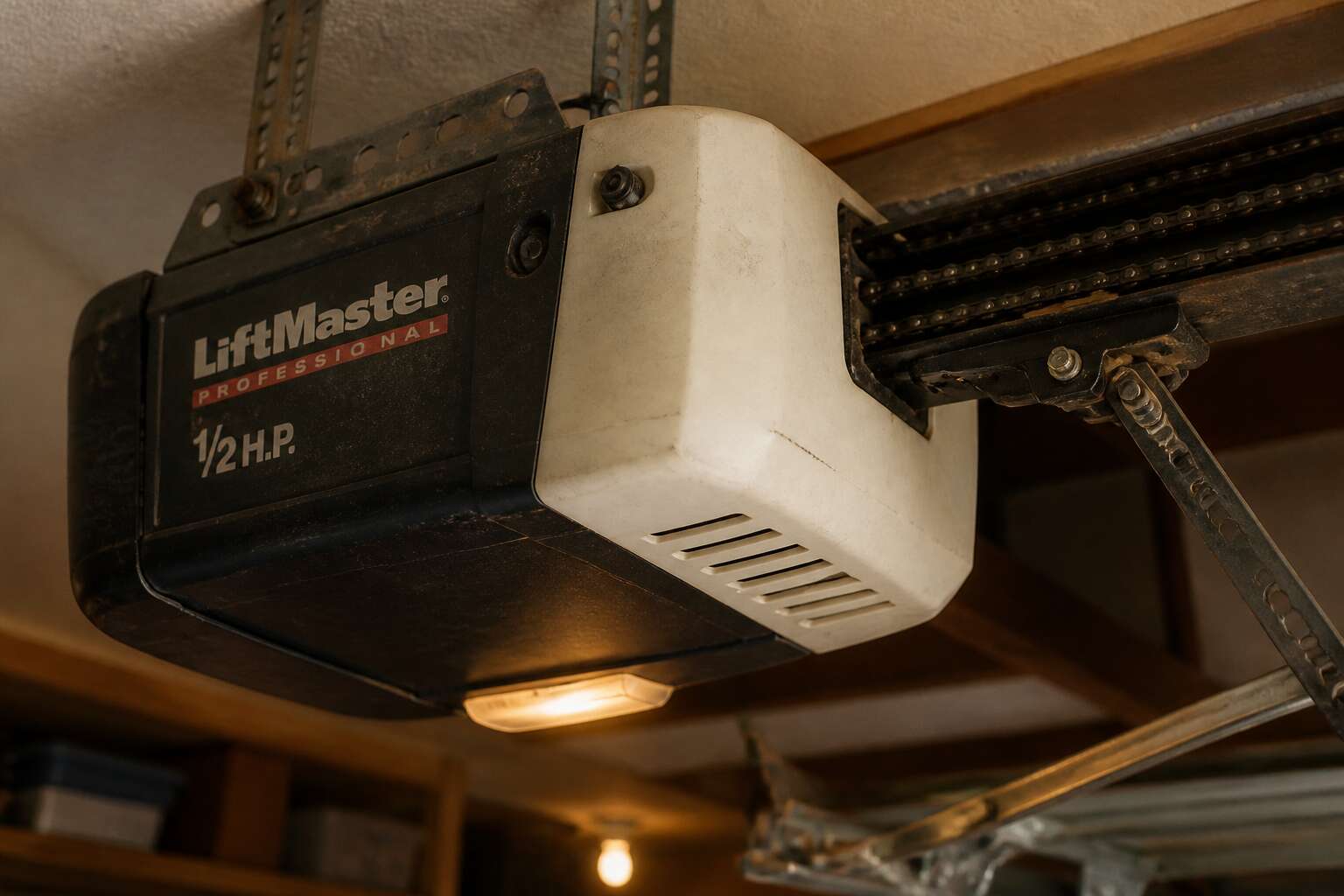
Assessing the Advantages of a Reconditioned Garage Door Opener
Cost Savings Compared to Brand-New Models
Most buyers assume brand new is always better. For garage doors, that assumption can empty your wallet. A used garage door motor offers substantial savings without sacrificing reliability. In South Africa, where electricity prices climb yearly, every rand counts.
The cost difference between a reconditioned opener and a new one often exceeds 40%. You get the same lifting power, the same safety features, and a serviceable life that surprises many. Reconditioned units are stripped, cleaned, and fitted with fresh components. They undergo testing that mirrors factory standards.
- Lower initial purchase price
- Reduced replacement fees for other parts
- Immediate availability from local suppliers
But savings extend beyond the tag. Installation costs stay the same, yet your payback period shortens. For households managing budgets, the choice becomes obvious.
Environmental Impact and Sustainability Benefits
South Africa generates roughly 360,000 tonnes of e-waste annually. Each discarded opener adds to a global pile that depletes resources and contaminates soil. A used garage door motor, reconditioned instead of melted down, sidesteps that chain completely.
Reconditioning demands a fraction of the energy used to manufacture a new unit. Harvesting sound components reduces mining pressure, water consumption, and logistics emissions. One technician’s bench can spare a small mountain of copper, steel, and plastic from a landfill.
- Extended product lifespan through targeted part replacement
- Lower carbon footprint per operational year
- Reduced demand for virgin raw materials
The trade-off appeals to budget watchers and environmental stewards alike, without requiring solar panels or a compost heap.
Performance Expectations for Second-Hand Units
A reconditioned opener can still deliver 10,000 cycles if the gearbox and motor windings are sound. That is roughly seven years of daily use for a typical South African household. Set realistic expectations before you hand over cash.
A used garage door motor should open a 75 kg door smoothly and quietly. Expect a slight hum from the belt or chain, but no grinding or hesitation. The limit switches need clean adjustment, and the safety reverse should trigger within two seconds.
- Motor torque at both extremes of travel
- Response time of the emergency release
- Condition of the drive gear teeth
Ask for a test run before purchase. Inspect the capacitor and travel modules. Replace worn rubber stops. With that diligence, performance often mirrors a new opener for the first five years.
Warranty and Return Policy Considerations
A warranty is the only promise that costs the seller something. That makes a used garage door motor with written cover worth serious attention. In South Africa, many vendors offer 90 days on parts and labour. That period reveals whether the reconditioner supports their work or merely collects your money.
Return policies require scrutiny. Ask if the warranty covers the capacitor and travel module. Confirm who pays callout fees. Demand clarity on these points:
- Whether cosmetic defects are excluded from replacement.
- If coverage transfers when you sell the home.
- What happens after two unsuccessful repair attempts.
Without a written return policy, you assume every risk. A fair policy signals a vendor with confidence.
Critical Checks Before Buying a Pre-Owned Opener
Verifying Motor Horsepower and Lifting Capacity
There is a quiet arithmetic to the used garage door motor, a calculation that must be done before you commit to the purchase. The motor’s horsepower, its very heart, is a promise of strength that must match the door it will carry. If you buy a unit with insufficient torque for a heavy, solid timber door, you are commissioning a mechanism destined for chronic failure. The lifting capacity is a separate, concrete measurement, often indicated on the manufacturer’s label. That number translates directly to the mass your door will present each morning and evening.
South African homes often feature larger, insulated doors to combat the heat, and these are significantly heavier than their older counterparts. So, you must seek the specification plate and read its testimony.
– Determine the door’s total weight by checking the manufacturer’s data or, if possible, lifting it manually to gauge the resistance.
– Match the motor’s horsepower rating against the calculated weight, with a margin of safety for friction and weatherstripping.
A motor rated for 1/2 HP will happily lift a standard aluminium door, but it will strain against a solid hardwood one. This strain is the beginning of the end for the gearbox. The prior owner’s habits are irrelevant; the physical load is not. If the seller cannot provide a model number or the plate is illegible, treat the used garage door motor with suspicion. The torque required to move the door smoothly is the true currency of the deal, and assessing it correctly is the only way to avoid owning a source of constant, grinding frustration.
Inspecting the Condition of Gears and Drive Mechanism
A technician once told me the gear teeth tell the truth before the motor does. Inside a used garage door motor, the gearbox reveals how the previous owner treated the door. You need to open the casing and inspect the drive train. Nylon gears develop hairline fractures long before snapping, and steel gears wear unevenly along the tooth flanks. Skipped lubrication leaves a brittle, yellowish residue instead of smooth grease.
Look for play in the mechanism. Rock the drive sprocket gently. Lateral movement suggests worn bearings or a stretched chain, both expensive to fix. On screw drive units, check the threaded rod for localised scoring; worn carriages create a bumpy ride.
- Inspect gear teeth for chips and uneven wear.
- Turn the mechanism by hand to feel for grinding.
- Examine the chain or belt for cracks and stiffness.
The drive mechanism moves your door. Its condition determines whether a used garage door motor serves you for years or fails within months.
Examining Safety Sensors and Auto-Reverse Features
Safety sensors on a used garage door motor are where bargain hunting meets actual common sense. A door that closes on your bakkie because the photo-eye is misaligned is a cheaper lesson than one that closes on your child, but neither is a bargain worth keeping. Test the auto-reverse with a rolled-up sock or a spanner. The door should reverse on contact without hesitation.
Some sellers swear the sensors work “fine” until you ask to test them. That is your cue to walk away. Check the sensor alignment and clean both lenses before purchase. A dead sensor often hides behind a blinking light.
- Confirm the reversing force limit is set correctly.
- Check for cracks on the sensor brackets.
- Test both edges, not just the centre.
The safety features determine whether your used garage door motor guards your home or merely pretends it does.
Compatibility with Existing Rails and Remote Controls
Compatibility determines whether a used garage door motor becomes a fit or a misfit. The rail system is not universal. A motor designed for a different track profile will conflict with your existing hardware, demanding adapters that cost more than the savings. Remote controls introduce another layer. Modern openers use rolling codes, while older units broadcast fixed frequencies. Your remote may stop responding against a mismatched receiver.
Before committing, run through these compatibility checks:
- Inspect the rail connector style and motor mount pattern.
- Compare the receiver frequency with your current remotes.
- Request the original remote to test the pairing directly.
A used garage door motor only delivers value when it fits your system without fuss. Verify matching parts before you pay.
Determining the Age and Model Lifecycle
Age announces itself quietly. The serial plate holds the manufacture date, but that number only matters when weighed against the model lifecycle. A used garage door motor still in active production offers accessible spare parts. Once a manufacturer shifts to a newer line, replacement circuit boards and gear kits vanish from shelves.
The gap between the unit’s production year and its current generation determines everything. Local distributors keep records of how long each model survives in the market. Knowing whether a unit is current, phased out, or discontinued shapes how you evaluate it.
– Active lifecycle: spares readily available
– Recently phased out: remaining stock only
– Discontinued: third party parts or refurbishing
In South Africa, where power surges and load shedding strain openers, a used garage door motor from a forgotten generation may struggle to find compatible surge protection components. That risk falls on the buyer.
Best Sources for Sourcing a Second-Hand Garage Door Motor
Online Marketplaces and Classified Listings
South Africa’s online classified market has quietly reshaped the hunt for a used garage door motor. Gumtree remains the busiest hub, featuring new listings every hour. Facebook Marketplace draws a more personal crowd, with sellers often posting videos of the unit running on their own rails. OLX and regional auction sites complete the digital landscape.
Cape Town homeowners browse during morning traffic, while Johannesburg buyers often negotiate deals over WhatsApp. These platforms create a constantly refreshed inventory of second-hand equipment, supplied by renovators, estate agents, and surplus dealers. The sheer volume of used garage door motor listings across these channels can feel overwhelming, but the structure is surprisingly simple.
The search usually narrows down to these channels:
– Gumtree
– Facebook Marketplace
– OLX
– Local online auction houses
– Community home improvement groups on social media
Each platform offers its own rhythm, and the pricing fluctuates based on the seller’s location, urgency, and willingness to negotiate. A little patience across multiple sites often reveals the best possibilities.
Local Garage Door Repair Shops and Suppliers
There is a telling difference between buying from a stranger on a screen and buying from a person who has held a torque wrench for a living. Local garage door repair shops and suppliers offer a channel that the classified giants cannot replicate. When a technician removes a motor from a client’s home, they possess the history of that unit. They know why it was replaced, which component started failing, and what the mechanical state of the gears actually is.
Walking into a supplier’s workshop changes the nature of the transaction. You are no longer parsing pixelated photographs for signs of rust or corrosion. The motor is on a bench, and the person selling it can answer a direct question about the drive mechanism without hesitation. For the buyer, this is a form of due diligence that no online bid can ever match. The search for a used garage door motor becomes a conversation, not a gamble.
The inventory in these spaces is often sourced from trade-ins, house renovations, or estate clearances. It is rarely advertised online.
– Units often come with the original brackets and hardware
– Sellers may demonstrate the motor on a test rail
– You can physically check the condition of the sprocket and chain
This kind of examination changes the power dynamic. The seller knows that a knowledgeable buyer is a dangerous buyer, so negotiation happens on a level field. You are not competing with fifty other bidders in the final seconds of an auction. You are standing in a storeroom, asking a practical question about the auto-reverse sensitivity, and watching the answer in the seller’s eyes. That alone is worth the drive. While online platforms offer sheer volume, the local supplier offers the subtle assurance of a person who will remember you when you return for spare parts.
Auction Sites and Surplus Stock Liquidators
Auction sites and surplus stock liquidators operate on a different rhythm. These channels gather equipment from business closures, insurance claims, and warehouse overruns. A used garage door motor might sit in a pallet lot alongside industrial shelving and office chairs.
- Bidding windows are short
- Inspection days are announced in advance
- Payment and collection deadlines are strict
What these sources lack in polish, they make up for in volume. Liquidators often sell entire batches of motors, which suits property owners managing multiple units. I have found a used garage door motor in a Johannesburg warehouse that was listed nowhere else! The viewing day has its own energy. Buyers circle crates with flashlights and torque wrenches, checking sprockets and chains before the auctioneer calls for silence.
Installation and Compatibility Essentials for a Reconditioned Unit
Matching Voltage and Frequency to Your Home System
South Africa’s grid delivers 230 volts at 50 hertz. A used garage door motor built for 110 volt systems will burn out in weeks. The nameplate tells the story. Look for the V and Hz markings. If they do not match your home’s supply, you need a transformer or a different unit.
Frequency matters more than most buyers realize. A motor designed for 60 hertz will spin too fast on 50 hertz, causing erratic limit switches and gear wear. Some reconditioned units have been re-wound, but verify this before handing over cash. A mismatch also voids any guarantee from the seller.
- Check the voltage rating against your breaker panel.
- Confirm the frequency rating matches 50 Hz.
- Inspect the plug type for South African sockets.
Even a perfect motor cannot work if the electrical signatures clash. Take the time to match these basics, and your used garage door motor will serve you for years.
Adapting to Different Drive Types: Chain, Belt, or Screw
Drive systems are where second-hand purchases stumble. A chain drive uses a metal rail and trolley. A screw drive rotates a threaded steel rod. A belt drive glides on a rubber belt. These mechanisms are not interchangeable. You cannot hang a screw drive motor on a chain rail.
Before you pay for that used garage door motor, look at the rail it came with. If the seller offers the motor only, ask for the make and model. Your existing rail must match the motor’s drive mechanism. Otherwise, you will spend more on conversion kits than you saved. I have seen buyers skip this step.
A used garage door motor bought without its original rail is a gamble. Inspect three parts first. The trolley reveals whether it slides or screws. The belt tensioner points to a belt drive. The sprocket teeth confirm a chain system. Get this right, and your motor will fit with minimal fuss. Get it wrong, and you will have a unit that cannot do its job.
Necessary Tools and DIY vs Professional Installation
Installing a used garage door motor demands patience. A reconditioned unit often arrives with mismatched hardware. Check the mounting brackets and torsion spring setup first. Your wall console and safety sensor wiring must align with the motor’s logic board. Without the original manual, download it using the model number.
Necessary tools include a socket set, screwdrivers, a level, and a ladder. You also need a torque wrench for the set screws. But here is the catch. DIY installation saves money yet risks misalignment. A professional charges more but knows Johannesburg’s building codes and wind load factors. For a used garage door motor, I recommend professional installation unless you have done this before.
Check these items before you start:
– The emergency release rope length
– The force adjustment settings
– The rail angle against the door track
The gearbox backlash in second-hand units amplifies any installation error. Leave it to someone who understands tension and travel limits.
Programming New Remote Controls and Keypads
Programming new remote controls and keypads for a used garage door motor is where the real comedy begins. The previous owner left a mismatched replacement. You press the learn button, hold it, release it, then time your next step. The logic board may respond with a blink or a click. I have yet to see two units program the same way.
In Johannesburg’s gated communities, the used garage door motor must respect frequency etiquette. Older units transmit at 433 MHz, newer keypads prefer 868 MHz. Your wall console matters more than brand name. Check the receiver board before buying remotes. A generic remote works once the code type matches.
Compatibility essentials before programming:
- Receiver frequency printed on the logic board
- Code type: fixed, rolling, or smart
- Number of remotes the unit supports
A rolling code system requires resetting every remote. The keypad loses sync. This is where neighbours learn your frustration vocabulary.
Aligning the Limit Switches and Travel Settings
The quiet hum of a freshly installed used garage door motor can turn into a symphony of grinding and stuttering if the limit switches are not respected. These small components dictate where the door stops, both when opening and closing. A reconditioned unit often carries the ghost of a previous door’s dimensions, so the travel settings are almost certainly wrong for your specific tracks. You will need to adjust the force and travel limits to match the physical reality of your garage.
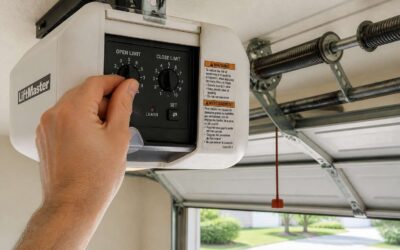
The process involves turning screws on the side of the motor housing, typically labelled for open and close limits. Loosen the screw for the direction you want to adjust, then run the door through a cycle. You listen for the motor strain. A door that presses too hard into the floor will cause premature wear on the gears. Too little pressure and the door will bounce back on impact, which creates a safety hazard.
– Mount the motor securely to the header before any adjustments.
– Disconnect the trolley from the door to test the motor alone.
– Set the close limit to stop a few millimetres above the rubber seal.
– Reattach the trolley and fine tune the force settings to prevent damage.
The best practice is to visually align the trolley arm with the track when the door is halfway open. This ensures a smooth travel path. From my own observations in Johannesburg’s dusty conditions, a magnetic collar sensor is far more reliable than the old mechanical force wheels. The latter tend to slip over time. After the settings are dialed in, run a full manual test. Pull the release rope and check the balance. The door should stay at the halfway point. If it drifts, the counterbalance springs are fighting the motor, and no amount of limit switch adjustment will save you. This is the moment where a reconditioned unit proves its worth, or reveals its hidden trauma. The alignment is a precision task that rewards patience, ensuring your used garage door motor operates with quiet consistency for years.
Extending the Lifespan of Your Pre-Owned Opener
Routine Lubrication and Cleaning of Moving Parts
The average household ignores their motor until it wheezes like a tired kettle. A used garage door motor deserves better. Routine maintenance is cheap, so why postpone it? Because greasing a track sounds like work. Here is the truth: ten minutes now prevents a large bill later. You do not need an engineering diploma. You need a rag, some lithium grease, and patience.
Start by unplugging the unit. Wipe down the main rail. Dust and grit turn into grinding paste. Then lubricate these parts:
- Rollers and hinges
- The chain or screw drive
- Track curves and pulleys
Use a silicone spray. Avoid WD-40 for this task, it attracts dust. I check the balance every month. Pull the release cord, lift the door halfway. If it stays put, good. If it drops, the springs need a professional.
A used garage door motor will run for years if treated with respect. The moving parts are simple. The reward is a quiet, obedient machine.
Replacing Worn-Out Springs and Cables Proactively
People rarely consider springs and cables when they buy a used garage door motor. They focus on the motor housing, the remote, the overall mechanics. Yet these tension components carry the actual weight of the door. A motor that strains against a failing spring will burn out faster than any other factor.
The physical signs are subtle. A door that hesitates, or a cable showing tiny frayed strands near the drum. South African homes deal with unique wind and load-shedding cycles that accelerate wear. Wait too long, and a snapped cable locks the door in place. The safety sensors won’t matter at that point.
Check the balance every few weeks. Disconnect the trolley, lift the door to waist height, let go. A proper spring system holds it steady. If it falls, the tension is wrong. Replacing springs is not complex, but it is dangerous. The stored energy demands respect. A professional with the right winding bars costs less than your safety margin. Consider this part of the used garage door motor ownership deal, not an optional upgrade.
Testing Safety Features on a Monthly Basis
Monthly safety testing does more than protect your family. It reveals developing faults in a used garage door motor before they become expensive failures. The auto-reverse function, for instance, responds to resistance. Place a block in the door’s path. The door should halt and reverse within seconds. A sluggish response points to worn gears or misaligned sensors.
Test the force settings too. Excessive force strains the motor and the tracks. Listen for unusual grinds. Watch the door’s speed through its travel arc. Each observation builds a diagnostic picture.
- Check the photo-eye sensors for dust and alignment.
- Test the manual release handle.
- Inspect the emergency battery, if fitted.
Monthly checks cost ten minutes. They convert the used garage door motor’s hidden weaknesses into scheduled repairs.
Upgrading Minor Components Like Batteries and Capacitors
A used garage door motor survives on attention, not luck. The capacitor, a small cylindrical component, acts as the muscle behind every start. When it weakens, the motor strains to lift doors that once glided. Replacing it takes minutes and costs a fraction of a service call. In South Africa, where heat accelerates component ageing, this single upgrade can add years of life.
The backup battery deserves equal scrutiny. Load shedding forces openers to rely on reserves that often sit forgotten. A sulphated battery drags down the entire electrical system, causing erratic remote response and memory loss.
Replacing these components yields immediate results:
– Eliminates hesitation at start-up
– Prevents control board damage from power fluctuations
– Restores consistent travel speed
– Extends runtime during outages
Think of it as preventative surgery. The mechanical tracks and gears receive all the greases, yet electrical elements decide whether the system thrives. A used garage door motor with fresh capacitors and batteries performs like a unit half its age. Pay attention to the small parts. They carry the load no one sees.

0 Comments