
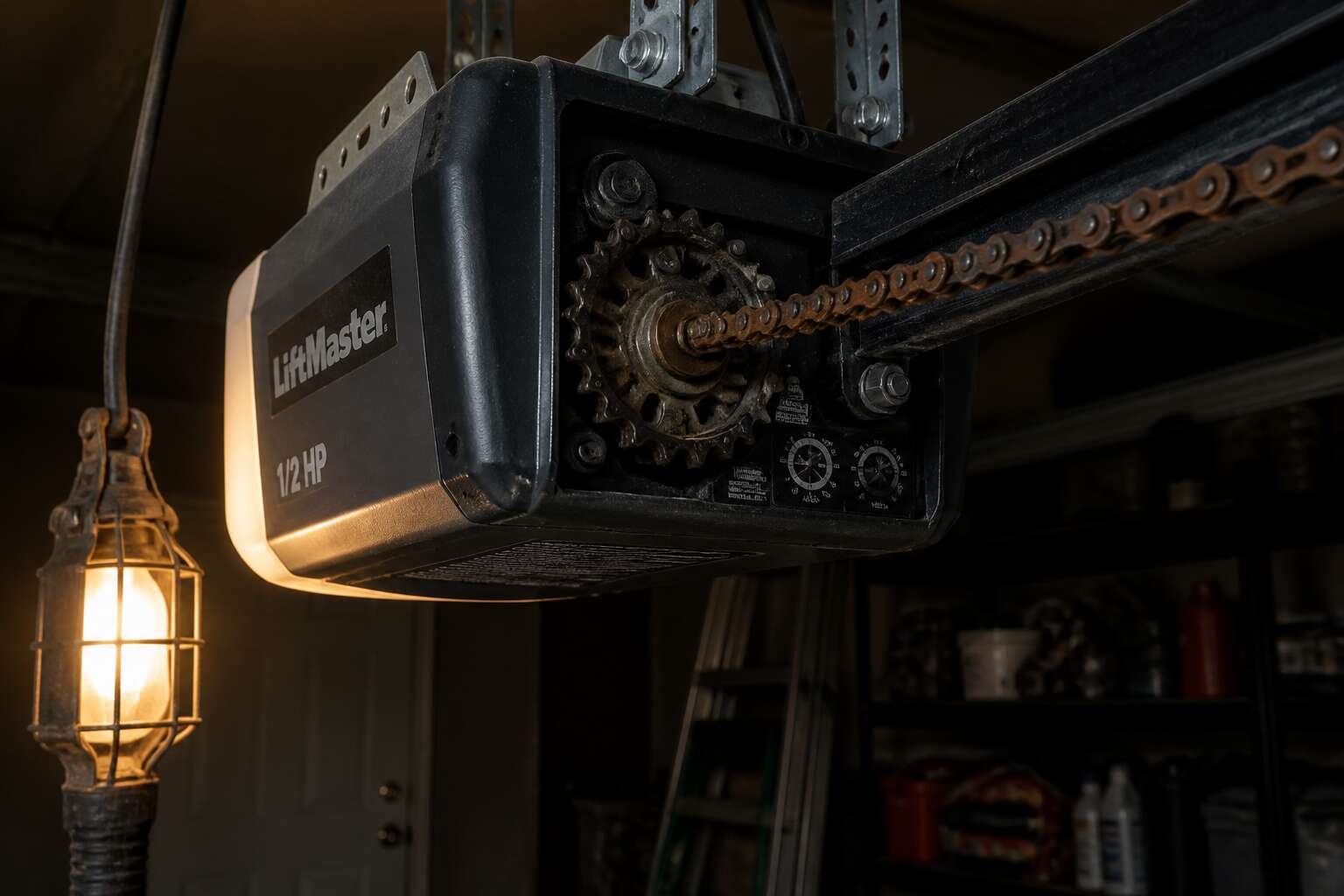
Why Your Garage Door Motor Chain Gets Stuck
Your garage door motor chain not moving can feel like a sudden betrayal. One moment the door glides, the next it freezes mid-lift. It’s rarely a mystery, though. The most common culprit is a snapped or loose chain, often from years of tension. Another frequent issue is a misaligned sprocket, which jams the links. Debris, like pebbles or grease buildup, can also wedge between the teeth. Even a failing motor capacitor might stop the whole unit, leaving the chain stationary.
Check these likely causes first:
– Inspect the chain for visible slack or breaks.
– Look at the sprocket for wear or obstruction.
– Listen for a humming motor without movement.
For South African homes, heat and humidity accelerate rust on the chain, making it brittle. That silent pause is your signal to act, not to ignore. A garage door motor chain not moving is a warning worth heeding before it costs you more than a repair.
Diagnostic Steps to Isolate the Issue
There is a particular kind of frustration reserved for the moment you press the button and hear only the lonely hum of a motor with a dogged refusal to move its chain. The culprit is rarely a single, dramatic failure. More often, it is a cascade of smaller, neglected issues that culminate in this silent standoff.
Before you assume the worst, take a breath and observe the system with a curious eye. The first step is always visualization. Watch the motor as it engages. Does the chain even attempt a twitch, or is it a statue? Listen for the subtle click of the sprocket engaging, which tells you the gear is trying to turn. This initial observation is your best guide to the next course of action.
If you have access to the manual for your specific model, it will help to break the diagnostic process down into a simple checklist. Often, the problem is mechanical, not electrical. A quick physical inspection can save you hours of troubleshooting.
– Check the tension of the chain itself, as a slack chain can slip off the sprocket entirely.
– Look for any obvious obstructions on the rail, like a stray bolt or a tangle of debris.
– Inspect the links for rust or stiffness that might be binding the travel.
– Verify that the sprocket teeth are not worn smooth, which would prevent them from gripping the chain.
Once you have ruled out the obvious physical impediments, your attention turns to the motor assembly and its power source. A tripped breaker or a blown fuse at the mains is a common South African household issue, especially during load shedding fluctuations. If the power is fine, the next suspect is often the limit switch, which tells the motor when to stop. If it is misaligned, it can trick the motor into thinking it has already completed the journey, leaving the garage door motor chain not moving at all. The goal here is to isolate the fault, not to panic, and methodically work your way down the list.
Step-by-Step Fixes for a Non-Moving Chain
Nothing tests your patience like a garage door motor chain not moving when you are already late. The motor hums, the trolley stays put, and you stand there wondering if the whole system has given up. In South Africa, power surges from loadshedding often cause this exact failure.
Start by checking the simplest culprit. The emergency release cord might be engaged, which disconnects the trolley from the chain. If that is not the issue, inspect the chain tension. A loose chain skips over the sprocket instead of gripping it.
- Pull the release cord to reset the trolley.
- Check the chain for visible slack.
- Inspect the gear sprocket for worn teeth.
A garage door motor chain not moving usually points to one of these three problems. Fix them in order, and you avoid calling a technician for something you can solve in ten minutes.
DIY Repair vs. Hiring a Professional Technician
The sudden silence when your garage door motor chain not moving can feel like an insult. For the hands-on homeowner, the urge to grab a spanner is strong. You inspect rollers, test the breaker after a load shedding surge. Often, that is all it takes.
But the chain holds immense tension. A careless adjustment can turn a minor stall into a bent rail or a fractured spring.
Before calling a professional, try these steps:
1. Verify the mains power and the motor’s manual release.
2. Lubricate the chain and sprockets with a silicone spray.
3. Clear any debris from the track grooves.
However, if the garage door motor chain not moving persists, hiring a technician becomes a sound investment. They bring calibrated torque wrenches and the skill to reprogram the limit switches that often fail after voltage fluctuations. The price of a service visit is trivial compared to a full motor replacement, which can cost thousands of rands.
Preventative Maintenance to Keep the Chain Running Smoothly
Your garage door motor chain not moving is a sign that neglect has finally caught up. I have walked into too many garages where the chain sits frozen, rusted, or stretched past its limit. The good news is that this failure is almost always avoidable.
Set aside ten minutes each month to examine the chain. Look for kinks, rust spots, or uneven wear. A slack chain can slip off the sprocket, which causes the motor to run without moving the door. Lubrication matters more than people think. I use a silicone spray, not grease, because grease attracts dust and turns into a grinding paste.
- Check chain tension with the motor off
- Wipe the chain clean before lubricating
- Listen for scraping sounds during an open and close cycle
A garage door motor chain not moving often stems from a misaligned sprocket. Catching that early saves you a repair bill. Prevention is just a habit. Your door will keep answering, quietly and reliably.

0 Comments