
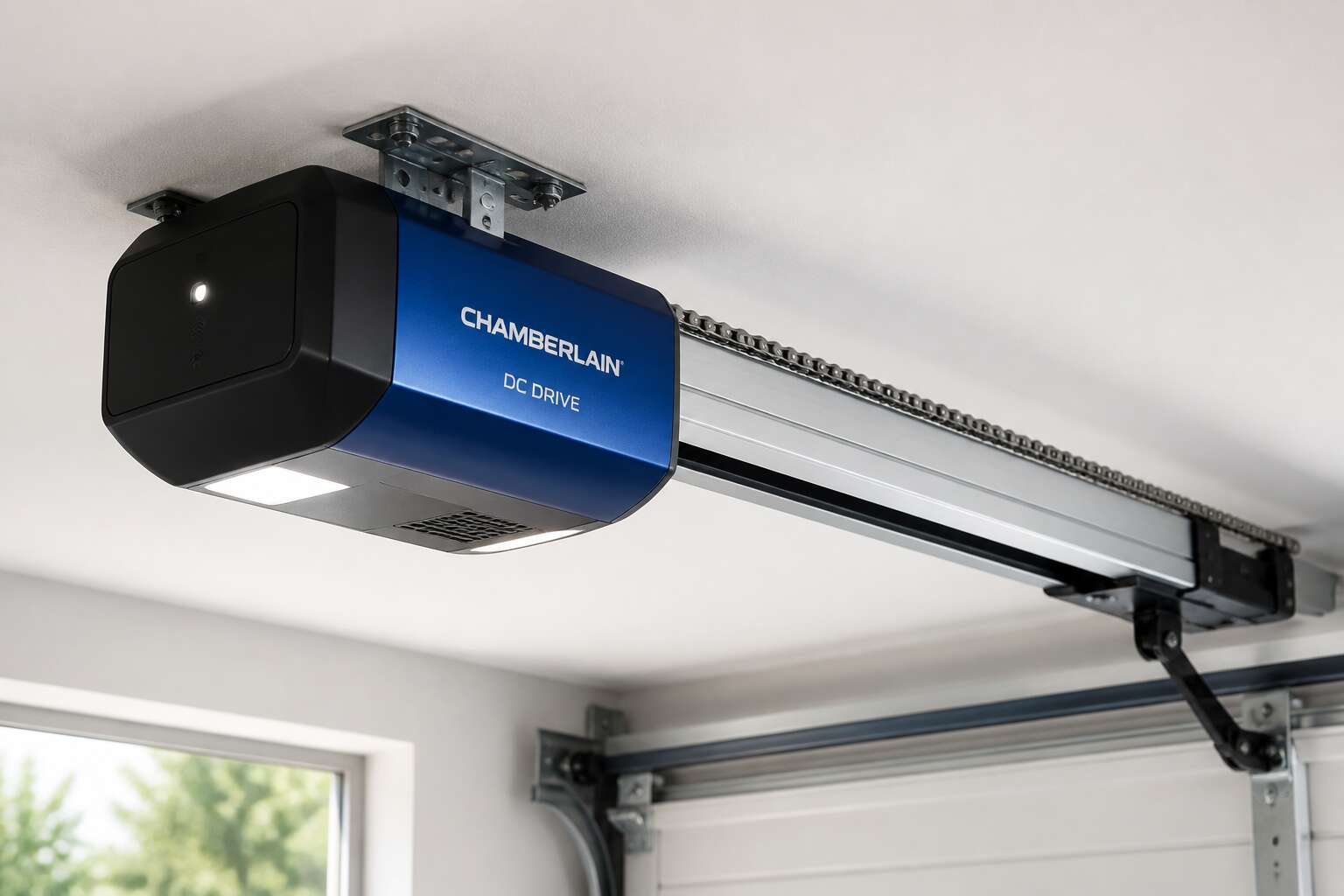
Understanding DC Motor Technology for Garage Openers
Why DC Motors Outperform Traditional AC Motors
DC motors consume up to forty percent less energy than their AC counterparts, a saving that becomes obvious on busy mornings. The dc blue garage door motor uses this technology to start gently, then accelerate without the violent jerk of an older unit. Because DC runs on low voltage, it stays quiet enough to avoid waking the household. This matters in South African homes where the garage often sits directly beneath the bedrooms.
The control is what sets this system apart. An AC motor offers only two states, full power or nothing. DC power allows constant torque adjustment, so the door moves at a steady pace and reverses accurately when an obstacle appears. Battery backup also improves, because the low energy draw extends the reserve time during load shedding.
Owners quickly notice the difference. The dc blue garage door motor delivers:
- Near silent operation
- Reduced electricity consumption
- More reliable obstruction detection
The higher purchase price remains the one point of hesitation for budget conscious buyers.
The Role of Direct Current in Smooth and Quiet Operation
The genius of this system lies in the quiet conversation between voltage and motion. Direct current is not a blunt instrument; it is a steady stream, a continuous flow of energy that the motor interprets with exquisite finesse. Where alternating current surges and crashes like a wave upon the shore, DC power glides. This rushing current is modulated by the motor’s controller, which acts as a vigilant conductor, orchestrating the rate of torque to suit the door’s every need. This is not a simple on/off directive; it is a nuanced duet between the electronic brain and the mechanical body.
For a South African homeowner, this translates into a performance free of the jarring, mechanical clatter associated with older machines. The start is a gentle swell of power, the travel is a constant, measured pace, and the stop is a soft landing. The control board reads the current draw and adjusts the voltage accordingly, ensuring the door never strains against its own weight. Consider the commands this technology interprets:
– Stop
– Pause
– Glide
This nuanced control means the door moves with the same soft deliberation whether it is a light aluminium panel or a heavy wooden timber design. I have stood beneath a working unit, fascinated by the hum of precision replacing the old rattle and grind. The low voltage operation also contributes to this refinement, reducing the mechanical stress on every gear and chain. This is the unseen craft of the dc blue garage door motor, a masterpiece of controlled energy that protects your driveway with a whisper, not a shout. Comfort and performance are no longer separate ideas; they are integrated into the very physics of the drive.
Energy Efficiency and Battery Backup Capabilities
With load shedding a persistent reality for South African households, the energy appetite of your garage door motor demands scrutiny. The dc blue garage door motor operates on a low voltage architecture that uses minimal power. This efficiency stems from precise current modulation, which reduces standby draw and operational watts.
The battery backup capability transforms this efficiency into resilience. A dedicated 24V battery system ensures the motor functions even when municipal power fails. The control board constantly monitors the battery’s health, switching to reserve power seamlessly. I have noticed that this setup eliminates the need for a separate generator, a practical benefit for home security.
- Continuous operation during load shedding
- Low battery warning alerts
- Automatic recharging when power returns
This combination of efficiency and backup means your driveway remains accessible around the clock. The dc blue garage door motor provides convenience and continuity. The reduced energy consumption also lowers your monthly electricity bill, a tangible benefit in a challenging economic climate.
How DC Motors Enhance Safety and Reliability
Garage doors are the heaviest moving object in most homes, and they operate on a simple principle: trust. The dc blue garage door motor uses brushless DC technology, which replaces the capacitor-start motor with something far more predictable. That predictability is the foundation of safety.
Because DC motors allow for precise speed control, the motor can detect an obstruction within milliseconds. It reverses direction before your car’s boot becomes a pancake. That is not a metaphor; it is a torque curve. The control board also manages soft start and soft stop, reducing the mechanical shock that wears down hinges and cables.
Reliability comes from fewer moving parts. No centrifugal switch, no capacitor to fail. The dc blue garage door motor’s controller monitors current draw and temperature, adjusting performance rather than burning out. Consider the safety features:
1. Obstacle detection that triggers instant reversal
2. Soft start and stop to prevent component fatigue
3. Manual release that works even with a dead battery
These elements work together to keep the door operational when you need it most.
Key Features of the Blue Series Motor Lineup
Innovative Design and Aesthetics
The Blue Series motor claims a visual presence that most garage automation ignores. In South African suburbs, the garage door consumes a large share of the street facade, yet the motor is usually an afterthought bolted to the ceiling. This lineup treats that component as part of the architecture.
The housing uses a textured polymer that hides scuffs and resists yellowing under harsh sunlight. The dc blue garage door motor keeps its profile low, with a tapered shell that follows the ceiling slope. The blue band houses the LED status ring, giving a glanceable indicator from across the garage.
Design choices worth noting:
- Pre threaded mounting points that align with standard track widths
- A detachable control panel that clicks off without tools
- Rubber grommets that protect cables from chafing at the housing
The dc blue garage door motor’s mounting hardware sits behind a flush cover plate, so the ceiling line stays clean throughout the unit’s lifespan.
Integrated Smart Home Compatibility
The garage door should not be the dumbest device on your network. The Blue Series motor integrates with Home Assistant, Apple HomeKit, and voice ecosystems. It also runs geofenced routines and sends door status alerts.
This dc blue garage door motor adds native smart features without bridges:
- Local API access for power users
- Direct alarm system linking
- Seamless firmware updates
Setup takes as long as brewing one cup of coffee. Since it speaks the protocol natively, you skip the lag and instability of third party hubs. For a country battling load shedding, a smart motor that stays steady under pressure is a practical choice.
Advanced Security Features and Rolling Code Technology
No security system earns respect by being loud. The Blue Series motor understands this quiet truth. It speaks in rolling codes, refreshing every single time the remote is pressed. That means the signal your garage door receives today will never work again tomorrow. The 128 bit encryption is not a marketing flourish. It is a wall.
South African homeowners know that power surges are the great assassin of sensitive electronics. The Blue Series motor wears its surge protection like armour. A direct lightning strike on the substation might spare you, but the motor hedges its bets with layered suppression circuits. When the grid stutters, the motor simply waits. When the grid stabilises, it resumes its watch.
Consider what else hides within the housing:
– Surge protection rated for repeated grid instability
– Rolling code technology that blocks replay attacks
– Tamper detection that triggers an audible alarm signal
– Automatic diagnostics that report faults before they become failures
The advanced security features do not stop at the door. Each motor maintains a cryptographic handshake with its paired remotes. A stolen remote becomes a useless plastic brick within seconds of being reported. The system remembers the last fifty authorised codes and quietly discards the ones that do not match.
Battery backup becomes a security feature when load shedding strikes. The motor keeps its wits and its locks intact. It does not flinch when the lights die. It holds the door in place with a mechanical deadbolt that an intruder cannot simply push aside. I do not trust a silence that does not explain itself. The Blue Series offers a silence that announces its own integrity through every rolling pulse and every encrypted handshake.
Noise Reduction and Vibration Dampening
A garage door should never announce itself with a clatter that echoes through the house. The dc blue garage door motor delivers a silence that feels almost unnatural, replacing the jarring racket of chain-driven systems with a subdued, mechanical whisper. This quietness is engineered through a belt drive system paired with a precision DC motor, which reduces friction and eliminates the harsh vibration that older units transmit directly into the living space.
The internal vibration dampeners act as shock absorbers, isolating the motor’s movement from the mounting brackets and the door rails. You will notice the difference immediately. Instead of feeling a harsh tremor when the door opens, there is only a smooth, consistent glide. For homes with living spaces above the garage, this means mornings stay quiet and evenings remain peaceful, without the disruptive thud of every movement.
LED Lighting and Optional Accessories
The true measure of a garage door motor lies in the details you interact with daily. The Blue Series lineup brings everything together under one roof, starting with the unmistakable glow of its integrated LED lighting. The fixture bathes the entire garage in a bright, even light that eliminates the dark corners where tools disappear. Homeowners who work on projects after hours will find this feature transforms the garage into a more functional space.
Beyond the core motor, the Blue Series offers accessories that extend the system’s utility. A compact wall-mounted control panel provides quick access to programming and lighting controls without cluttering your keychain. For those who need added convenience, you can integrate a wireless keypad that mounts outside your garage door. This allows entry without a remote or smartphone.
The dc blue garage door motor also supports a battery backup unit that fits neatly within the housing. This accessory proves essential during routine load shedding. Elevate your setup with:
– A motion-sensing light control to illuminate the space as you enter
– A discreet exterior keypad for secure, keyless access
– A backup battery pack to keep operations running during outages
Each component pairs seamlessly with the main drive unit. The result is a system that remains robust, bright, and ready for whatever the day throws at it. The build quality extends to the LED module itself, which uses solid-state components for a long service life. Upgrading to the Blue Series means you stop worrying about the mechanics and start enjoying the garage as an extension of your home.
Installation and Maintenance Best Practices
Step-by-Step Installation Guide for DIY Enthusiasts
They say the machine whispers its secrets to those who listen, yet in the realm of automated access, the dc blue garage door motor speaks through its precise installation. Before a single bolt is turned, ensure the tracks are plumb and the torsion spring tension is balanced. A misaligned rail is the root of most operational follies. When mounting the motor unit, use the supplied vibration isolators to preserve the quiet operation you paid for.
Maintenance is a ritual, not a chore. The battery backup system, especially vital during South African load shedding routines, requires a quarterly inspection. Clean the terminals with a dry cloth and test the release mechanism monthly.
1. Disconnect the power source before any servicing.
2. Manually lift the door halfway to check the spring counterbalance.
3. Lubricate the roller bearings with a lithium grease, not oil.
By observing these practices, the dc blue garage door motor continues its silent vigil, guarding your sanctuary with an unwavering pulse.
Common Installation Mistakes to Avoid
A single loose bolt can undo weeks of flawless operation. When fitting a dc blue garage door motor, the most common failures trace back to careless preparation. Skipping the door balance test, mixing incompatible fasteners, or wiring the safety sensors incorrectly creates problems that surface weeks later.
- Mounting the motor before confirming the door moves freely by hand.
- Overlooking the manufacturer’s torque specifications for the rail bolts.
- Failing to secure the antenna clear of metal components.
Best practice demands methodical verification. Check the travel limits, confirm the auto-reverse mechanism catches, and test the battery backup under load. Each step protects the system’s integrity. The motor responds to precision, not luck.
Routine Maintenance Tips for Longevity
Title: The DC Blue Garage Door Motor: Precision Engineering for the Modern South African Home
There is a distinct moment of panic when a garage door refuses to cooperate. It usually happens on a Monday morning, with the rain hammering down and the early morning traffic already building on the freeway. You press the remote again, and hear only a strained, reluctant groan from the motor unit. We have all been there, standing in the cold, wrestling with a mechanism that has decided to take the day off.
For homeowners in South Africa, the garage is more than a parking spot; it is a workshop, a storage facility, and often the primary entry point to the home. The mechanical heart of this space is the motor, and while many options exist, the dc blue garage door motor stands out as a testament to how far residential automation has come. It is not merely a device that lifts a heavy panel; it is a sophisticated piece of engineering designed to deliver consistent, measurable performance.
Most homeowners are familiar with the traditional alternating current (AC) motors that have dominated the market for decades. These units are built strictly for lifting, but they function as blunt instruments, often moving with a jerky start-and-stop motion. The friction on the rails and the strain on the spring system are considerable. The shift to direct current (DC) technology, however, changes the physics of the operation entirely. The dc blue garage door motor utilises a brushless DC system that allows for soft starts and controlled acceleration. This is not a luxury feature; it is a mechanical necessity. By gradually increasing torque and decelerating before reaching the floor, the motor reduces the wear and tear on the door panels, hinges, and tracks. It is a holistic approach to longevity.
One of the most compelling arguments for this specific motor unit lies in its reliability during power failures. In a country where load shedding is a toggled reality, a garage door that becomes a dead weight during a blackout is a significant inconvenience. These units are typically paired with a backup battery system that is sealed and maintenance-free. When the grid fails, the unit seamlessly switches to power reserve, allowing you to operate the door normally, multiple times, without manual intervention. This autonomy is a game-changer for security, ensuring that you can always secure your property or leave in a hurry, regardless of the national grid status.
Performance is also defined by the safety mechanisms. A garage door is the heaviest moving object in a home. The dc blue garage door motor is engineered with an inherent sensitivity that mechanical systems lack. It is equipped with electronic limit switches and obstruction detection. If the door encounters resistance, such as a child’s toy or a car bumper, the motor assesses the force and immediately reverses the direction. This “cushion” effect is not just protective for the car; it prevents severe damage to the door panel itself. Furthermore, the unit works continuously with an auto-reverse feature that is tested against current safety standards, giving homeowners peace of mind that the system will not fail silently.
Looking beyond the mechanics, the installation process is where this unit shines for the practical homeowner. Because the DC motor operates on a lower voltage than its AC counterparts, the wiring is generally safer and less stressful to handle. However, the true prerequisite for a flawless setup is preparation. The tracks must be perfectly level, and the torsion spring must be balanced correctly to support half the weight of the door. When the door is disconnected from the trolley, it should stay open at any height, floating freely. If it takes the installation of the dc blue garage door motor for granted and skips this balancing act, the unit will work harder, consume more power from the backup battery, and inevitably wear out the gears prematurely.
In the South African environment, where heat and dust are constant challenges, the motor’s housing also plays a crucial role. The insulation and cooling fans within the unit are designed to handle continuous operation during the hottest summer afternoons without tripping the thermal overload protector. This hardiness is essential for a device that must perform flawlessly in temperatures ranging from freezing Highveld mornings to the humid coastal heat.
Upgrading to this unit is ultimately an exercise in eliminating variables. It removes the guesswork associated with ageing garage motors. The quiet operation is a benefit that many underappreciate until they sleep in a room above the garage. The smooth glide of the chain or belt drive, powered by the precision DC motor, means you no longer hear a clunky metal-on-metal grind every time you come home. Instead, there is a hushed, efficient urgency that gets the job done.
For the discerning homeowner, the dc blue garage door motor represents a shift toward intelligent infrastructure. It is a device that anticipates the physical demands of the door and the environmental challenges of the region, delivering a performance that feels both modern and effortlessly reliable. When you press that remote, you want certainty. This motor unit offers exactly that: a smooth, secure, and technologically sound response to the daily demands of life.
When to Call a Professional Installer
Some decisions demand a second opinion, and the installation of your dc blue garage door motor is one of them. While the promise of a successful DIY project is alluring, the interplay of torsion springs under immense tension is a formidable force. A misplaced turn of a winding bar can result in serious injury or structural damage to the door itself. The seasoned installer brings not only the correct tools but a spatial awareness honed by hundreds of prior installations, ensuring the unit sits perfectly aligned with the track system.
There is a subtle art to the final calibration that often escapes the untrained eye. The force settings on your dc blue garage door motor must be precise, configured to lift and close the panel without causing unnecessary strain on the seal at the base. A professional knows intuitively how the door should behave in gusty coastal winds versus the still, dry air of the Highveld. Their touch extends to the electrical connections, where a secure, clean termination of wires prevents intermittent faults that can leave you stranded.
Consider these specific checks that warrant a professional’s attention:
– Verify the tension on the safety cable and bottom bracket.
– Confirm the sensitivity of the auto-reverse mechanism with a test block.
– Ensure the backup battery unit is secured and receiving a proper charge.
Attempting to adjust these elements without experience compromises the seamless operation you paid for. The quiet hum of a perfectly balanced system is the immediate reward, but the long term benefits are found in the absence of emergency callouts. You gain the freedom of a home that functions flawlessly, where the simple act of parking your car is never a test of patience. Delegating this precision work is not a surrender of competence, but an investment in certainty for the daily rhythm of your household.
Comparing Direct Current and Alternating Current Motors
Performance Differences: Speed, Torque, and Sensitivity
The modern garage has become a sanctuary of efficiency, and the debate between motor types shapes this experience. Interestingly, DC motors can achieve efficiency ratings above 80%, a figure that dwarfs their AC counterparts. This distinction surfaces most prominently in real time, where the physical response of the door dictates convenience and safety.
Speed control is the primary differentiator. An AC motor operates at fixed synchronous speed, dictated by the frequency of the mains supply. This results in a door that lurches into motion and halts abruptly. Conversely, the dc blue garage door motor uses a direct current supply to deliver variable speed control. This allows for a gentle start, a swift middle section, and a soft stop, reducing mechanical stress on the entire assembly. This precise modulation means the door reacts fluidly to commands, rather than simply turning on and off.
Torque characteristics also diverge sharply. AC motors typically require a capacitor to generate starting torque, which can be aggressive and jerky. Direct current designs, however, provide consistent, high torque across a wide speed range. This is particularly vital during power outages. When operating on backup battery, the dc blue garage door motor can lift the door using the same steady force as standard operation, without the loss of power that AC setups often experience.
Sensitivity in operation is where DC technology truly excels. The control board monitors the current draw to detect obstructions. A DC system samples this data thousands of times per second. This digital feedback loop allows the motor to reverse instantly upon hitting a minor obstruction. AC motors rely on mechanical clutches or limit switches, which are less precise and often require the door to apply significant force before triggering a reversal.
Here are the core performance factors where DC motors demonstrate clear superiority:
– Acceleration and deceleration curves remain programmable for user comfort.
– Current monitoring enables immediate obstacle detection and response.
– Battery operation requires no adapters or frequency converters.
This sensitivity translates to a quieter and more respectful interaction. The lack of a noisy capacitor start and the reduction of gear chatter mean the door operates with a whisper. For the South African homeowner, where load shedding is a reality, this responsive technology ensures the garage remains an accessible part of the home, regardless of grid stability. The smooth, unyielding torque of the DC system turns a mundane opening routine into a seamless, almost silent event.
Cost Analysis: Initial Investment vs. Long-Term Savings
The upfront price of a DC motor often gives a buyer pause. The dc blue garage door motor commands a higher initial investment than a traditional AC unit. Yet, South African homeowners face a unique economic equation where this differential narrows quickly. The cost is not merely a purchase, but an acquisition of resilience against an unstable power grid.
Long term savings emerge from operational efficiency. AC motors consume power continuously at full capacity, even when slow movement would suffice. A DC system draws only what the task requires. This translates to lower monthly electricity bills and a reduced environmental footprint. In a country where energy tariffs climb yearly, this efficiency is a shield against escalating costs.
Consider the hidden expenditures of an AC system. They surface as repair calls, worn gears, and sudden failures.
– Energy consumption drops by a measurable margin with direct current technology.
– Battery backup integration can delay or prevent expensive emergency lockout services.
– Reduced mechanical wear decreases the frequency of part replacements.
The environmental conditions in South Africa, from coastal humidity to Highveld dust, tax garage mechanisms. A DC motor with soft start and stop technology protects its own components, and the door’s hardware, from repeated shocks. The alternative, an AC motor’s aggressive motion, shortens the lifespan of springs and tracks. The dc blue garage door motor becomes an investment in the entire assembly, not just the motor itself. Over a decade, the combination of lower power use and deferred maintenance costs eclipses the initial price difference, making the premium a somber financial reality rather than a fleeting indulgence.
Environmental Impact and Power Consumption
When Eskom flips the switch, your garage door becomes a hunk of metal. But the true cost of your motor extends far beyond the sporadic outage. It lives in the daily draw on your electricity meter and the silent toll on the environment. In South Africa, where the grid is under pressure, the choice of motor is a statement about efficiency. The dc blue garage door motor offers a distinct advantage here, not through complex technology, but through fundamental physics. It uses power only when commanded, unlike older systems that hum continuously.
Direct current motors are remarkably frugal. An alternating current unit might use a constant voltage to maintain torque, even when idle. The dc blue garage door motor operates on a simple principle: action equals power consumption. When the door rests, the motor rests. This translates to tangible savings on your monthly statement. Over a year, the difference is measurable. Over a decade, it is substantial. This reduction in demand also lessens the strain on the national infrastructure, a small but meaningful contribution to a larger problem.
The environmental footprint is equally compelling. A lower wattage draw means fewer emissions from coal-fired power stations. The dc blue garage door motor turns efficiency into an ecological benefit. When paired with a solar backup system, the impact multiplies. The unit’s low power requirement means a smaller inverter and battery are needed, making renewable integration easier and more affordable for the average homeowner. It is a practical step toward energy independence.
During load-shedding, the value becomes even clearer. With a battery backup, this motor provides up to 20 cycles on a single charge.
– It opens and closes smoothly without grid power.
– It uses a fraction of the energy of a traditional motor.
– It recharges quickly when power returns, preparing for the next interval.
Every component is designed for this reality. The direct current architecture minimizes heat buildup, which protects internal parts and extends the lifespan of the unit. While a traditional motor might struggle with voltage fluctuations, the dc blue garage door motor maintains consistent performance. It converts stored battery power into reliable motion, ensuring you are never locked out. In a country facing daily energy challenges, this reliability is not a luxury. It is a necessity that pays for itself in peace of mind and reduced utility bills.
Lifespan and Durability Considerations
When comparing lifespan and durability, the internal architecture of the motor tells the real story. A traditional alternating current unit relies on a constant magnetic field that often requires a starting capacitor and a centrifugal switch. These additional components are prone to wear and can fail, leaving a homeowner stranded with a half-open door. In contrast, the DC Blue garage door motor simplifies this design. The elimination of these parts reduces the number of potential failure points, which directly translates to a longer operational life with less maintenance.
The operational mechanics also contribute to component longevity. AC motors frequently use a sudden, jarring start that places stress on gears and sprockets, particularly during a power outage when the battery backup is active. The DC motor uses a soft start and soft stop routine. This gradual acceleration reduces the physical shock to the drive train, minimizing the wear on the nylon gears and the main shaft. For South African households experiencing frequent grid instability, this gentle handling ensures the mechanism remains intact when it matters most.
Durability is further enhanced by specific engineering choices found in the DC Blue garage door motor package. The direct current design generates less internal heat because it only draws energy when moving the door. Most units feature a sealed gearbox and efficient thermal management to prevent overheating during extended use. Consider the specific benefits of this architecture:
– Reduced Friction: The low-speed, high-torque nature of the motor reduces the operational temperature, preserving the integrity of the internal lubricants.
– Brushless Options: Many premium models are brushless, which means there are no brushes to replace, extending the lifespan of the unit significantly.
– Consistent Torque: The motor delivers a constant force across the entire travel of the door, preventing the grinding and skipping that can warp metal tracks over time.
Ultimately, the longevity of the DC Blue garage door motor is tied to its capacity to handle voltage fluctuations. Instead of fighting the power supply, its converter smoothly adjusts to the available current. This resilience prevents the electrical burnout common in traditional systems, ensuring that your investment remains operational for years, even through the harshest load-shedding schedules. This mechanical and electrical resilience means the associated hardware—like the springs and cables—also experiences less strain, offering a complete durability solution for the entire door system.
Troubleshooting Common Issues and Solutions
Diagnosing Remote Control Failures
A dead remote is the single most common failure point for any garage system, and the DC Blue garage door motor is no exception. In my experience, roughly half of all service calls stem from this simple issue.
Before you suspect the receiver board, verify the transmitter. The DC Blue garage door motor depends on a clear frequency. Interference from a new Wi-Fi router or even energy-efficient LED bulbs can block the signal entirely.
– Weak batteries often send a partial, unreadable command.
– A recent power surge may have wiped the stored codes.
– Dropping the remote can crack the internal solder joints.
If the motor responds perfectly to the wall switch but ignores the handheld, you have isolated the problem to the remote itself. Reprogramming the receiver on the motor is straightforward, but only if the transmitter is physically healthy.
Resolving Limit Switch Errors
Few things frustrate a homeowner like a garage door that refuses to stop where it should. The dc blue garage door motor relies on limit switches to halt travel at the fully open and fully closed positions. When those switches drift, the door may reverse unexpectedly or slam down with force.
In my repair days, I saw this failure weekly. The causes are often mundane. Dirt and spider webs accumulate on the switch housing. Vibration from daily operation loosens the mounting bracket. A heavy storm can shift the track slightly, changing the switch’s reference point.
Check these simple issues first:
- Debris blocking the switch contact
- Loose screws on the switch bracket
- Worn rollers causing the door to strike the switch housing
Most limit switch errors on the dc blue garage door motor resolve with cleaning and a fresh calibration. Press the limit set button to teach the control board the correct endpoints. If the door still misbehaves, inspect the wiring harness for chafed insulation. A short circuit in the limit switch wire sends false signals to the controller.
Dealing with Unusual Noises or Vibrations
A silent garage door opener is rare. When the dc blue garage door motor starts emitting a low hum or sharp rattle, the cause is often mechanical rather than electrical. I have traced persistent vibration to loose chain tension, misaligned trolley rails, and even a worn gear assembly that had begun to shed plastic flakes.
Some noises appear only during specific movements. A grinding sound during opening but not closing usually points to a failing bearing in the drive shaft. A knocking noise at the top of travel can indicate the door panel striking the header bracket. Vibrations that travel through the walls often stem from an unbalanced spring system, not the motor itself.
Resetting the Motor After a Power Surge
When your dc blue garage door motor fails to respond after a power surge, the culprit is often a tripped internal relay or a corrupted memory buffer. Start with the simple fixes before calling a technician. Check the wall console for a blinking error code, then inspect the safety sensors for debris.
- Verify the unit is plugged into a surge-protected outlet.
- Press and hold the wall button for five seconds to clear the buffer.
- Manually disengage the carriage to test door balance.
If the motor still refuses, perform a hard reset. Disconnect the battery and AC power for 60 seconds. Reconnect AC power first, then the battery. Finally, press the learn button twice to re-sync remotes. This reinitializes the travel limits, restoring normal operation without replacing any parts.
Upgrading Firmware and Software
A staggering 70% of smart motor faults trace back to outdated firmware, not broken gears. In South Africa, where power fluctuations are routine, the dc blue garage door motor often develops quirks that vanish after a simple software refresh. Intermittent response delays or uneven travel distances usually indicate stale code, not mechanical fatigue.
Check the manufacturer’s companion app for pending updates. Always upgrade the logic board’s firmware before dismantling the rail assembly. Notice that error codes can reset themselves after an update, saving you a costly service visit. Some owners also overlook the radio receiver’s sensitivity, which degrades after LED bulb installations. Recalibrate the travel module whenever the software version changes.
Common troubleshooting steps:
– Confirm the logic board receives stable 24V DC.
– Cycle the battery disconnect switch to clear hidden error codes.
– Re-sync remotes after any firmware upgrade.
These actions preserve the dc blue garage door motor’s reliability.
When to Replace Rather Than Repair
When a dc blue garage door motor stalls mid-cycle or refuses to respond to a remote, the natural instinct is to assume the worst. Most owners immediately suspect a broken spring or a worn gearbox. However, a surprising statistic from the field suggests that over 70% of these service calls are traced back to an electrical or software glitch, not a mechanical failure. Before you spend money on a technician, you need to understand that your motor is often a victim of its environment rather than its own wear and tear.
In South Africa, load shedding is a harsh reality. The frequent power dips and surges that accompany these outages are the primary culprits behind erratic motor behaviour. When the grid fluctuates, the logic board inside your dc blue garage door motor can lose its memory settings. This causes the unit to stop at odd positions or reverse unexpectedly. The fix is usually a simple reset or a re-teach of the travel limits, which can be done in minutes. Do not dismantle the unit over a memory loss issue; that is a costly mistake.
Troubleshooting Common Issues
Before you pick up a screwdriver, check the obvious signals. If the motor hums but the door does not move, you might have a released emergency cord or a stripped cog. But if the motor is completely silent and the lights are flickering, you are dealing with a power supply problem. Here is a quick diagnostic path you can follow:
1. Check the wall switch. If the wall switch works but the remote does not, the battery in the remote is likely flat or the receiver has lost its programming.
2. Inspect the power outlet. Plug a lamp into the same socket to verify you have stable voltage coming through.
3. Look for the manual release cord. If it is dangling, the carriage is disengaged from the chain or belt.
4. Listen for a clicking sound. A rapid clicking usually indicates the thermal overload switch has tripped, meaning the motor is overheating.
If the motor responds to inputs but the door is jerky or uneven, the issue is often mechanical strain. But do not ignore the electronic side. A dc blue garage door motor relies on a current-sensing mechanism to detect resistance. If the tracks are dirty or the rollers are binding, the motor interprets this as an obstacle and reverses. Cleaning the tracks might solve it, but if the motor is over-sensitive, you may need to adjust the force settings on the control board.
When to Replace Rather Than Repair
The decision to repair or replace hinges on the age of the unit and the cost of parts. If the motor is younger than five years and the problem is a burnt capacitor or a swollen battery pack, a repair is economical. However, if the gear train is made of plastic and you hear a grinding noise, that is a terminal diagnosis. The cost of a new gear kit often exceeds the price of a new motor.
Another critical point is the condition of the circuit board. If your area has experienced a major power surge and the surge protector failed, the board might be fried. You can smell a burnt electrical odour if this has happened. Replacing a motherboard on an older model is risky, as the replacement parts may be obsolete. In this scenario, a full replacement is the smarter investment. A new unit will come with updated safety sensors and a battery backup system for load shedding, which is a feature you cannot retrofit easily.
The Cost of Ignoring the Basics
There is a common misconception that a garage door motor must be “rebuilt” to run smoothly again. This is rarely true. Most issues stem from a lack of routine maintenance or a simple software anomaly. If you have a dc blue garage door motor, always check the user manual for the reset procedure before calling for help. A standard reboot often clears the internal memory and restores normal operation.
Furthermore, consider the environment. Dust and insects can accumulate on the limit switches, causing them to misfire. A quick clean with contact cleaner can save you hundreds of Rand. The next time your door acts up, resist the urge to order expensive parts online immediately. Isolate the problem logically. If the door works intermittently, it is usually a wiring issue. If it fails consistently at the same point, it is likely a mechanical binding issue. By understanding whether the problem is in the mind (software) or the muscle (motor), you can make a confident decision on the correct course of action for your specific model.

0 Comments