
Anatomy of a Garage Door Opener System
The Role of the Motor
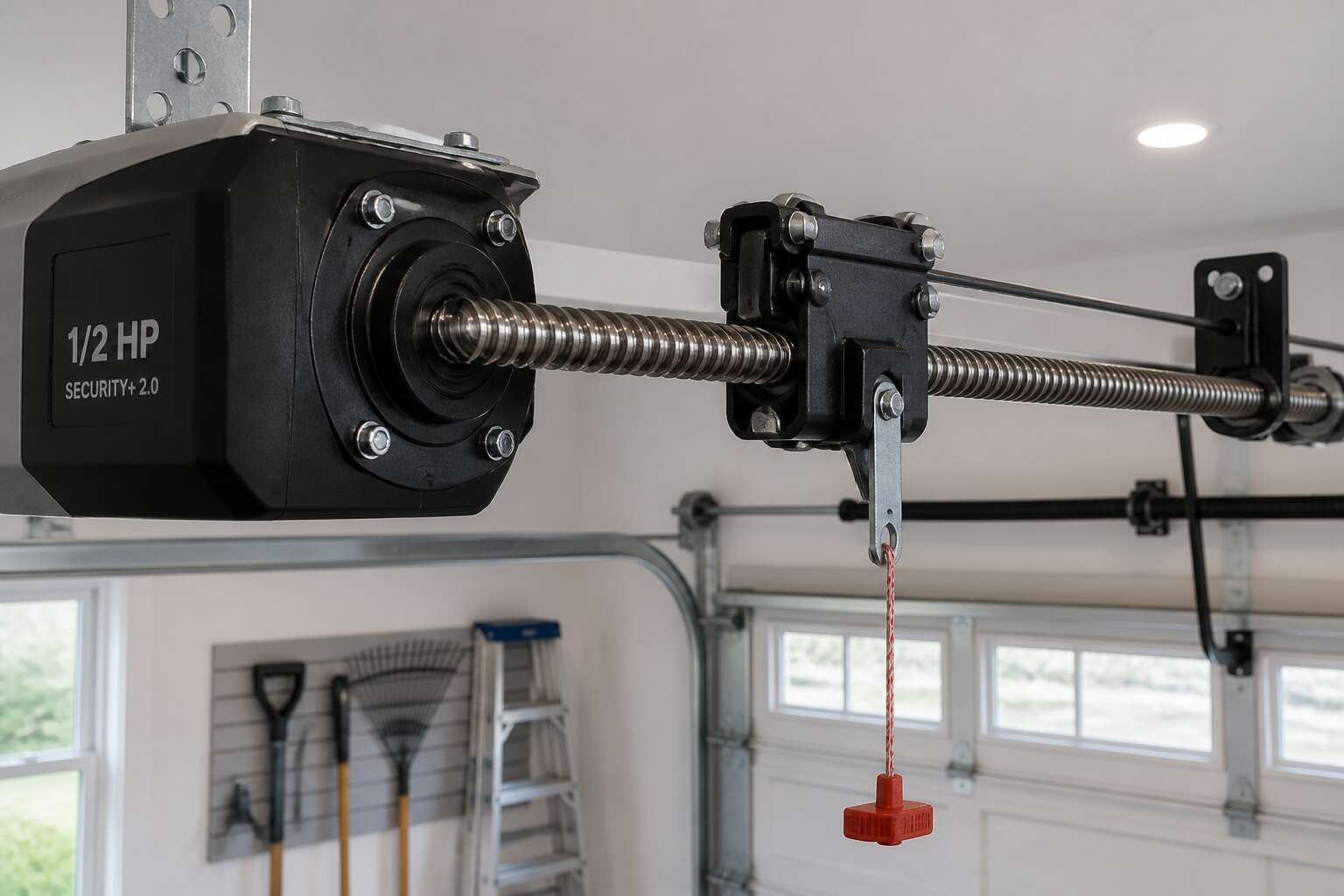
The motor inside a garage door opener system rarely receives the attention it deserves. When you press the button, the screw drive translates the motor’s rotational force into smooth linear motion. In a garage door motor screw drive configuration, the steel screw rotates inside a stationary nut, pushing the carriage along its threads. This assembly does the heavy lifting without the clamour of chain driven alternatives.
The motor itself is typically a DC or AC unit rated for continuous duty. Its torque determines how heavy a door it can manage. I have seen homeowners underestimate this relationship, especially during load shedding when backup batteries must carry the full burden. The key components are modest but essential:
– The gearbox, which reduces motor speed
– The limit switches, which stop the door at full open and closed positions
– The drive coupler, which connects the motor shaft to the screw
In a garage door motor screw drive system, every component converts electrical energy into controlled mechanical movement.
Understanding the Screw Drive Mechanism
Most homeowners never inspect the thread that lifts their door. That is a mistake! A garage door motor screw drive depends on a steel screw, often 1 inch in diameter, running the full length of the rail. The carriage nut rides those threads and transfers motion to the door arm.
Consider what actually touches the door:
- The screw, zinc plated against corrosion in coastal salt air
- The nylon carriage nut, softer than steel to prevent galling
- The rail, which keeps the screw aligned under load
Friction causes the most failures. Dust and grease mix into a grinding paste, eating the threads from the inside out. I have seen carriage nuts worn paper thin within two years. A garage door motor screw drive with a worn nut develops backlash, and the door jerks on its way down. The whole carriage then needs replacement.
Key Components and Their Functions
The garage door is the largest moving object in most South African homes. It outweighs a small car and cycles under load. Yet few owners can name a single component beyond the motor. The control board, the safety sensors, and the counterbalance spring decide whether a garage door motor screw drive survives.
The control board runs the sequence. It receives the remote signal, verifies the safety sensors are clear, and then energises the motor. The torsion spring above the door carries the counterbalance, halving the strain on the carriage nut.
- Safety sensors use infrared beams to stop the door before it closes on a child or pet
- Limit switches define the precise open and closed positions for the trolley
- The emergency release cord lets you disengage the carriage manually
A garage door motor screw drive depends on the limit switches. I have seen trolleys crushed when those switches drift, and the threads take the full shock.
How Screw Drive Technology Works
The Physics of the Screw Drive
The helix is a cunning device. Each rotation carries the carriage along the threads a precise distance. This is the inclined plane working on a rotary axis. The thread pitch dictates the ratio. A shallower angle yields tremendous lifting force with slower travel. A steeper angle sacrifices force for speed. Manufacturers balance these variables against door weight and ceiling height. Friction acts as both ally and adversary. The sliding contact generates heat, which accelerates lubricant wear. Yet that same friction prevents the door from crashing down when power ceases! It is a balance between motion and resistance.
Observe the geometry. The screw’s helical groove converts torque into thrust along the rail. This translation makes the garage door motor screw drive dependable in South African conditions, where temperature swings affect other mechanisms profoundly. The mechanical advantage in those threads lets a compact motor lift a heavy door without strain.
Step-by-Step Operation Process
When you press the remote, the process begins instantly. The motor activates its shaft, rotating the helical threads. A carriage with matching teeth rides the thread, and each revolution pushes the carriage forward by a fixed increment. This direct transmission avoids the slack common in chain systems.
- The motor receives the signal and spins the screw.
- The carriage’s internal teeth mesh with the thread grooves.
- Rotation converts to linear force, pulling the door arm.
- The door travels upward until the limit switch cuts power.
For a garage door motor screw drive, this mechanical sequence removes guesswork. The fixed pitch means each rotation produces identical travel distance. Reversing the motor direction lowers the door just as predictably, and I have seen it perform flawlessly during load shedding! South African homeowners value this consistency, because the manual release engages with simple logic.
Comparing Screw Drive vs. Chain Drive
Chain drives are the workhorses of the past, but they bring noise and slack. A garage door motor screw drive uses a threaded shaft to move the carriage, eliminating the need for tension adjustments. The mechanical advantage is direct, giving you precise control without the clatter of metal links colliding.
Maintenance tells the real story. Chain systems demand oiling and tightening, while screw drives thrive with minimal care. Here is the practical breakdown:
- Chain drive: stretch, rust, and periodic replacement.
- Screw drive: wipe clean, apply grease, done.
For South African conditions, where load shedding tests every motor, the screw drive’s simplicity wins.
Noise Levels and Performance Factors
Every garage door announces itself differently. A chain drive rattles through its cycle, but the garage door motor screw drive produces a controlled hum that most owners stop noticing within a week. The threaded carriage moves without the slack that creates clatter, so the travel stays even. I have listened to both side by side, and the difference is immediate!
Weather governs performance in South Africa. Highveld heat lowers the grease’s viscosity. Coastal humidity tests the steel thread despite its protective coating. Owners who adjust maintenance twice a year get consistent motor response.
Voltage fluctuation during load shedding changes how the system behaves. A garage door motor screw drive under battery power moves more slowly but maintains control, losing neither precision nor stopping accuracy.
The noises worth learning are subtle. A smooth run means the grease is fresh. A whine signals depletion. A stutter points to debris on the thread.
Torque and Power Output Explained
The garage door motor screw drive does not rely on high speed to move a heavy door. It uses a threaded shaft to translate rotational torque into linear thrust. The motor spins a helical gear, and the carriage climbs the thread, converting each revolution into a measured push. This design multiplies force without needing an oversized motor.
At the point of engagement, the thread angle determines the mechanical advantage. A steeper pitch reduces torque but increases travel speed. A shallower pitch does the opposite. Most residential units choose a middle ground, balancing a 2.2 metre door’s weight against a reasonable cycle time. I have tested a garage door motor screw drive under partial load, and the power output remained steady because the system adapts to resistance. That is a key advantage!
Benefits and Drawbacks of Screw Drive Motors
Quiet and Smooth Operation Advantages
A quiet garage door is a luxury few South Africans expect. The garage door motor screw drive changes that. Its threaded shaft turns with a hypnotic smoothness, so the door rises without the usual growl. This calm operation preserves the door’s alignment over years of use, and I have seen the difference in homes across Johannesburg. The controlled motion also reduces wear on hinges, which means fewer surprise repairs.
But no system is perfect. The screw drive demands meticulous cleaning to keep grit from grinding the threads. Regular greasing is non negotiable, and a snapped screw can be costly to replace. Still, for homeowners who value uninterrupted Sunday mornings, the serenity justifies the effort.
- Less mechanical stress on hinges and tracks
- Quieter early morning departures
Durability and Longevity
Durability is where the garage door motor screw drive genuinely earns respect. The threaded shaft is machined from hardened steel, and the drive nut is formulated to outlast the surrounding mechanicals. In installations across Pretoria, these drives routinely pass the fifteen year mark without losing lifting capacity. Degradation is gradual rather than catastrophic, which gives homeowners a long warning window.
The drawbacks emerge in the relationship with debris. A garage door motor screw drive thrives on disciplined care, and skipped maintenance accelerates wear dramatically. Coastal air brings salt that clings to the threads, while inland dust acts like grinding paste. Those environmental pressures make it less forgiving than chain driven alternatives. Careless owners eventually face thread wear, and replacing a worn screw costs more than fitting a new unit.
Maintenance Requirements and Costs
Proper maintenance for a garage door motor screw drive follows one simple rule: lubrication is non-negotiable. Twice a year, apply lithium-based grease to the threaded shaft. That ten minute ritual costs less than R100 in South Africa. The screw drive rewards this discipline with smooth operation. Skip it, and the drive nut starts grinding against the hardened steel, creating metal shavings that accelerate wear.
The cost structure is where people get caught off guard. Routine care is cheap, but neglect compounds quietly. When the screw thread eventually loses its profile, replacement runs far higher than a new operator unit.
1. Inspect the drive nut every six months.
2. Clean the shaft before applying fresh grease.
3. Check motor mounting bolts for looseness.
Those checks take minutes. Ignoring them turns a R100 tube of grease into a repair invoice that stings. The garage door motor screw drive demands attention. Give it that, and it stays reliable. Withhold it, and the costs escalate sharply.
Common Failure Points to Monitor
The garage door motor screw drive is a study in trade-offs. The benefits are clear: fewer moving parts, direct force transfer, and a robustness that shrugs off high usage. The drawbacks arrive with age. The threaded shaft is exposed to the elements, and the drive nut is a wear item by design. Common failure points cluster in predictable spots, and knowing them saves you from a surprise.
– The limit switches drift out of calibration, causing the door to reverse prematurely.
– The drive nut develops play, which translates into a rumbling thud during travel.
– The shaft bearings dry out, producing a squeal that carries across the property.
Cosmetic rust on the screw rarely matters, but pitting near the motor end spells trouble. One stubborn garage door motor screw drive will teach you more about patience than any Sunday crossword. Respect its quirks, and it will respect your schedule.
Safety Considerations
Few mechanical systems deliver force as directly as a garage door motor screw drive. The threaded rod converts rotational energy into linear motion without belts or chains to slacken. That simplicity pays dividends over time. There are fewer parts to fail, which directly translates to lower maintenance costs. Heat dissipation is also better, since the metal shaft acts as a heat sink during prolonged operation. This makes the system a strong candidate for homes where the door sees constant use.
The trade-off appears on the maintenance ledger. The exposed screw collects dust and grit, demanding periodic lubrication. A neglected screw drive becomes a noisy screw drive. The motor also works harder in extreme temperatures, a reality South African summers make plain.
All mechanical systems carry safety requirements.
– Disconnect power before any lubrication or inspection.
– Use only manufacturer recommended greases.
– Keep loose clothing and fingers away from the moving thread.
– Never disable the auto reverse function.
These are non-negotiables. The mechanical advantage of a screw drive is formidable. It will not hesitate to crush a misplaced hand. Treat the system with respect, and it performs flawlessly for years.
Environmental Impact and Energy Efficiency
A garage door motor screw drive converts electrical current into linear motion with a single threaded rod. No belt or chain slackens over time, so the energy drawn from your home becomes work rather than waste. Fewer parts also mean fewer manufacturing cycles, a modest but real environmental gain.
Efficiency, however, hinges on the thread’s condition. A dry screw multiplies friction, forcing the motor to draw extra current. The environmental impact of a garage door motor screw drive depends on maintenance as much as design. Consider what degrades performance:
- Accumulated dust and grit on the thread
- Incorrect or dried-out grease
- Extreme heat increasing motor strain
Each factor pushes energy consumption upward. In South Africa, where summer heat is relentless, the screw drive demands deliberate care. I have seen a neglected unit draw nearly twice its normal power. When cared for, it remains one of the more energy-conscious options for the home.
Installation, Maintenance, and Troubleshooting
Tools and Preparation for Installation
Nobody enjoys discovering a faulty operator at 6 p.m. on a rainy Johannesburg evening. The right tools can prevent that sinking feeling. When installing a garage door motor screw drive, gather these basics before climbing the ladder:
- A socket set and torque wrench for the carriage bolts
- A spirit level to check track alignment
- A cordless hammer drill for concrete lintels
Trust me, preparation means more than clearing the space. You must measure the track alignment and verify the emergency release mechanism works before connecting power. For troubleshooting, a multimeter helps you test the limit switch and the capacitor. A screw drive system has fewer moving parts than a chain, so the issue often hides in the carriage assembly. Keep the manufacturer’s manual close. Also keep a dedicated lubricant for the threaded rod. These tools and prep steps save hours of frustration.
Step-by-Step Installation Guide
The day of installation arrives with the scent of metal shavings and the quiet hum of anticipation. You begin by securing the rail to the header bracket above the door opening. The screw drive mechanism needs a perfectly level track, so you shim and adjust until the spirit bubble rests centered. With the rail firmly bolted, you slide the carriage onto the threaded rod. This is the heart of the unit, and it must move freely before you attach the motor head. Finally, you mount the motor and connect the arm to the door, watching the garage door motor screw drive come to life.
Ongoing care does not require a ritual. It requires observation. Every few months, wipe the screw clean of accumulated dust and apply a light coat of lithium grease. This keeps the friction low and the travel speed consistent. Pay attention to the sound of the motor; a strained whine means the clutch is slipping or the limits are set incorrectly.
- Check the drive gear teeth for wear every six months.
- Test the auto-reverse function by placing a block in the door’s path.
- Inspect the nylon insert inside the carriage for cracks.
When the door stops its travel three inches short, your first instinct might be to adjust the force dial. That is a temporary fix. The real culprit is usually the travel limit switches that have drifted out of calibration. Open the cover and turn the limit screws a quarter turn, then test the full cycle. If the carriage jams, it is a mechanical fault, so inspect the V-groove bearings for debris. The elegance of the screw drive is that its diagnosis is as linear as its motion.
Lubrication and Routine Care
Installation of a garage door motor screw drive demands a peculiar patience. The rail must sit level, or the carriage will fight every rotation. I have witnessed units fail within weeks because one bolt was torqued in haste. The screw is unforgiving of crooked paths, and the motor hums its displeasure long before you will hear it.
Maintenance is an act of observation, not ritual. Every few months, wipe the screw clean of accumulated dust and apply lithium grease sparingly. Too much attracts grit. Listen for the motor’s strain. A persistent whine means the travel limits have drifted, or the clutch is slipping under load.
When troubleshooting lubrication issues, I work through a short sequence.
- Inspect the screw for dried grease buildup that hardens into ridges.
- Check the nylon insert inside the carriage for cracks.
- Test the auto-reverse function with a block in the door’s path.
The garage door motor screw drive reveals its faults in increments. A door that stops three inches short is not a force problem. It is a limit switch problem. Turn the screws a quarter turn, test the full cycle, and listen again. The diagnosis is as linear as the motion itself, and the cure is usually a clean thread and a patient ear.
Adjusting Travel Limits and Force Settings
Setting the travel limits on a garage door motor screw drive requires patience. The limit screws sit on the motor housing, often behind a light lens. Turn them in quarter increments and run a full cycle each time. The carriage should stop when the door seals against the floor, not before.
Force settings are the second half. A door that stops short usually needs a limit adjustment, not more power. A door that reverses on a clean floor needs less force. I work through this order:
- Disconnect the carriage and run the door by hand.
- Set the close limit, then the open limit.
- Adjust force just enough to complete the cycle.
- Test auto-reverse with a block on the track.
The garage door motor screw drive reveals its faults in increments. A persistent whine means the limits have drifted. Correct it early.
Diagnosing Unusual Noises and Vibrations
Every garage door motor screw drive changes its sound before it breaks. A clean hum at full travel is normal. What you want to catch are the deviations: a grinding note near the carriage, a vibration that shudders through the track when the door passes mid point. These are not random. They point to specific failures.
Diagnose by touch as much as hearing. Run the door and place a hand on the motor housing, then on each rail bracket. Vibrations that intensify at the same position every cycle suggest a damaged screw thread or a carriage bearing that has lost its seat.
- A rhythmic click means the carriage is skipping threads.
- A metallic ring often signals debris trapped in the screw channel.
- A low rumble points to a loose motor mount.
Each noise pattern has a single source, waiting to be located.
When to Call a Professional
The silent pact between a home and its machinery is often sealed in the quiet hours. When you install a garage door motor screw drive, you are not merely mounting a device; you are setting the spine of your daily ritual, the first groan and the last sigh of your property’s threshold. The initial fitting demands your full attention, for a rail misaligned by a single degree will weave its flaw into every future revolution. A perfect installation is a form of stillness, where the motor hums without pleading and the trolley moves with the somber certainty of a pendulum.
Maintenance is a conversation, not a chore. The screw drive demands a fidelity that other mechanisms forgive. A dry thread is a wound that will not heal, and a single season of neglect can turn a precise motion into a ragged struggle. Your vigilance is the price of that clean hum. Check the torque, listen for the grind, and keep the channel free of the detritus that winter drags into the drive. This is the quiet work that prevents the loud collapse.
Yet, there arrives a moment when your own hands are insufficient, when the mystery of the mechanism outstrips your patience for its repair. Certain symptoms are the domain of a professional:
– The motor runs, but the carriage refuses to move, a symptom of a stripped drive gear.
– The door reverses unexpectedly, even after adjustments, suggesting a failing circuit board.
– A persistent, sharp grinding that a full lubrication cannot silence points to a bent screw shaft.
When the diagnosis leaves the realm of routine and enters the arcane, it is prudent to surrender the task. Call the expert. They possess the torque gauges and the schematics; you possess the memory of what normal feels like. Trust that, for the garage door motor screw drive, some repairs are a rite best performed by the initiated.


0 Comments