
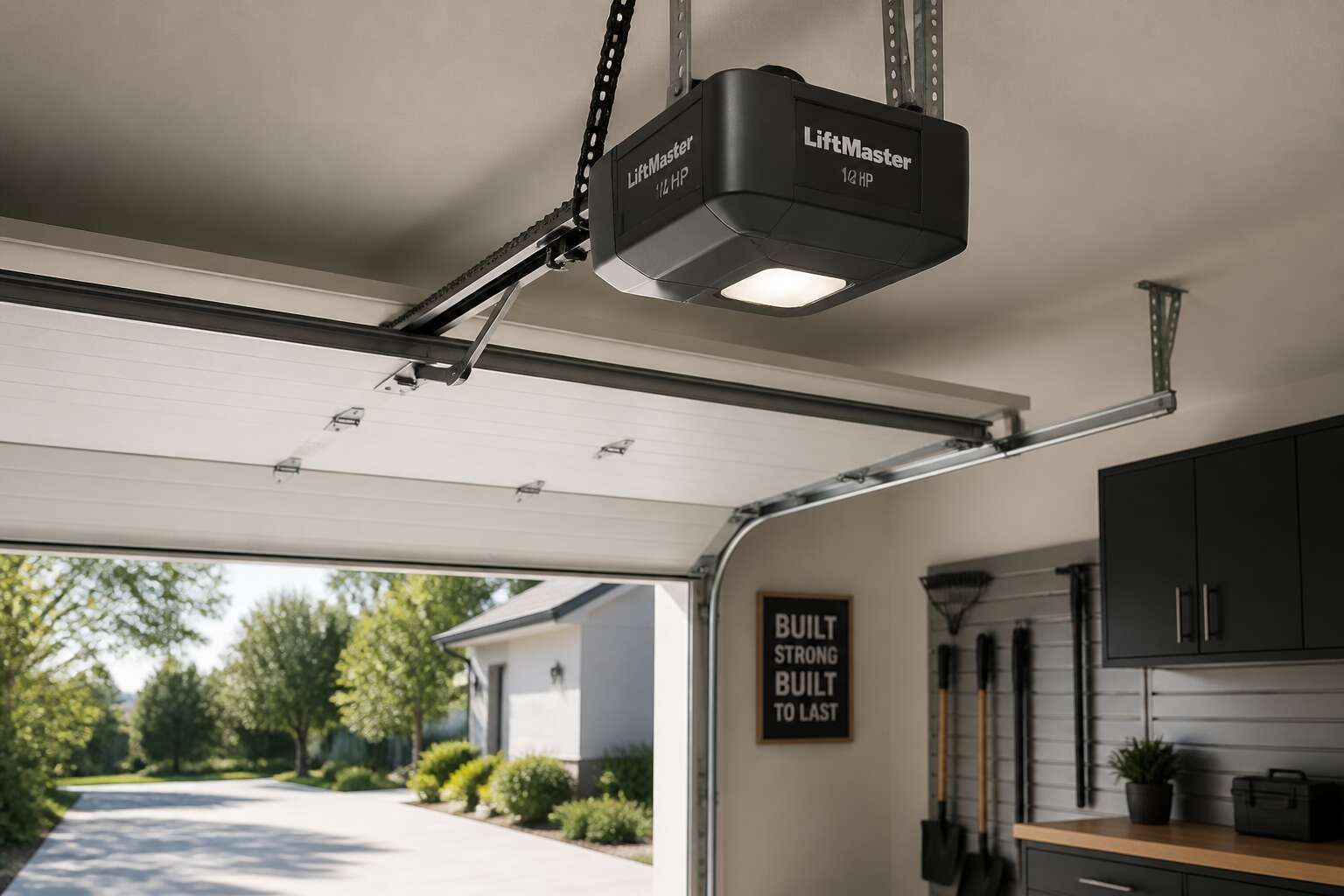
Average Lifesage Expectations
Typical Years of Service
The average garage door motor lasts between 10 and 15 years. This is a rough baseline, not a guarantee. Some units fail before their tenth birthday, while others keep running past two decades. The difference often comes down to the specific conditions in which the motor operates.
South African homeowners face unique challenges. High summer temperatures and coastal humidity place significant stress on electrical components. Frequent power surges, common in many areas, also degrade internal circuitry over time. A motor installed in a sheltered garage will naturally outlast one exposed to the elements.
Brand quality plays a pivotal role in longevity. Premium motors use better capacitors and gears, crafting a service life that stretches closer to the upper limit.
Here is what typically influences the outcome:
– Heavy, solid wood doors force the motor to work harder.
– Poorly balanced doors cause premature wear on the gear train.
– Infrequent maintenance lets dust and grime accumulate.
– Short-cycling, or opening the door multiple times per hour, accelerates fatigue.
So when you ask, garage door motor how long does it last, remember that this question has no fixed answer. The operating environment and installation quality dictate the real figure. A well-treated unit in a mild climate will serve you for years, but a neglected one in a harsh setting might fail early.
Understanding Duty Cycles
The lifespan of a garage door motor is not set in stone, but most homeowners can expect a solid decade of service. You will find that the unit’s build quality and the demands placed on it daily are the true deciding factors. For a precise answer to garage door motor how long does it last, think in terms of 10 to 15 years as the average window before replacement becomes necessary.
Local conditions play a massive role in determining the garage door motor lifespan. The South African sun is relentless, and the heat inside a metal roof can cook electrical components prematurely. Power surges from load shedding are notorious killers of circuit boards, while coastal humidity and salt air corrode terminals and bearings. A motor in a shady, sheltered suburb will often outlive one battling the elements in Sandton or Durban.
Understanding the operational stress is key to predicting longevity. Here are the primary factors that shorten a motor’s working life:
1. The weight of the door; a solid hardwood door is far harder on the mechanism than a lightweight aluminium one.
2. The frequency of use; a single garage home with two cars will cycle a motor twice as often as a single-car household.
3. The condition of the springs; if the torsion springs are weak, the motor takes on the full lifting burden, which causes rapid overheating.
4. The state of the tracks and rollers; excessive friction forces the unit to work harder on every single cycle.
It is also important to consider the mechanical condition of the door itself. A motor that is perfectly maintained will still fail early if it is forced to move a door with broken rollers or rusted hinges. The motor is essentially a dedicated workhorse, but it relies on the entire system to be balanced. When the physical door runs smoothly, the motor draws less current and runs cooler, which directly correlates to a longer garage door motor lifespan.
Ultimately, when you ask garage door motor how long does it last, the answer hinges on the local climate and the maintenance habits of the owner. A premium brand motor with a steel-gear drive will usually push past the 15-year mark without complaint. However, a cheaper chain-drive unit exposed to Highveld thunderstorms and irregular servicing might struggle to see its tenth birthday. Getting a professional to assess the wear and tear on the complete system is the only reliable way to gauge if your unit is on its last legs or has years of service left.
Chain Drive vs. Belt Drive vs. Screw Drive
The question of garage door motor how long does it last often depends on the drive mechanism inside the unit. While the 10 to 15 year window provides a general rule, the specific technology alters the life expectancy you can realistically plan for.
Here is how the three main types typically compare.
Chain drive motors: These are the workhorses. They take significant wear and tear, but the robust design often pushes them toward the upper end of the lifespan, frequently hitting 15 years with basic maintenance.
Belt drive motors: The rubber belt is easier on the motor itself, but the belt material can dry out and crack in harsh sun. Expect 10 to 12 years, with the belt often needing replacement during that period.
Screw drive motors: Because they use fewer moving parts for the sliding mechanism, these can be extremely durable, but they demand specific lubrication. Neglect can halve their potential lifespan to around 7 years.
So, when you wonder how long a garage door motor lasts, identifying the drive type is the first step to knowing if your unit is nearing retirement or has years of operation left.
Premium vs. Economy Models
When it comes to garage door motor how long does it last, the price you pay upfront often dictates the timeline for replacement. Premium models, typically featuring belt drives and DC motors, are engineered with higher-grade components. These units operate more smoothly and generate less internal friction, allowing them to consistently reach the 10 to 15-year mark even with frequent daily use.
On the other hand, the more affordable chain drive motors are the workhorses of the industry. They are loud, but they are also brutally effective. The trade-off involves heavier wear on the metal gears and the chain itself. However, because the design is so straightforward, a basic unit can still offer a solid eight to twelve years of service. The deciding factor here is often the quality of installation and the local climate.
Here are three key factors that separate the budget buys from the long-term investments:
– Materials used: Premium hubs and nylon gears resist wear better than their all-metal, standard counterparts.
– Motor type: Direct current (DC) motors run cooler and last longer than alternating current (AC) options.
– Lubrication: Sealed bearings require less maintenance, while open tracks need regular grease to prevent grinding.
Ultimately, the economy model is not a bad choice for a weekend cottage or a seasonal home. But for a primary residence in South Africa, where the sun and heat can bake the rubber components, a premium unit often proves far more resilient. You might save a few hundred rand today on the purchase, but you could easily double that cost in repairs and labour within five years. Think of the motor as the engine of your home; the lifespan of a garage door motor depends on whether you are willing to invest in a robust system or just a temporary fix.
Key Factors That Impact Longevity
Frequency of Daily Use
So you want the straight answer on garage door motor how long does it last? It is the question every homeowner asks when that grinding sound starts. The truth is that lifespan hinges on a handful of variables you actually control. It is not just about the brand or the price tag. It is about how you treat the workhorse that lifts hundreds of kilograms daily.
Think of your motor like a car engine. You can drive a sedan like a rally car, but do not be shocked when the transmission gives out. The same logic applies to your garage. A motor that lifts a heavy wooden door four times an hour will burn out faster than one that operates twice a day. That is simple physics.
Here is the breakdown of what really wears down the system:
– Cycles per day: Every open and close counts as one cycle. A motor rated for 10,000 cycles will last roughly five years at six cycles daily. Push it to twenty cycles, and you halve that timeline.
– Temperature extremes: In scorching summers, the grease thins out. During icy winters, it thickens. Both extremes force the motor to work harder to overcome resistance. That extra strain adds up.
– Power surges: Lightning strikes or faulty wiring can fry the circuit board instantly. A surge protector is a cheap insurance policy compared to a full motor replacement.
– Door balance: A perfectly balanced door makes the motor work minimally. If the springs are worn, the motor takes on the heavy lifting. You will hear the difference immediately.
Maintenance plays a sneaky role here too. I have seen motors last fifteen years because the owner sprayed the hinges with lithium grease every six months. I have also seen units die in year three because nobody bothered to check the alignment. The motor does not fail alone. It fails because the connected hardware drags it down.
Another overlooked factor is the type of usage. A motor that stops mid-cycle frequently, due to safety beam misalignment, suffers from electrical stress. It is not the physical movement that kills it; it is the constant starting and stopping that heats up the windings. That heat is the silent assassin.
So when you ask garage door motor how long does it last, look at your habits. A family with kids coming and going will chew through a motor faster than a retired couple. It is not a mystery. It is arithmetic, friction, and a little bit of electrical luck. If you want the maximum years, ease up on the remote and listen to the machine. It will tell you when it is struggling.
Climate and Weather Conditions
South African climate conditions tax garage door motors ruthlessly. Coastal humidity in KwaZulu-Natal or the Western Cape corrodes the circuit board contacts. Inland, highveld heat thins the internal grease until it loses its protective film. I have opened motors after three summers and found the windings brittle from the bake.
Winter frost thickens the lubricant. The motor must overcome stiff resistance on every start. Repeated cold starts overheat the winding insulation. Thunderstorms bring voltage spikes that can destroy the electronics in a single strike.
- High heat accelerates grease breakdown
- Humidity corrodes electrical components
- Cold makes the motor work harder
The question garage door motor how long does it last depends heavily on where you live. A motor in a mild coastal area may last twice as long as one in the highveld.
Power Surges and Electrical Issues
The electricity feeding your home carries its own dangers. Load shedding creates a violent cycle of voltage drops and spikes. The question of garage door motor how long does it last often has an electrical answer rather than a mechanical one. A single heavy surge can fry the control board. Smaller transients deposit silent damage on capacitors over months.
The damage is cumulative. What presents as sudden failure is usually the end of a slow degradation process. Each power cut stresses the rectifier and transformer. The motor remains mechanically sound, but the electronics fail quietly.
Voltage spikes from neighbourhood switching arrive without warning. You do not see this damage. It builds until the day the door stops moving. This hidden attrition is why garage door motor how long does it last cannot be answered without knowing what kind of power it receives.
Installation Quality
The quiet hum of a well-installed garage door motor is something you rarely notice until it stops. Then, the silence is deafening. You might wonder, “garage door motor how long does it last?” while staring at a car trapped inside. The answer often lies not in the motor itself, but in the hands that fitted it.
A flawless installation sets the stage for a decade of reliable service. A sloppy one plants the seeds of premature failure from day one. It is the unseen foundation that determines whether your motor dies young or lives a long, productive life.
When a technician aligns the tracks perfectly and torques every bolt to spec, the motor operates under minimal strain. It glides through its cycles without fighting against friction or binding components. This is the difference between a motor that works hard and one that works smart.
Consider the balance of the door itself. An installer who takes the time to calibrate the spring tension precisely is doing you a massive favour. This balance counteracts the door’s weight, meaning the motor only needs to provide a gentle push rather than a heroic lift. A misaligned door forces the motor to labour, generating excess heat and wearing down gears rapidly.
The electrical connection is another realm where installation quality shines. A dedicated circuit with proper earthing protects the motor’s sensitive electronics. Loose wiring or shared circuits invite voltage fluctuations that can corrupt the control board’s logic. These gremlins are hard to diagnose and often result in erratic behaviour long before a total failure.
Compare the experience of a homeowner who chose a certified professional versus one who opted for a bargain-basement handyman. The difference is stark.
1. A professional performs a full site survey, checking door condition, spring tension, and track alignment before touching a single wire.
2. They reinforce the frame with a sturdy backing plate, ensuring the motor does not tear itself loose from the wall under repeated stress.
3. They test the auto-reverse mechanism and photoelectric sensors, guaranteeing safety features work flawlessly from the first press of the button.
The bargain installer might save you a few hundred Rand upfront. However, they often skip these critical steps, leaving a ticking time bomb above your head. The motor will run, but it will run poorly. It will shudder, strain, and eventually surrender to the relentless abuse.
When you ask the question of how long your motor will last, consider that the warranty is only as good as the installation. A quality fitment gives you the full benefit of the manufacturer’s engineering. It ensures every cycle is smooth, every start is clean, and every stop is precise.
So, the next time you press that remote, think about the unseen craft behind the motion. The concrete answer to your motor’s lifespan is shaped by the skill of the person who bolted it into place. Protect that investment. Ensure your installation is performed with the care and precision it deserves.
Maintenance Habits
Most homeowners never think about their garage door motor how long does it last until the unit starts grinding. Maintenance habits decide that answer more than any other factor. A motor that gets regular lubrication and track cleaning runs smoothly for years. An ignored motor accumulates dirt, friction, and heat. The gears wear unevenly. The control board suffers from repeated strain. The springs lose their balance, and the motor takes over the heavy lifting. This is where the lifespan quietly shrinks. Consider the common oversights that shorten motor life:
- Dry bearings and chains that grind with every cycle
- Dirty tracks that force the motor to push against debris
- Loose limit switches that cause the door to slam or reverse mid-travel
Each of these issues compounds over time. A motor that operates smoothly under proper maintenance can serve a household for over a decade. One that is neglected will fail far sooner. The difference is not dramatic. It is routine.
Warning Signs Your Motor Is Failing
Unusual Noises and Vibrations
A garage door motor that hums, grinds, or rattles is trying to tell you something. Silence is golden, but sudden, harsh sounds are often the first whisper of mechanical distress. When you ask the question, “garage door motor how long does it last,” the answer often depends on how clearly you listen to these auditory clues.
Grinding often points to worn gears inside the drive unit. This is a metallic, persistent friction that signals the internal lubricants have failed or the nylon teeth have stripped. A loud clicking or snapping sound during operation usually indicates a problem with the sprocket or the chain drive slipping on its teeth. These sounds rarely resolve on their own and typically lead to a complete failure.
Vibrations tell a similar story. If the entire rail shakes violently when the door moves, the motor mounting brackets may have loosened. Excessive trembling can also indicate an unbalanced torsion spring system, which forces the motor to work harder than intended. Consider these common indicators:
– A sudden, loud bang that sounds like a whip crack, often from a snapped cable or spring.
– Continuous rattling that persists even when the door is stationary but the motor runs.
– A high-pitched squeal that occurs only during the initial start-up phase.
These physical tremors travel through the steel tracks and into the walls of your home. When you feel that shudder, the unit is under extreme duress. Ignoring the vibration does not make it disappear; it accelerates the wear on every moving component. The true measure of how long your motor lasts is often determined by how promptly you respond to these early warnings, rather than the calendar date of its installation.
Sluggish or Inconsistent Operation
A garage door that once glided upward now stutters, pauses, or reverses for no apparent reason. This sluggishness is a definitive signal that the drive train is losing its battle against friction, or that the capacitor is failing to deliver consistent power. The motor may run, but the performance is erratic, making each cycle a gamble.
- The door moves in short, jerky increments instead of a smooth sweep.
- It stops halfway, waits, then continues as if second-guessing itself.
- The opener struggles to lift the panel on a cold morning, which is a classic sign of worn internal components.
These inconsistencies directly affect the answer to garage door motor how long does it last. When the motor strains against sticky rollers or a misaligned track, the amperage spikes, heating the windings. Each labored run chips away at the remaining service life. The question is no longer about calendar age, but about how many more faltering revolutions the unit can endure before it simply refuses to respond.
Overheating and Burning Smells
The life of a garage door motor is measured in quiet revolutions, and its end is rarely announced with a dramatic crash. It is more often a slow, olfactory confession. When the internal components begin to fail, they generate heat as a byproduct of their struggle. This heat has a distinct character, a metallic breath that escapes into the air of your garage. The garage door motor how long does it last question becomes secondary when you first catch that scent of scorched wiring or hot grease; it signals an internal battle being lost.
The burning smell is often the first tangible evidence of a system under duress. A motor straining against excessive friction, poor lubrication, or a failing capacitor will draw higher amperage to compensate. This increased electrical load translates directly into thermal stress, and the protective coatings on the windings begin to break down. The result is a pungent, acrid odor that is unmistakable. When the unit begins to emit this warning, the operational lifespan is measured in days, not years. The question of garage door motor how long does it last is no longer about calendar age but about the remaining integrity of the insulation.
Beyond the scent of burnt plastic, you may notice a hot spot on the motor housing itself. A healthy unit will run warm to the touch, but a failing one becomes uncomfortably hot, radiating heat even after a short cycle. This heat is a symptom of internal friction and electrical resistance. It is a silent thief, slowly degrading the components until a thermal overload switch trips or the motor seizes entirely. At this stage, the unit is a hazard, and the answer to garage door motor how long does it last is a simple metric of how many more cycles it can survive before it becomes a fire risk.
There are a few telltale signs that accompany the overheating, which you should listen for as the heat builds:
– A noticeable reduction in the motor’s speed before it halts.
– A persistent, low-frequency hum that persists even when the door is stationary.
– The smell of hot metal or a distinct ozone odor, indicating arcing electrical contacts.
When the motor reaches this state of thermal distress, the damage is often irreversible. The lubricants have thinned and lost their viscosity, and the internal gears are grinding against each other without protection. Even if you allow the unit to cool down and reset, the damage has been done. The garage door motor how long does it last is a question that now has a definitive, grim answer, and the only safe remedy is a replacement before the unit fails catastrophically.
Remote and Keypad Malfunctions
Remote and keypad malfunctions often whisper before your motor ever screams. These little devices act as the nervous system for your entire garage setup, translating your intentions into mechanical action. When they start behaving erratically, something deeper is usually brewing beneath the surface.
You press the button and nothing happens. You press it again, maybe a little harder. Still nothing. Then, five minutes later, the door decides to cooperate as if your frustration finally registered somewhere. This inconsistency is never random. Your motor might be struggling to receive the signal, or its internal receiver could be degrading from years of continuous use. This question of garage door motor how long does it last becomes pressing when your remote starts acting like an unreliable messenger.
Beyond the simple inconvenience of a door that refuses to listen, these failures often signal that your motor’s wiring or circuit board is experiencing trouble. Perhaps the backup battery has died, causing the system to lose its memory settings. Maybe the safety sensors have shifted slightly, confusing the system into thinking an obstacle exists when none does. The symptoms multiply while the root cause stays hidden behind that stubborn metal panel.
Common remote and keypad failure symptoms include:
– Intermittent response that grows progressively worse over several weeks
– Reduced operating range where you must stand directly at the door for any reaction
– Unresponsive buttons that require multiple presses before engaging
– Keypad error codes flashing when you attempt to enter your PIN
– One remote working while another fails, suggesting internal component wear
These problems rarely exist in isolation. A failing motor often produces electrical fluctuations that interfere with signal reception. Your remote might work perfectly in the kitchen yet fail in the driveway, not because the remote is faulty, but because the motor’s receiver has grown weak and confused. This pattern reveals the truth about your system’s declining health.
The cost of replacing a remote seems trivial compared to a full motor installation. Yet many homeowners ignore these warning signs, chalking them up to dead batteries or minor glitches. That short-term patience eventually leads to a completely seized motor, a door stuck halfway, and an urgent call to a repair technician during inconvenient hours. As with most mechanical systems, the earliest symptoms provide the cheapest solutions. Pay attention when your remote starts playing games. That frustrating little device is often the first honest messenger about garage door motor how long does it last in practical terms.
Maintenance Tips to Extend Motor Life
Lubricating Moving Parts
It’s the question every homeowner asks eventually: exactly how long does that trusty workhorse keep going? You might hope for a decade, perhaps even two. In reality, the garage door motor lifespan hinges mostly on how well you treat it. Think of it like a car engine; neglect it, and it sputters out well before its time. With regular attention, however, you can easily reach that 15-year mark, and sometimes even push past it. Your daily routine is the deciding factor.
Lubrication is the cheapest insurance policy you will ever buy for your machinery. A dry system creates friction, and friction is the silent killer of moving parts. You want to focus on the metal rollers, the hinges, and the bearing plates. A simple silicone-based spray or a light lithium grease works wonders. Just remember, a little goes a long way, and you should always wipe away any excess to prevent attracting dust and grit.
1. Spray the rollers and hinges every six months.
2. Apply a small amount of grease to the rails, not the gears.
3. Wipe the tracks clean with a dry cloth before applying anything new.
Beyond the lube, a quick visual inspection can save you from a major headache. Give the hardware a good once-over. If you spot loose bolts or brackets, tighten them up. A system that wobbles is a system that wears out faster, putting extra strain on the motor. By simply staying ahead of these small issues, you’re directly answering the question of garage door motor how long does it last with more years than you might expect. A little regular care means you won’t be scheduling a costly replacement any time soon.
Tightening Hardware and Cables
A garage door motor that wobbles on its mounting is a motor that is working too hard. Loose bolts on the bracket or the track rails cause the entire assembly to vibrate. That vibration wears out gears and stresses the circuit board. A simple annual check of all hardware can add years to your system’s life. Use a socket wrench to tighten the mounting brackets and the track bolts. You should also inspect the hinges on each panel. A broken hinge causes the door to twist, which forces the motor to pull unevenly. This uneven strain is a primary culprit when people ask garage door motor how long does it last and find the answer is disappointingly short.
Cable tension is another critical point. The lift cables wind around the drum on the motor shaft. If they are slack, the door can jerk and bind. If they are too tight, they put constant stress on the bearings. Check the cables for fraying or kinks. Look for a thin wire that has snapped and is sticking out of the main bundle. If you see that, stop using the door and call a technician. For regular maintenance, applying a thin coat of wire rope lubricant to the cables prevents rust and reduces friction. This is not a difficult task, but it protects the motor from the single most damaging force it faces: sudden, jerky movements.
Hardware maintenance is the silent partner to lubrication. It does not get the same attention, but it keeps the system square and balanced. When the door is balanced, the motor only has to lift the weight, not fight against misalignment. Taking thirty minutes twice a year to inspect springs, rollers, and bolts prevents the kind of breakdown that leaves you stranded. If you want to see the maximum number on the question of garage door motor how long does it last, make wrenching part of your routine. A tight door is a happy door, and a happy door delivers a long service life.
Cleaning Photo Eyes and Sensors
Some sensors are so sensitive they can detect a dust mote having an existential crisis. Yours, however, will eventually get coated in the grime of daily life. A sensor that cannot see clearly will refuse to close the door, or worse, reverse it mid-descent. This constant stopping and starting wreaks havoc on the opener’s electrical components. It is a workaround for a problem that a cloth could solve in seconds.
The safety system relies on a tight infrared beam between the two lenses positioned near the floor. A cobweb, a splash of mud from the morning rain in Johannesburg, or a wayward sticker from a toddler can scatter that beam. The motor then decides to stage a sit-in. A quick wipe with a damp microfibre cloth is usually enough. But do not stop at the lenses. The sensor mounting brackets themselves need to be absolutely square. If they are nudged out of alignment, the beam misfires and the motor engages in a frustrating game of reversal and stop. A shift of just a millimetre can feel catastrophic to the system. Here is a laundry list of moments to check them:
– After any work around the garage, as sweeping debris can nudge the mounts.
– When the weather shifts wildly from hot to cold, which can often warp the plastic housings.
– If you notice the door starts moving down, then changes its mind and immediately goes back up.
While tilting the shades and squinting at them, it is worth checking the wires that connect back to the motor. Mice love the taste of wire insulation. A partially chewed copper wire causes intermittent signals and phantom command failures. A fluctuating circuit sends confusing data to the motor brain, which signals it to behave erratically and chew through its own components. You are not avoiding motor replacement by being meticulous with a cleaning cloth; you are preventing the motor from starting and stopping under load constantly. A motor that runs a smooth, uninterrupted course is one that lasts. It is the stalling, hesitant operation that corrodes the motor’s life span. So remember, the answer to garage door motor how long does it last depends on how well the sensors keep the door moving along. Keep the path clear and the motor will live to see another sunset.
Testing Auto-Reverse and Safety Features
The auto-reverse mechanism is the garage door motor’s final failsafe. A door that crushes a cardboard box without hesitation will do the same to a child’s tricycle. Test it monthly with a solid object. Place a roll of paper towels in the doorway. The door should reverse on contact. If it presses down, the force settings are wrong. This directly influences garage door motor how long does it last, because a motor straining against an obstruction overheats fast.
Follow the same routine each month:
1. Place a solid object in the door’s path.
2. Press the close button.
3. Watch for immediate reversal.
4. Adjust the force settings if it fails.
Also pull the manual release handle. A motor that cannot disengage during a power outage is a liability. These quick checks keep the opener free from sustained abuse.
Scheduling Professional Tune-Ups
The lifespan of a garage door motor is a question almost every homeowner asks eventually. Most units provide reliable service for 10 to 15 years, but this number is not a guarantee. It is a target that depends heavily on the treatment the system receives. A motor that is ignored will fail long before its time, while one that is cared for can easily exceed expectations. To truly get the most out of your investment, you must move beyond simple observation and adopt a routine that addresses the mechanical stresses of daily operation.
Regular maintenance is the anchor of longevity. The moving parts, such as rollers and hinges, need specific attention to function without dragging down the motor. A few minutes of work each month can prevent the small issues that eventually turn into a full motor burnout. Consider these tasks part of your essential home care checklist:
- Lubricate the metal rollers and hinges with a silicone-based spray, not grease, to reduce friction.
- Tighten the bolts on the track brackets and the hanging brackets that hold the motor unit.
- Check the balance of the door by disconnecting the trolley and lifting it manually halfway.
- Clean the tracks with a damp cloth to remove built-up dirt that creates resistance.
These steps reduce the amount of strain placed on the electronic components. When the door moves freely, the motor does not have to work as hard to lift the weight, which preserves the internal gears and the winding mechanism.
Beyond the do-it-yourself care, the professional tune-up is the most effective way to extend the motor’s life. You can handle the surface cleaning, but a technician brings a calibrated eye to the system. They check the tension of the springs, which are the true counterbalance for the door’s weight. If the springs are weak, the motor takes on a burden it was never designed to carry. A professional visit typically involves adjusting the travel limits and force settings on the opener. These adjustments ensure the motor shuts off at the correct moment. If the door stops slamming or reversing unnecessarily, the electrical load on the unit drops significantly.
Scheduling this service annually is a small price compared to the cost of a complete motor replacement. The technician can also spot early wear on the drive belt or chain, catching a potential failure before it happens. In the end, the answer to how long a motor lasts is written in the quality of the care it receives. A consistent maintenance schedule, paired with an expert assessment, turns a standard lifespan into a maximum one.
Repair vs. Replacement Decisions
Cost Comparison of Repair vs. New Motor
When a motor wheezes past its tenth year, the repair versus replacement question becomes a raw financial calculation. The honest answer to garage door motor how long does it last shapes that decision, but so does the price of labour in your suburb. A new motor unit costs between R2,500 and R6,500 installed, depending on the brand and drive mechanism. Repairing a failed capacitor or stripped gear set might run R800 to R1,500. However, a repair on a motor that has already served its full lifespan buys only a short reprieve.
Compare the repair cost against the remaining years you expect to occupy the home:
– A repair on an old motor offers six to twelve months of additional service.
– A replacement resets the clock entirely and includes a fresh warranty.
– Repeated repairs on an ageing unit accumulate well beyond the price of a new motor.
When the motor fails twice in one season, the decision answers itself.
Age and Repair Frequency Considerations
The mathematics of a garage door motor how long does it last often collide with the reality of repair frequency. A motor that has delivered eight solid years owes you nothing, and every subsequent fault becomes a negotiation with diminishing returns.
Intuition tells you when a repair is justified. When the same component fails twice in a single season, the pattern overrides the logic of small-scale fixes. I have seen homeowners spend R1,500 on a gear set, only to face a circuit board failure three months later. The machine is telling you it is finished, and the cost of listening is the price of a new unit.
- Two or more failures in twelve months
- Replacement parts that are no longer manufactured
- Repair quotes exceeding half the value of a new motor
Age alone is not the deciding factor. A ten year old motor with a single, minor fault can be nursed through. But when the frequency of breakdowns accelerates, the honest assessment is that you are funding a slow decline rather than purchasing reliability.
Upgrading to Smart or Battery Backup Motors
The garage door motor sits in a strange spot. It is not a lightbulb, replaced without thought, and not a car engine, demanding complex surgery. It is the middle child of home maintenance. Homeowners often stare at a failing unit and freeze, unsure whether to spend money on a fix or commit to something new. I have watched this indecision play out for years, and the answer usually comes down to a simple piece of arithmetic.
Consider the age of the unit first. A motor that has passed the decade mark has beaten the odds. If the gears are grinding and the travel limits are drifting, you are not fixing a fault; you are delaying the inevitable. The garage door motor lifespan in South African suburbs typically hovers between ten and fifteen years, but heat and load shedding shorten that window. When you face a quote that exceeds forty percent of a new installation, the math stops working in your favour. You will be back inside that motor housing within eighteen months, handing over another deposit.
The strategy shifts when you look at what a new motor offers. That R2,500 gear replacement keeps the old brain alive, but a new unit brings soft start technology, better safety sensors, and often a backup battery. The battery is the quiet hero here. It turns a pitch-black evening into a minor inconvenience instead of a security risk. I have walked too many customers through a power failure where their gate is stuck halfway and their phone is dead. A modern motor with a battery changes that story completely. You are not just buying a machine; you are buying peace of mind for the next decade. The old repair only buys you a few more months of the same frustration. The choice, when laid out like this, stops being a gamble and starts being a sound investment.

0 Comments