
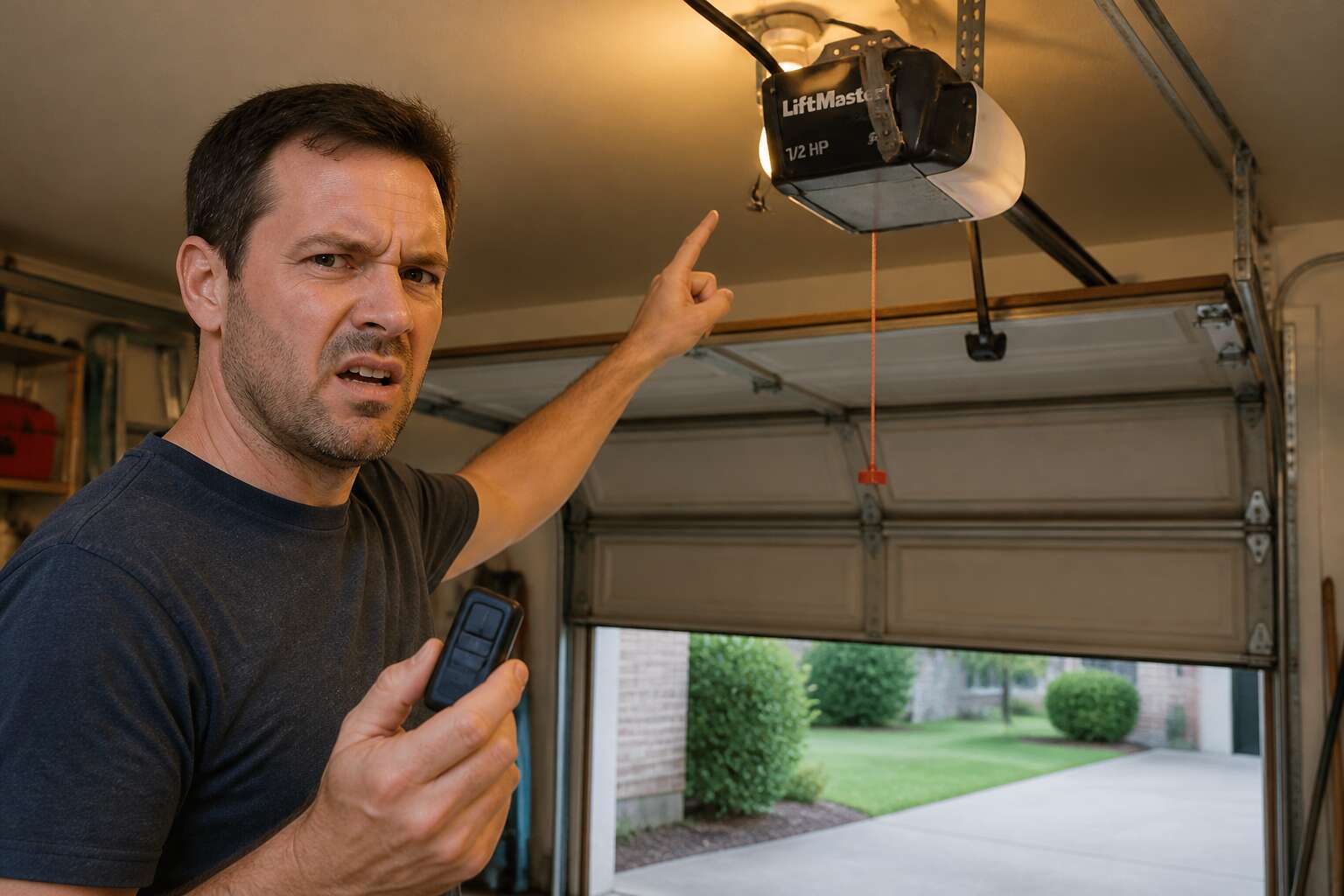
Diagnosing a Non-Responsive Garage Door Opener
Power Source Verification
The silence from the ceiling is more telling than any error code. When a garage door motor won’t work, most owners assume the worst and call for replacement. Yet in my experience, the most common culprit is embarrassingly simple: the power supply. Trust, but verify. Check the wall socket with a device you know functions, not merely the one that failed.
Work through these points methodically:
- The wall switch and its wiring for loose connections
- The overhead unit’s indicator light, if present
- The circuit breaker and earth leakage unit in your distribution board
A multimeter reading at the terminal block confirms whether 230 volts actually reaches the motor unit. Without that confirmation, every other diagnosis is guesswork. Replacing parts while a garage door motor won’t work due to a dead socket wastes money and time.
Remote and Keypad Battery Issues
The remote in your hand feels solid, but the motor stays silent. In my years of service calls across Johannesburg, I have watched homeowners curse a garage door motor won’t work, only to find the keypad or remote simply starved of power. A battery at 1.2 volts instead of 1.5 volts makes the difference between a functioning door and a frustrating morning.
Consider these symptoms of a fading remote battery:
- The LED on the remote dims or flickers when pressed
- The door responds from four meters away, but not from the driveway
- The keypad glows faintly or fails to register the PIN
Voltage drops under load. That is the hidden problem. A fresh battery holds 1.5 volts, but a depleted one drops below the transmitter’s threshold, causing intermittent operation. When a garage door motor won’t work, checking battery voltage first saves you the cost of a service call.
Wall Switch and Wiring Problems
Walk to the wall switch and press it. Nothing. The remote works from the driveway, yet the wall switch is dead. When a garage door motor won’t work from one control point but responds to another, the fault lives in the fixed wiring, not the motor itself.
Disconnect the switch plate and expose the terminals. Touch them together with a short piece of wire. If the motor kicks in, the switch is the culprit. If it stays silent, trace the wiring back to the motor unit and inspect every connection.
Signs of wiring trouble are often visible before you test anything:
- Burning smell near the motor housing
- Terminal screws that turn without resistance
- Discoloured or brittle insulation on the low-voltage cable
In older Johannesburg homes, I have found conduit crushed by roof trusses and cables chewed by rodents. These hidden breaks produce intermittent operation that mimics a failed motor. The garage door motor won’t work because the signal never arrives, and no battery replacement will solve that.
Sensor Alignment Concerns
Most homeowners assume a silent opener means a dead motor. But the overlooked culprit is often the pair of photoelectric sensors near the floor. These units send an invisible beam across the doorway. When the garage door motor won’t work, check whether that beam is intact.
Misalignment happens in busy households. A kicked shoe, a leaning bicycle, or a passing trolley can shift the sensor brackets by a few millimetres. The motor receives a stop signal and refuses to respond. The garage door motor won’t work because the sensors perceive an obstruction.
Common signs of alignment trouble:
- One sensor light steady, the other blinking
- Both lights dark simultaneously
- The door reversing after touching the floor
I have found sensor lenses blocked by spider webs in Pretoria garages and brackets knocked loose in Durban. These problems take seconds to fix, yet they mimic a failed motor completely!
Circuit Breaker Tripping
A tripped circuit breaker is arguably the most overlooked reason a garage door motor won’t work. Homeowners often check the remote, the wall switch, and even the sensors before they consider the electrical panel. The breaker sits quietly in the dark. When it trips, it cuts power to the entire opener circuit. The motor becomes completely unresponsive. No hum, no lights, no movement. It is a silent failure.
The cause is usually an electrical surge or a worn motor drawing too much current. South African grid fluctuations are notorious for this. A lightning strike in Johannesburg or a heavy load on the municipal line can trip the breaker instantly.
To diagnose this, you need to inspect your distribution board.
- Look for a breaker that sits in the off position, or one that sits halfway between on and off.
- Flip it firmly to the off position first, then push it fully back to on.
- Try the garage door motor again.
If the breaker trips again immediately, do not keep resetting it. That indicates a short circuit in the motor unit or a serious wiring issue. Call a qualified technician in your area. For Cape Town residents dealing with load shedding, a manual reset of the breaker is often the only step needed to restore function. But the garage door motor won’t work if the breaker is weak. Sometimes the switch itself wears out and needs a replacement. It is a simple part, about the size of a matchbox, but it controls the entire system. Ignoring this component leads to frustration and unnecessary service calls.
Troubleshooting the Motor and Drive Mechanism
Testing the Motor Capacitor
When the garage door motor won’t work, the capacitor is often overlooked. This cylindrical component stores energy and delivers the initial surge that gets the motor turning. A failing capacitor produces a telltale hum, yet the door stays stubbornly still.
Signs of capacitor distress are usually visible:
- A swollen or bulged casing
- Burn marks around the terminals
- A faint electrical smell
I have learned to inspect the capacitor before anything else. To test it properly, discharge the unit first, then use a multimeter in capacitance mode. The reading should match the value printed on the side.
The drive mechanism deserves equal attention. A stretched chain or a worn gear can seize quietly, leaving the motor to strain without effect. These mechanical failures mimic electrical ones, which explains why so many motors get replaced unnecessarily.
Inspecting the Drive Belt or Chain
A humming motor that refuses to move is rarely a ghost in the machine. More often, the fault lies in the physical connection between the power source and the door itself. When the garage door motor won’t work, the drive mechanism is your prime suspect. You cannot hear the strain of a snapped chain, but you can see the results.
Begin by disengaging the emergency release cord. This allows you to operate the door by hand. If the door moves smoothly and balances correctly, the issue is upstream. Now, inspect the drive belt or chain for wear. Look for these specific signs:
– Loose links or excessive slack in the chain
– Frayed fibres or cracks on the belt surface
– Accumulated grime and debris in the gear sprocket teeth
A tight chain should have about a half inch of flex. If it bows more than that, it skips gears under load. A worn gear inside the opener’s housing can also strip silently. You will see plastic shavings collecting on the track. This destroys the motor’s ability to transfer torque. Replacing a gear kit is far cheaper than a new motor. Ignoring this mechanical fault is a false economy, as the labour costs often exceed the price of a simple part.
Checking the Limit Switches
Your garage door motor can fail without making a single sound. The thermal overload protector trips after sustained use, leaving the motor silent for twenty minutes or more. Wait, then test again. If the motor resumes, the issue is heat, not electricity.
The limit switches deserve equal scrutiny. These small components tell the motor when to stop. When they drift out of adjustment, the opener may refuse to move entirely. A garage door motor won’t work when the limit switch contacts corrode or break under years of vibration.
The clicking relay tells you everything. A click means the circuit is alive. Silence means the signal never reaches the motor. I have seen perfectly good motors condemned because someone ignored the relay. The switch travel matters equally. A carriage that strikes the housing prematurely stops everything.
Evaluating the Gear Assembly
When a garage door motor won’t work, the gear assembly often hides the true culprit behind a peaceful exterior. I have opened countless units where the motor hummed perfectly, yet the door never moved. The gears, usually nylon in modern openers, grind their teeth down after years of Johannesburg heat and coastal humidity. Stripped teeth mean the drive shaft receives no torque, no matter how healthy the motor sounds.
The failure is progressive. You might notice a whirring noise without travel, then nothing at all. Inspect the gears for flattened teeth, plastic shavings, or cracks around the centre hub. If the motor spins freely but the chain stays motionless, suspect the gear assembly before touching anything electrical.
- Remove the cover and look for white powder near the gear.
- Turn the motor by hand and watch the gear rotation.
- Replace the gear kit if worn, it is a common fix.
Simple Repairs You Can Do Yourself
Resetting the Opener
Before you phone a technician and part with a tidy sum, try the unglamorous reset. Many South African homeowners discover that their garage door motor won’t work because the opener’s internal logic has simply frozen. A power surge or months of heat-soaked inactivity can leave the controller confused. The remedy is a clean start.
- Unplug the motor unit from the wall socket.
- Wait ten minutes for the internal capacitors to discharge.
- Plug it back in and press the reset button until the indicator light blinks.
- Hold the button on your remote for three seconds to re-pair.
The process sounds almost too simple, yet it resolves a surprising number of failures! When a garage door motor won’t work after the earlier checks, this reset is the last inexpensive trick before you call for help. Bear in mind that resetting clears all programmed remotes and keypads, so expect to re-sync everything afterward.
Lubricating Moving Parts
Lubrication is the cheapest insurance your door will ever get. A dry track forces the motor to work harder, and that strain wears out internal parts. When a garage door motor won’t work, inspect the moving parts before blaming the electronics. Dust and rust are common culprits here.
Silicone spray works best. Open the door halfway and apply it to the rollers, hinges, and the top of the track. Wipe off any excess immediately. Then operate the door manually for a full cycle.
- Clean the track rails with a dry cloth first.
- Spray the rollers and hinges, not the track groove.
- Repeat every three months, more often near the coast.
That routine keeps friction low and extends the motor’s lifespan. Skip it, and the garage door motor won’t work when you need it most.
Replacing the Remote Batteries
It is a strange moment when the motor hums with intent, yet the door remains stubbornly still. More often than not, the delusion that a garage door motor won’t work because of a catastrophic failure is just that, a delusion. The culprit is usually much smaller and sits right in the palm of your hand. A remote that has gone silent is rarely a sign of mechanical death, but rather of a slow energy drain we seldom notice until the button clicks with no response.
Replacing the batteries is a five minute task that feels almost too simple to fix the frustration. Yet, it is frequently the missing link. The internal transmitter requires a specific voltage to send its signal. When the power dips, the signal becomes too weak to reach the receiver, even if the little LED light still blinks at you.
Here is the sequence you should follow:
– Pop open the casing and note the battery type, typically a coin cell.
– Check the metal contacts for a dull film, which impedes current.
– Insert the fresh battery, ensuring the polarity matches the diagram.
Spending ten minutes on this simple repair restores the connection and erases the panic of a presumed breakdown. Before you call a technician and spend a fortune, remember that your remote is just a small radio. It needs clean power to do its job. When a garage door motor won’t work, look at the smallest components first. They are the ones that often fail us.
Cleaning the Sensors
There is a quiet irony in how often the eyes of the system are ignored. The safety sensors, those small plastic units near the floor, are the primary reason a garage door motor won’t work, yet they rarely get a second glance. They are not designed to fail dramatically. They simply accrue a film of dust, spider silk, or the residue of a passing storm. This layer acts as a barrier, convincing the motor that an obstacle is present. The door then refuses to close, and the motor may even stop responding to specific commands, leaving you with a useless button.
The fix is a matter of precision, not engineering. You are clearing the vision of a mechanical eye. Use a soft, dry cloth to wipe the lens of each sensor. A cotton swab works well for the corners. Do not use solvents, as they can leave a streak that mirrors the original problem. In some cases, the sensor mounts loosen over time, allowing the units to point in slightly different directions. A misaligned pair creates the same fault as a dirty lens. Check that both faces are aimed directly at one another, and tighten the brackets if needed.
– Wipe the lens with a microfiber cloth to remove grime.
– Clear away any cobwebs or debris from the mounting arms.
– Ensure the sensor housings are firmly attached and not vibrating loose.
Performing this simple upkeep restores the communication link between the units. When the motor can see a clear path, it will engage with its usual force. The next time a garage door motor won’t work, consider that the answer might be a few minutes of focused attention on the smallest components. They are the silent guardians of the entire operation, and they require only a moment of your care to function flawlessly.
Adjusting the Closing Force
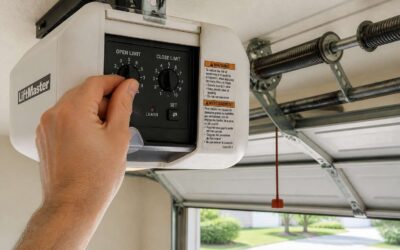
Adjusting the closing force is simple. The motor’s force setting controls how much power pushes the door down. Set too low, and the door stops and reverses for no reason. That leaves you with a garage door motor won’t work scenario. The adjustment screw sits on the back of the motor unit, marked with a plus and minus.
Turn the screw a quarter turn at a time, then test. You want enough force to close smoothly, but not too much. Most openers have a dial for this. Here is a quick check!
- Locate the force adjustment controls on the motor housing.
- Increase the closing force slightly, then run a test cycle.
- If the door reverses, lower the force a touch.
Watch for the door’s response. A balanced door needs less force, so check the springs. If the force is maxed out and the motor still struggles, the problem is elsewhere. Then call a professional.
When to Seek Expert Assistance
Signs of a Burnt-Out Motor
The average garage door motor has a lifespan of ten to fifteen years, but South African conditions often shorten that window. High heat, dust, and power fluctuations accelerate wear on internal components. When a garage door motor won’t work despite your best troubleshooting efforts, you might be facing a burnt out motor. This is not a DIY repair.
You can recognise the telltale signs before you call a professional. A burnt out motor often emits a distinct acrid smell, similar to electrical smoke. You might hear a faint humming sound from the unit, but the door refuses to budge. In many cases, the motor will trip your circuit breaker immediately upon activation. The thermal overload switch inside the unit often fails, preventing any response whatsoever.
- The motor casing feels excessively hot to the touch after a single attempt.
- You notice visible scorch marks or melted plastic near the wiring terminals.
- The opener produces a grinding noise followed by total silence.
Ignoring these symptoms leads to further damage to the gear assembly and circuit board. A professional technician can confirm the diagnosis using a multimeter to test the windings. They will check the resistance levels to determine if the motor has shorted out. In South Africa, replacement motors are readily available for most major brands. The cost of a new motor often rivals the price of an entirely new opener system, so a technician might recommend a full replacement. Their assessment will provide the clarity you need to make a sound financial decision.
Electrical Wiring Issues
Electrical faults within the home’s wiring often masquerade as a failed motor. When a garage door motor won’t work and the unit receives power at the outlet yet fails at the terminal block, the problem may lie in the internal wiring harness or the printed circuit board connections. South African homes with older electrical installations frequently experience voltage drops that confuse the opener’s logic board.
A professional electrician should inspect the supply cable for loose terminations, corrosion, or insulation breakdown. These are specific conditions that demand expert intervention:
- A burning odour emanating from the wall socket or ceiling junction box
- Visible discolouration on the plug or wiring insulation
- Voltage readings that fluctuate beyond the standard 220 to 240 volt range
These symptoms indicate deteriorating connections that create resistance and heat. Continuing to operate the opener under these conditions risks a house fire. A licensed technician will trace every circuit, identify the compromised component, and restore safe operation.
Complex Gearbox Replacements
The gearbox within a garage door motor is a precision component. When its gears strip or the housing cracks, the unit may seize or grind. DIY repairs often worsen the damage. A professional disassembles the drive mechanism, inspects each gear, and replaces the assembly if necessary.
South African homeowners face specific challenges here. Imported parts can take weeks to arrive, and generic substitutes may not match the manufacturer’s torque specifications. The technician identifies which gearbox failures can be salvaged and which demand full replacement. Quick fixes with epoxy or mismatched gears only shorten the motor’s lifespan.
Call a technician when you notice:
– The motor hums but the drive shaft stays stationary
– Metal shavings collect near the trolley or rail
– The gearbox housing shows visible cracks or oil leaks
A qualified expert will determine whether the garage door motor won’t work due to gearbox failure or a separate electrical fault. The distinction matters because a replaced gearbox cannot compensate for a failing circuit board.
Safety Concerns with Springs and Cables
When a garage door motor won’t work, the problem may not be electrical at all. Broken torsion springs or frayed cables can bring the door to a halt, and these components are genuinely dangerous. A spring under tension can release its stored force with enough energy to injure or damage property. Do not attempt to adjust or release them on your own. South African homes often contend with power interruptions, but spring failure is a separate mechanical hazard that demands respect.
Call a technician immediately if you notice:
– The door feels heavy or jerks during manual release
– Cables are loose, frayed, or slipping off their drums
– A visible gap appears between the spring coils
Those signs indicate a system under serious strain. A professional will secure the door, carefully relieve the tension, and then determine whether the garage door motor won’t work because of an independent fault or because the springs have carried the burden for too long.
Warranty and Insurance Considerations
The moment you open the motor housing to tinker, you may void the warranty that would have paid for the repair. When every troubleshooting step has been exhausted and the garage door motor won’t work, the next decision concerns liability. In South Africa, homeowners often hesitate to call a technician because of call out fees. That hesitation can turn a small fault into an expensive problem.
Inspect the manufacturer’s warranty before authorising a repair. Some policies cover the motor parts but exclude labour. Others become void if an unaccredited contractor opens the casing. Read the fine print and locate the original proof of purchase.
- most warranties exclude call out fees
- some insurers require a report for surge damage
- written quotes prevent disputes later
Insurance claims for a garage door motor won’t work usually hinge on the cause. Sudden electrical surges may be covered, while gradual wear is not. Document the failure date and any power interruptions. Contact your insurer to confirm what is claimable.
Preventative Maintenance to Avoid Future Failures
Regular Inspection Schedule
A staggering 70% of garage door repairs stem from neglected routine upkeep, yet most homeowners only think about the mechanism when it protests. The harsh Highveld sun, coastal humidity, and frequent load-shedding cycles here in South Africa create a unique set of challenges for your automated entrance. These environmental stressors accelerate wear and tear on components that would otherwise function flawlessly for years. Proactive care transforms a temperamental system into a reliable daily servant, sparing you the frustration of a garage door motor won’t work scenario on a busy Monday morning.
Treat your inspection as a monthly ritual, akin to checking your vehicle’s tyre pressure. A systematic approach demystifies the complexities of the machinery and prevents minor irritations from escalating into costly emergencies. Your checklist should include:
Following this ritual, pay close attention to the subtle cues. A door that hesitates before moving, or one that shudders during ascent, is whispering a warning. Ignoring these whispers invites the silence of a complete breakdown. Consistency is the watchword. By dedicating twenty minutes each month to this simple evaluation, you foster an environment where a stubborn failure becomes an impossibility rather than an inevitability. You master the rhythm of your home’s mechanical heartbeat before it ever stutters.
Lubrication Best Practices
A door that operates with a dry, grinding protest is a door that is failing. Friction is the primary enemy of your system, and lubrication is the cheapest defence you have. A routine application of the correct product reduces stress on the motor and the mechanical drive components. This simple act directly prevents the scenario where your garage door motor won’t work due to seized parts. Ignoring this is a false economy, as the cost of a new motor far exceeds the price of a good lubricant.
The type of lubricant matters. Avoid grease guns and heavy oils that attract dust. The Highveld’s fine red dust acts as an abrasive when mixed with thick grease.
1. Clean the track with a dry cloth to remove grit.
2. Apply a silicone-based spray to the rollers and hinges.
3. Lubricate the torsion spring with a light coat of oil.
4. Wipe away any excess product which can drip onto the floor.
Use this sparingly on the chain or screw drive, never on the tracks themselves. A lubricated chain reduces drag on the sprocket, easing the load on the motor board. Regular attention to these contact points ensures the mechanism operates with a quiet efficiency that protects your investment. Instead of waiting for the failure, you are prolonging the entire system’s lifespan through deliberate, simple care. The result is a smooth, silent operation that never leaves you stranded.
Testing Safety Features
Forty percent of garage door injuries involve a failing auto-reverse mechanism. That statistic explains why preventative maintenance must include testing your safety features. A garage door motor won’t work diagnosis frequently traces back to a neglected sensor rather than an actual motor failure.
Set aside two minutes monthly to verify the safety systems:
1. Place a rolled towel under the closing door.
2. Confirm the door reverses within two seconds of contact.
3. Wave your hand across the photo-eye sensors to ensure the door halts.
4. Use the wall console’s test button to simulate a blocked beam.
These checks prove the motor controller is receiving safety signals. Intermittent sensor faults can present as a garage door motor won’t work situation. Regular testing exposes these faults while they are still cheap to fix. The alternative, replacing a motor because of a faulty sensor, is an expensive mistake. This routine protects both your family and your wallet.
Battery Replacement Routine
A garage door motor won’t work after load shedding because the backup battery has degraded. South African homes experience frequent power interruptions, which places constant strain on these batteries. The typical lifespan is two to three years, but high temperatures in garage spaces accelerate the decline.
Inspect the battery terminals every six months for corrosion. A white or bluish residue on the contacts prevents the motor controller from receiving power. Clean the terminals with a wire brush and apply dielectric grease.
- Disconnect the motor from the mains supply.
- Open the housing panel and locate the battery compartment.
- Remove the old battery and note the polarity markings.
- Install the new battery and secure the housing.
A failing backup battery produces the same symptom as a defective motor. Homeowners often assume a garage door motor won’t work due to mechanical failure, yet the fix is simply a new battery. This routine preserves motor operation during outages and extends the unit’s life.
Seasonal Adjustments
South African seasons demand attention from your garage door system. The highveld’s harsh summers push motors to their limits, while coastal winters introduce moisture that corrodes components. A garage door motor won’t work after months of neglected seasonal strain. Small adjustments before each season prevent larger failures later.
Heat forces the door panels to expand, altering the track alignment. Cold thickens the lubricant, straining the motor’s start-up. The remedy is a simple routine:
- Inspect and adjust track brackets each spring
- Switch to a winter-grade lubricant before autumn
- Verify the door’s balance as temperatures shift
These checks take fifteen minutes! Skipping them means the door works harder, the motor runs hotter, and the gears wear faster. A garage door motor won’t work when seasonal adjustments get ignored.
0 Comments