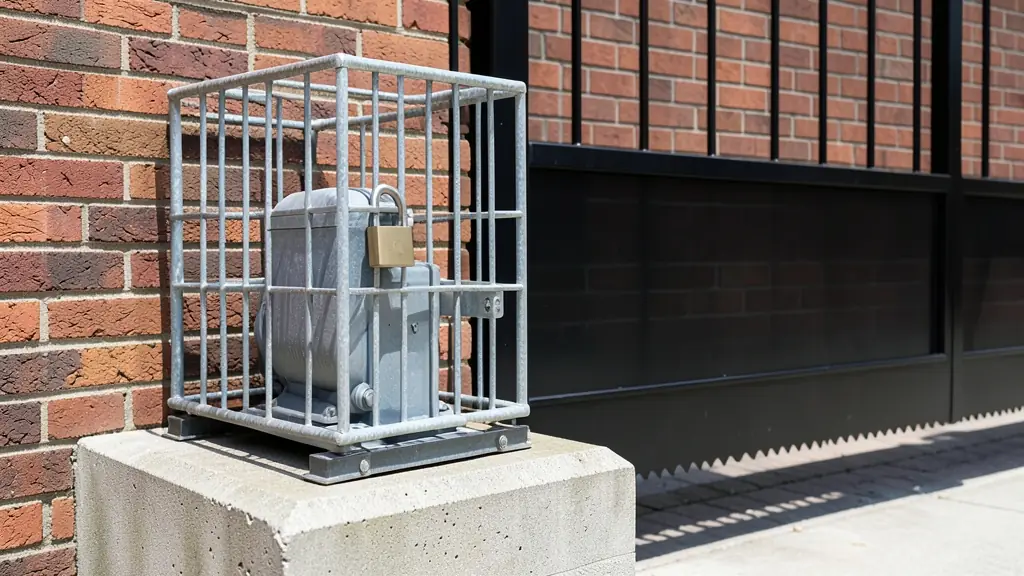
A garage door lock matters more than most people think: the garage often leads straight into the house and holds the cars, tools and bikes. Many motors hold the door shut when closed, but the manual release, a gap at the side or an old tilt door can still let someone in. Gate motors have a different weakness: the motor and its battery get stolen. This page covers locks and lock bars for garage doors, securing the release, and steel anti-theft brackets that cage a gate motor on its plinth.
Locking a garage door
A motor on a well fitted rail usually holds the door down, but it is not a lock in the full sense. For more security, installers fit a lock bar or slide bolts that shoot into the tracks or frame, a hasp and padlock on the inside, or a key lock in the handle. Roll-up doors often take locking bolts at the bottom rail or a padlock through the guides. Any lock on a motorised door needs care: if the motor runs against a locked door it can strip its gears or bend the door, so open the lock before you press the remote, and ask the installer which lock suits your motor.
Securing the manual release
The manual release cord disconnects the door from the motor so it can be opened by hand in an outage. Burglars sometimes hook it through the gap at the top of the door. A fitter can shorten the cord, fit a shield over the release, or change to a release that needs a key from outside. Keep the release working, though: you need it when the battery is flat. A smart opener that tells you when the door has been left open helps too.
Anti-theft brackets for gate motors
Sliding gate motors sit in the open on a plinth, and thieves lift them off for the motor and the battery. An anti-theft bracket (a theft cage) is a heavy steel cage bolted to the plinth over the motor and closed with a padlock or lock. A good bracket leaves access for the release key, is galvanised or painted against rust, and fits the motor model. A locking motor cover and a separately locked battery box add more protection. See sliding gate motors and gate motor batteries.
Theft, insurance and estate rules
If a motor has already been stolen, the installer can quote a new motor, a bracket and repairs to the plinth and rack together: see gate motor repairs. Ask your insurer whether they expect particular measures, and check estate or body corporate rules before fitting anything that changes how the gate looks. Keep spare keys for every padlock somewhere safe, because a lost bracket key in an outage means a locked gate.
What to put in your request
- Gate motor model, or the garage door type
- Whether a motor or battery has been stolen
- Plinth condition, with a photo
- Lock type wanted: bar, bolt or padlock
- Any insurer or estate requirements
Garage Door Locks and Anti-Theft Brackets for homes, complexes, estates, shops, warehouses, farms and more
- Houses: a steel cage over the sliding gate motor and a lock bar on the garage door
- Townhouse complexes and body corporates: brackets on the shared gate motors and shielded releases on the unit garage doors
- Security estates: brackets and locked covers in a finish that matches the estate's rules
- Offices and business parks: cages on parking gate motors and locks on basement roller doors after hours
- Shops, restaurants and filling stations: padlocks and locking bolts on shopfront roller shutters and caged delivery gate motors
- Factories, warehouses and workshops: heavy brackets on yard gate motors and lock bars on large roll-up doors
- Farms, smallholdings and lodges: cages and locked battery boxes on solar gate motors far from the house
- Schools, clinics and public buildings: brackets on school and depot gate motors that stand unwatched at night
- Builders and developers: brackets fitted to every new gate motor before the units are handed over