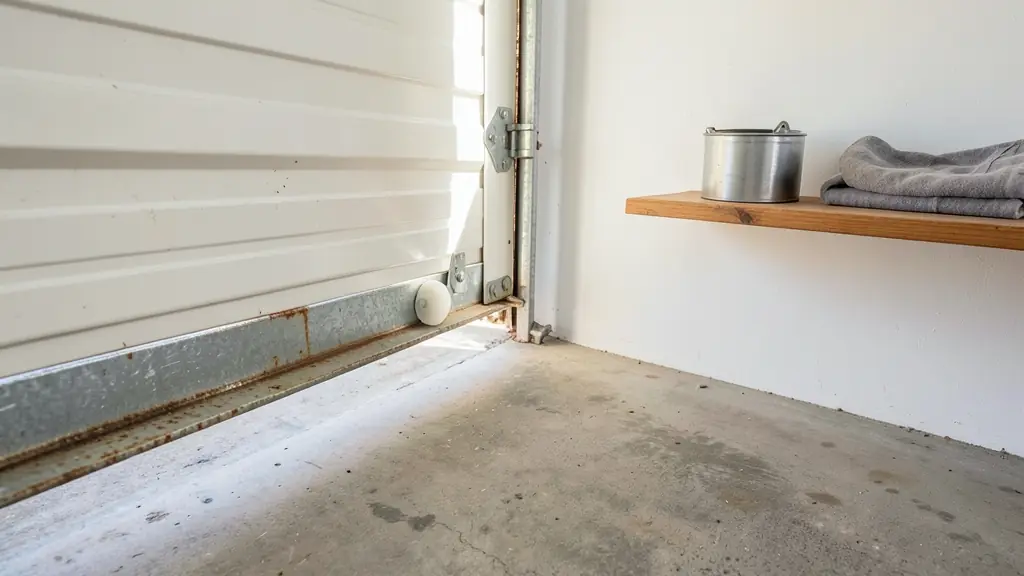
Garage door service visits catch problems while they are still small: a spring losing tension, a roller about to fail, a battery that won't last through the next power cut. A yearly check is often enough for a home door or gate. Doors near the sea, and gates in complexes that open hundreds of times a day, need it more often. This page sets out what a service should cover, how often to book one, and how service contracts work for body corporates and estates.
What a service covers
A thorough service often includes:
- a balance and spring check with the motor disengaged;
- lubricating rollers, hinges and the chain;
- checking track alignment and tightening fixings;
- testing obstruction sensing and the safety beams;
- on gates, cleaning the track and checking the rack and pinion mesh;
- a battery test;
- checking the remotes.
Ask for a short written report, so you know what was found and what may need replacing soon.
How often
Once a year suits most homes. Book sooner if the door has become noisy, slow or jerky, or the gate struggles on battery. A good time is before the summer storm season or a stretch of load shedding, when a weak battery or a tired board shows up quickly. Coastal homes see salt air rust tracks, springs and fixings faster, so a service every six months, and stainless or galvanised parts, are worth discussing. Dusty areas and farm gates need their tracks cleaned more often too, because grit on a sliding gate track makes the motor work harder and drains the battery. Doors used many times a day, on shops and workshops, also wear rollers and springs faster than a household door.
Noisy doors
Grinding, squealing and rattling usually come from dry or worn rollers and hinges, loose fixings or a slack chain. Lubrication and new nylon rollers often quieten a door noticeably. A bang or a sudden change in sound can mean a spring problem: that needs a fitter, not oil. Don't grease the tracks themselves; rollers should roll in a clean track, and grease there collects dirt. A belt drive motor in place of an old chain can help where the noise comes from the motor rather than the door.
Complexes and estates
Body corporates, estates and businesses with many doors and gates often take a service contract: scheduled visits for every door and gate, a log of what was done, and agreed call-out times for breakdowns. A shared complex gate opens many times a day, so it wears faster than a home gate and benefits most. Ask what the contract includes: labour only, or some parts; how quickly the company responds to a breakdown; and whether the visits fit around the estate's access rules. A written record per door or gate also helps the trustees plan for batteries and motors that are due for replacement.
What to put in your request
- How many doors and gates, and their types
- When they were last serviced
- Any noises or faults you have noticed
- Whether you are near the coast
- Once-off visit or a service contract
Garage Door and Gate Motor Servicing for homes, complexes, estates, shops, warehouses, farms and more
- Houses: a yearly check of the garage door and the gate motor in one visit
- Townhouse complexes and body corporates: a service contract covering every unit's door and the shared gate
- Security estates: scheduled servicing of entrance gates and residents' doors
- Offices and business parks: regular servicing of parking gates and basement doors
- Shops, restaurants and filling stations: roller doors on shopfronts kept running before they jam
- Factories, warehouses and workshops: frequent servicing of busy warehouse and workshop doors
- Farms, smallholdings and lodges: a check of solar gate motors, batteries and panels on far gates
- Schools, clinics and public buildings: planned servicing of doors and gates at schools and clinics
- Builders and developers: a first service before handover and a plan for the body corporate