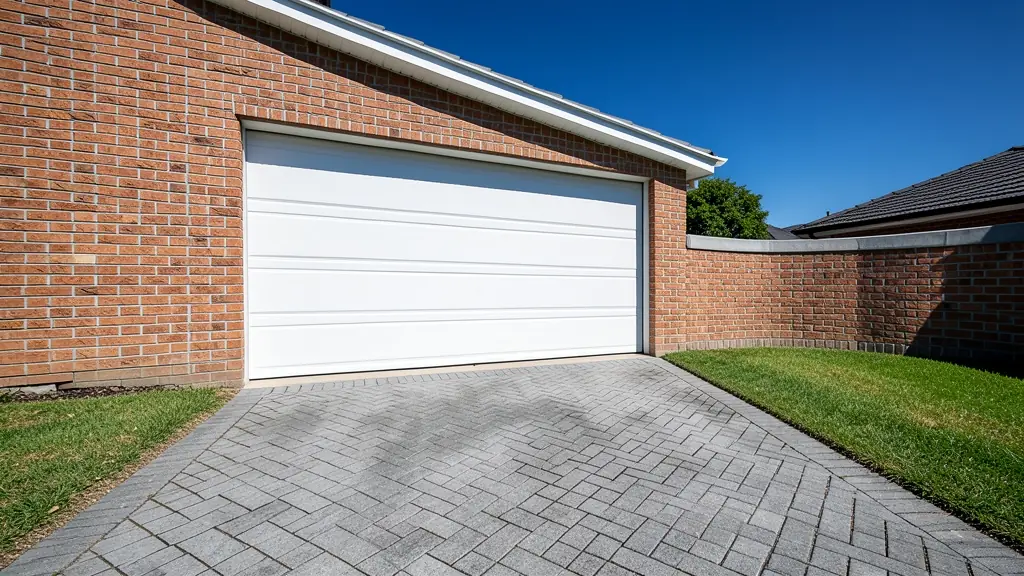
A new garage door is made to fit your opening, so the measurements matter more than the brochure. In South African homes, single doors are around 2.4 to 2.5 m wide and double doors around 4.8 to 5 m, both about 2.1 m high, but older houses and new builds vary. You choose the style (sectional, roll-up or tilt), the material (pre-painted steel, aluminium, wood or insulated panels) and whether a motor goes on at the same time. Here is how each choice affects the motor, the fitting and the upkeep.
Sectional, roll-up or tilt
Sectional doors are horizontal panels that run up curved tracks to lie under the ceiling. They seal well, suit a motor and are the usual choice for new homes and estates. Roll-up doors (roller doors) are slats or corrugated sheet that roll onto a drum above the opening, so the ceiling stays clear; they are common on townhouse garages and shops. Tilt doors are one panel that swings up and in; many older homes have them, and they need room in front and inside to swing. See sectional, roll-up and tilt-up door motors.
Steel, aluminium, wood or insulated
- Pre-painted steel: the most common, strong and good value, but scratches must be touched up or it rusts.
- Aluminium: doesn't rust, which suits homes near the coast, and it is lighter.
- Wood: meranti and other hardwoods look warm but need regular varnish, especially on a sunny side.
- Insulated sectional panels: a foam core keeps the garage cooler in summer, warmer in winter and quieter, useful when it is a workshop or sits under a room.
Measuring, colours and estate rules
Measure the opening's width and height in a few places, plus the space beside it (side room) and above it (headroom), because tracks, springs and a motor rail need room. The supplier will measure again before making the door, but your figures get you a fair first quote. Doors come in a range of colours and finishes. In estates and complexes, check the body corporate or estate rules before you choose a style or colour, since many require the same look on every house. Doors are made to size and often take a couple of weeks; ask the supplier.
With or without a motor
If you plan to automate, order the door and motor together: the fitter balances the door, sets the springs and hangs the rail in one visit, and an electrician can add a plug point near the motor head beforehand. A heavy wooden or double door needs a stronger motor and well matched springs. Ask for the door, springs, motor and fitting to be listed separately on the quote so you can compare like for like. See garage door motors and garage door motor installation.
What to put in your request
- Opening width and height, and the headroom
- Door style: sectional, roll-up or tilt
- Material and colour
- Whether a motor is fitted at the same time
- Any estate or body corporate rules
Garage Doors for homes, complexes, estates, shops, warehouses, farms and more
- Houses: a double sectional door in pre-painted steel, or a single wooden door on an older house
- Townhouse complexes and body corporates: matching roll-up or sectional doors on every unit, chosen to suit the body corporate rules
- Security estates: sectional doors in the colours and finishes the estate's design rules allow
- Offices and business parks: roll-up and sectional doors on basements, stores and parking garages
- Shops, restaurants and filling stations: roller doors on shopfronts, stores and delivery bays
- Factories, warehouses and workshops: large sectional and roll-up doors on warehouses and workshops, made to the opening
- Farms, smallholdings and lodges: steel roll-up and tilt doors on sheds, workshops and the farmhouse garage
- Schools, clinics and public buildings: durable doors on depots, school stores and clinic garages
- Builders and developers: doors ordered in batches for new units, measured once the openings are built