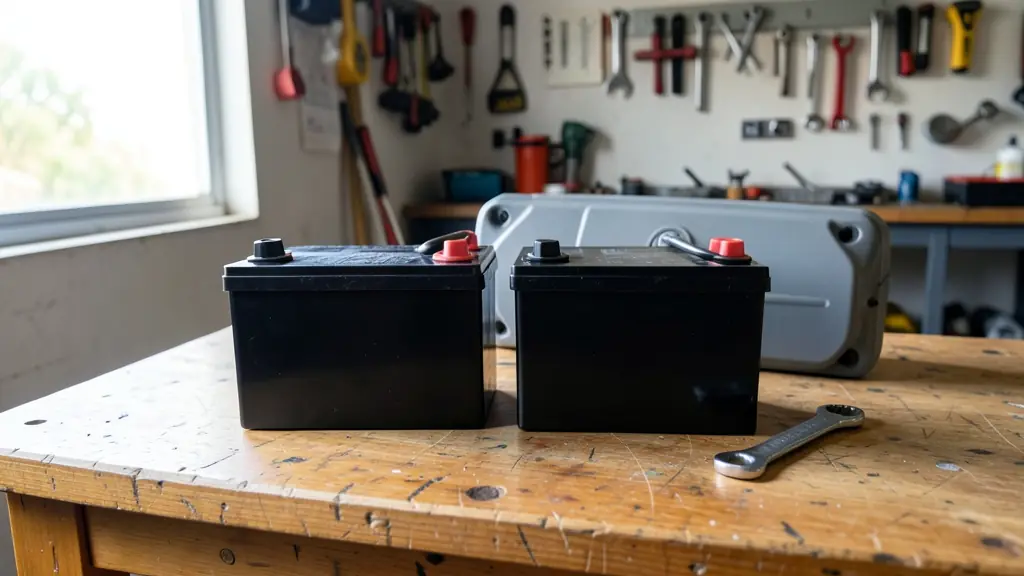
A gate motor battery keeps your gate opening when the power goes off, and in a country with load shedding it does a lot of work. Most home sliding gate and garage door motors run on a 12 V sealed lead-acid battery, with 7 Ah the common size on sliding gates. When the gate slows down, stops halfway or only works with the mains on, the battery is usually the first suspect. Here is how to tell when it is done, what size to ask for, and when a bigger battery or solar makes sense.
What sits inside the motor box
Most home gate motors and garage door motors use a 12 V sealed lead-acid battery, the same small rectangular block with two spade terminals found in alarm systems. Some 24 V motors take two batteries in series. The motor's charger keeps the battery topped up from the mains, and when the power fails the battery takes over without you noticing. Size is given in amp hours: 7 Ah is very common on sliding gate motors, and bigger batteries suit heavy gates, busy complex gates and long outages. A replacement must match the motor's voltage and fit the space, so check before buying a bigger one.
Signs a battery is finished
- The gate works with the mains on but stops during load shedding.
- It runs slower than usual, or stops halfway and reverses.
- The motor beeps or flashes a battery warning (the manual explains the pattern).
- The battery case is swollen, cracked or leaking.
Batteries often last about two to three years, but that depends on use and heat. Lots of load shedding means more deep discharges and a shorter life. Before you replace it, a fitter or supplier can test both the battery and the charger, because a faulty charger will ruin a new battery too.
Bigger batteries and solar
If your gate runs out of battery before the power comes back, a larger battery can help, as long as the motor's charger and the space in the box allow it. Some installers fit a bigger battery in a separate locked box beside the motor. For gates far from the house, where a mains cable means a long trench, solar charging works well: a panel on a pole, a charge controller and a bigger battery. The installer sizes the panel and battery to the gate's daily use and your area's sun. See sliding gate motors and gate motor installation.
Theft, disposal and recycling
Gate motor batteries get stolen, sometimes with the motor. A locked motor cover and a steel anti-theft bracket make that much harder. Old lead-acid batteries should never go in the dustbin, because the lead and acid are hazardous. Many battery suppliers and scrap dealers take old ones back for recycling, so ask whoever fits the new battery to take the old one away.
What to put in your request
- The motor model, or a photo of the old battery
- Battery voltage and Ah size, if you can read it
- How the gate behaves during load shedding
- Whether you want it fitted and the charger tested
- Whether you want a bigger battery or solar
Gate Motor Batteries for homes, complexes, estates, shops, warehouses, farms and more
- Houses: a 12 V battery in the sliding gate motor and another in the garage door motor
- Townhouse complexes and body corporates: a larger battery on the shared gate, which runs far more times a day than a home gate
- Security estates: bigger batteries or battery banks on entrance gates that must keep working through outages
- Offices and business parks: backup batteries on parking gates and basement doors so staff are not stuck during outages
- Shops, restaurants and filling stations: batteries on delivery gates and shutter motors so stock can still come in during outages
- Factories, warehouses and workshops: batteries on yard gate motors, checked on every service because trucks use them all day
- Farms, smallholdings and lodges: solar charged batteries on long gates far from the house and its mains supply
- Schools, clinics and public buildings: batteries on school and clinic gates, replaced on a schedule rather than after a failure
- Builders and developers: fresh batteries fitted and tested with every new gate and garage motor at handover