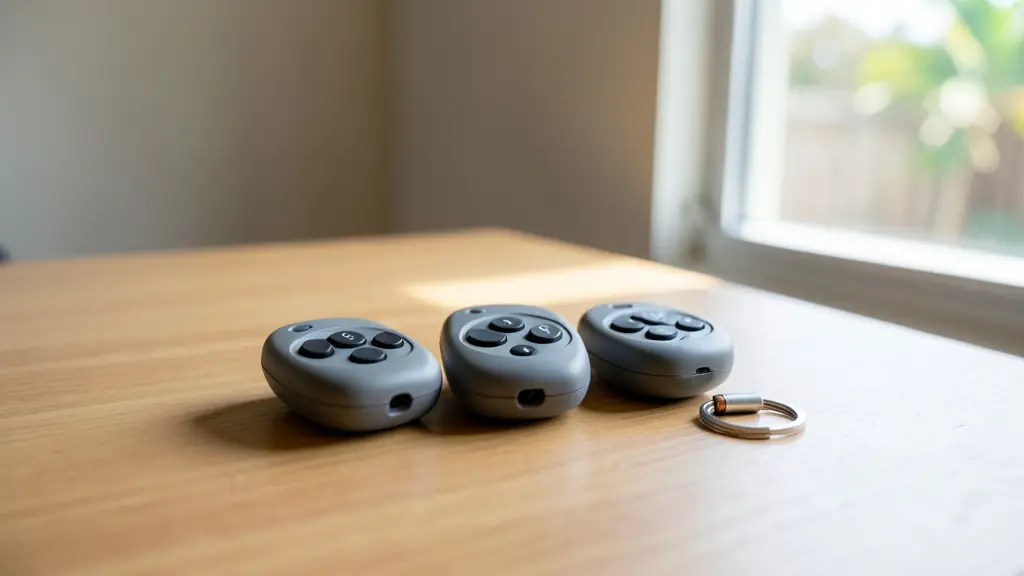
A garage door remote looks simple, but it only works if it speaks the same language as the receiver in your motor. Most garage door and gate motors in South Africa use 433 MHz remotes, yet two remotes on the same frequency can still use different code systems and refuse to work together. This page covers how to find a remote that matches, what code hopping means, why a lost remote must be deleted from the receiver, and what to tell a supplier so the remote you buy is one your motor will learn.
Frequency and code system: the two things that must match
Every remote sends a signal on a frequency, and 433 MHz is the most common one on home gate and garage motors here, though some systems use other frequencies. The frequency alone is not enough. The receiver also expects a particular code system, the way the signal is built. Many modern remotes use code hopping (rolling code): the code changes with every press, so a copied signal is useless. Older fixed-code remotes are cheaper but easier to copy. The surest way to match is to take a working remote, or a clear photo of the receiver, to the supplier.
Buttons, channels and one remote for everything
A four-button remote can run four things: the garage door, the sliding gate, a second garage and a pedestrian gate, for example. Each button is learned to its own receiver or channel. If your gate motor and garage motor use different code systems, one remote cannot run both, but an extra receiver wired into one motor can make it accept the other system's remotes. That is also how complexes get every resident's remote to open a shared gate. For keypads, intercoms and phone openers, see remote programming and access control and smart garage door openers.
Lost, stolen or broken remotes
A lost remote still opens your gate for whoever finds it, so have it deleted from the receiver's memory straight away. On many receivers a single remote can only be removed if you know its place in the memory; otherwise the whole memory is cleared and every remaining remote is learned again. Landlords should do this between tenants, and body corporates when a unit changes hands. A remote that has been dropped, washed or sat on often fails at the buttons or the battery clips, and replacing it usually costs less than repairing it.
Range problems and remote batteries
When a remote only works right next to the gate, start with its battery: the small cells inside weaken slowly, and the range shrinks before the remote stops completely. If a fresh battery doesn't help, the cause may be the receiver's antenna, a metal motor cover or a wall in the way, or a board damaged by a surge. A longer-range antenna mounted higher often helps on a long driveway. If every remote went dead at once after a storm, the fault is probably at the motor, so ask for gate motor repairs or garage door repairs instead.
What to put in your request
- The motor or receiver model, or a photo of it
- A photo of a remote that works, if you have one
- How many remotes, and how many buttons on each
- Whether a lost remote must be deleted
- Whether you want them coded on site
Garage Door and Gate Remotes for homes, complexes, estates, shops, warehouses, farms and more
- Houses: a remote or two per driver for the garage door and the sliding gate on one fob
- Townhouse complexes and body corporates: remotes for every unit on the shared gate, with lost ones deleted when units change hands
- Security estates: resident remotes on the entrance gate receiver, kept separate from each home's own motor
- Offices and business parks: remotes for staff on the parking gate and basement roller door, deleted when people leave
- Shops, restaurants and filling stations: a few remotes for managers on the delivery gate and the shopfront roller shutter
- Factories, warehouses and workshops: remotes for drivers and supervisors on the yard gate, with long-range antennas for big sites
- Farms, smallholdings and lodges: remotes for the house gate and long-range antennas for gates far down the farm road
- Schools, clinics and public buildings: remotes for caretakers and staff on school, clinic and municipal yard gates
- Builders and developers: a set of coded remotes handed over with every new unit and its gate