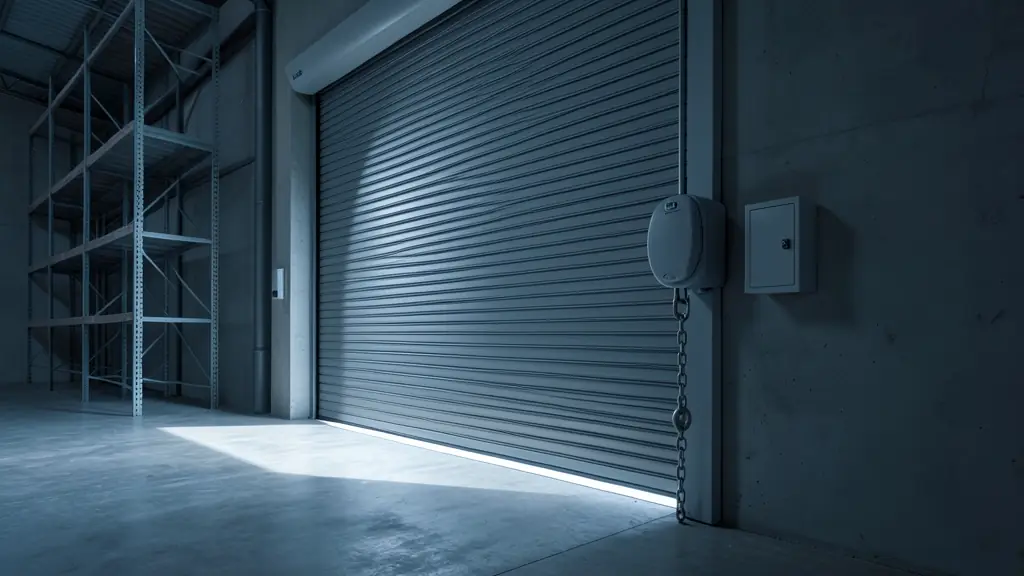
A warehouse, factory or workshop door is bigger, heavier and opened far more often than any garage door at home. A commercial roller door motor has to handle that load shift after shift, and if it fails, trucks queue and goods can't move. Big roller shutters and industrial sectional doors usually run on three-phase motors, with a chain hoist so the door can still be raised by hand. This page covers the choices: power supply, where the motor mounts, manual backup, daily cycles and safety.
Three-phase or single-phase
Large industrial shutters usually use three-phase motors, which handle heavy doors and frequent use well. Smaller commercial shutters and some lighter doors use single-phase motors on a normal supply. Either way the supply, isolator and protection are work for a registered electrician, who also issues a certificate of compliance for new wiring. If the building has no three-phase supply near the door, say so in the request, because it changes the motor choice and the cost. Factories on the Highveld also see lightning and surges, so ask about surge protection on the door circuit.
Side-mounted, centre-mounted and chain hoists
- Side-mounted: the motor sits on the end of the drum shaft, the usual layout where there is room beside the door.
- Centre-mounted: the motor drives the middle of the drum, used where the side space is tight or on very wide doors.
- Chain hoist: a hand chain that raises the door when the power is off, important during load shedding if there is no backup power on the site.
Industrial sectional doors use shaft-mounted motors on the torsion spring shaft rather than a ceiling rail.
High daily cycles
A loading bay door may open dozens of times a shift. Motors are built for different duty levels, so tell installers how many times a day the door runs and how many shifts the site works. A door used all day needs a motor and springs made for it, and a service plan that checks the springs, slats, guides and limits on a schedule rather than waiting for a breakdown. Before a motor goes on an older shutter, the door must roll freely and stay balanced on its springs; a motor will not cure a door that is binding in its guides or has bent slats. If there are several doors on the site, ask for the same motor on each so spares and settings are shared.
Safety edges, beams and controls
Big doors move a lot of weight, so the bottom edge often carries a safety edge that stops and reverses the door on contact, with infrared beams across the opening. Controls range from a simple up, stop and down station to remotes, keypads and timers. Forklift drivers need clear sight of the door. Spares like boards and limit switches are covered under motor spares.
What to put in your request
- Door width and height, and roller or sectional
- Three-phase or single-phase supply at the door
- How many times a day it opens, and shifts
- Number of doors on the site
- Controls wanted: station, remotes, timers
Industrial Door Motors for homes, complexes, estates, shops, warehouses, farms and more
- Houses: a heavier motor on a large roller door to a home workshop or boat garage
- Townhouse complexes and body corporates: motors on basement parking shutters under apartment blocks
- Security estates: motors on shutters at estate workshops, stores and maintenance yards
- Offices and business parks: motors on basement shutters and delivery doors at office blocks
- Shops, restaurants and filling stations: motors on loading bay shutters behind malls and supermarkets
- Factories, warehouses and workshops: three-phase motors on warehouse and factory roller shutters and bays
- Farms, smallholdings and lodges: motors on big shed, pack house and cold store doors
- Schools, clinics and public buildings: motors on doors at fire stations, bus depots and municipal workshops
- Builders and developers: motors fitted to roller shutters on new warehouses and units
Frequently asked questions
Do you supply or install industrial door motors yourselves?
No. We send your request to independent industrial door companies and installers in your area, and they quote you directly. We do not sell or fit anything. Include the door sizes, the supply at each door and how many shifts you run, so the quotes are comparable.
Can I fit a motor to an existing manual roller shutter?
Often, if the door, drum and springs are sound and it can be raised by hand without strain. The installer inspects the door first and quotes any repairs with the motor.
Who wires the motor?
A registered electrician installs the supply and isolator and issues a certificate of compliance. Many door companies work with one; ask whether the quote includes the electrical work.
What happens in load shedding?
Most industrial motors stop without power. The chain hoist lets you raise the door by hand. If the site has a generator or backup system, the installer can tell you what the motor draws so it can be included.